
10 Easy Ways to Keep Twins Entertained (Updated 2026)
Let’s be honest: Keeping twins entertained isn’t just about preventing boredom—it’s about maintaining your sanity while fostering their development, strengthening their sibling bond, and creating meaningful memories. Whether you’re juggling remote work, managing household chaos, or simply trying to get through Tuesday without turning on screens, entertainment strategies that actually work are essential.
The good news? You don’t need elaborate setups or expensive solutions. With the right activities, your twins can stay engaged, happy, and out of trouble for hours at a time.
Why Is Keeping Twins Entertained Such a Challenge?
One child requires creativity and patience. Twins? They demand double the strategies and triple the energy.
According to recent research from the Journal of Twin Research and Human Genetics (2025), parents of multiples report spending an average of 3-4 additional hours per week on entertainment and engagement compared to single-child households. Here’s why twins present unique challenges:
- Synchronized boredom: Both twins often lose interest simultaneously, leaving you scrambling for the next activity
- Competitive dynamics: What delights one twin may frustrate the other, especially during competitive games
- Attention demands: Twins often seek attention simultaneously, making one-on-one engagement difficult
- Different developmental paces: Even identical twins develop at different rates, complicating activity selection
- Space constraints: Many homes lack adequate space for two children to engage in separate activities
Expert Insight: “The key to entertaining twins isn’t about keeping them constantly busy—it’s about creating structured yet flexible activities that encourage collaboration, celebrate individuality, and allow parents to recharge. Twins who engage in activities together strengthen their bond while developing crucial social skills,” says Dr. Sarah Mitchell, child development specialist and author of Raising Multiples with Purpose (2025).
The Science Behind Twin Entertainment
Research shows that engaging twins in collaborative activities (rather than splitting them up) leads to:
- Stronger sibling bonds and emotional intelligence
- Extended engagement periods (up to 300% longer than solo activities)
- Better conflict resolution skills
- Increased creativity and problem-solving abilities
Creating a safe, stimulating environment that encourages exploration helps twins discover their individual interests while maintaining connection.
10 Easy Ways to Keep Twins Entertained
1. Art Projects
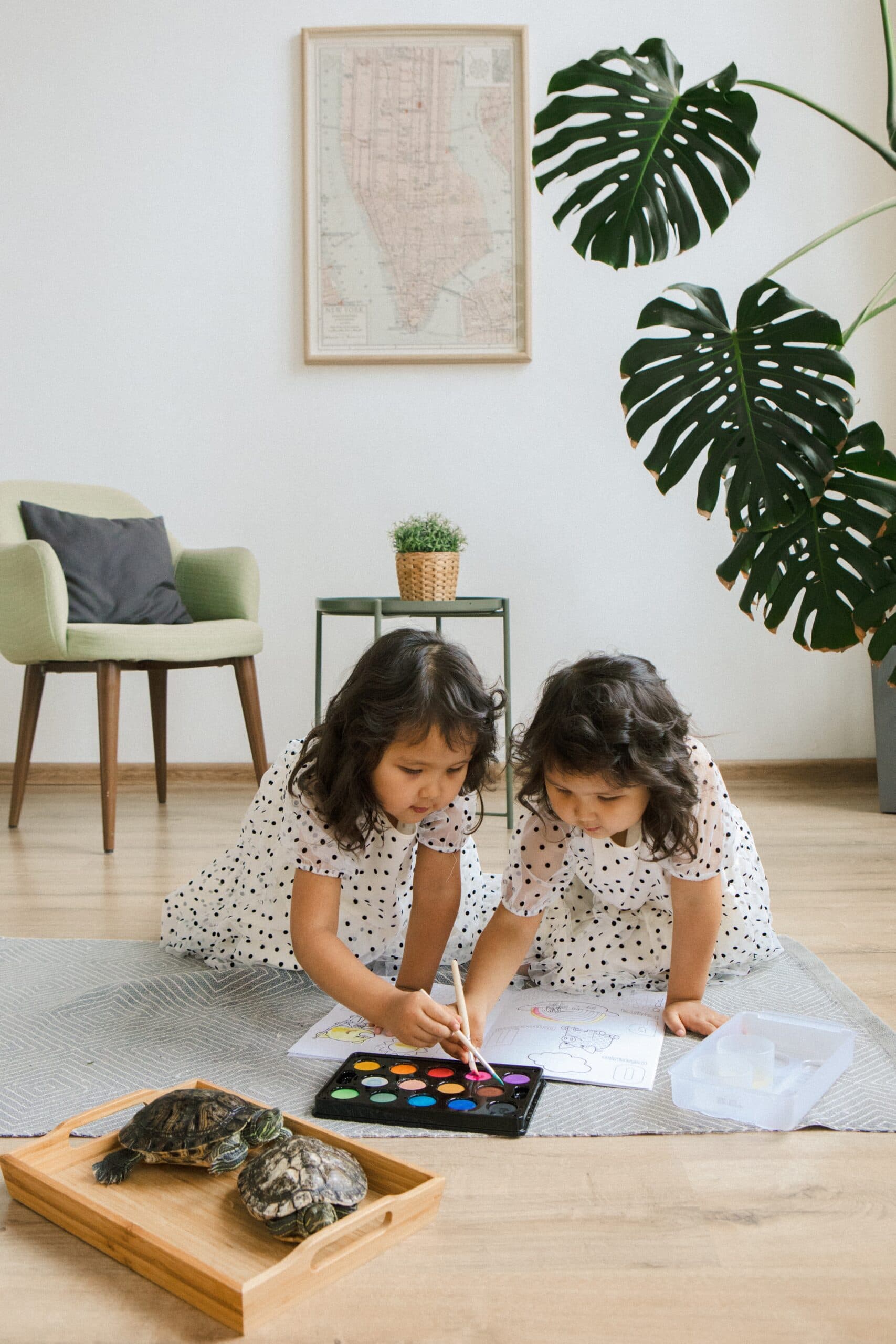
Encourage twins to create art projects together—or side-by-side with their own creative visions. Whether painting, drawing, coloring, or building with blocks or Legos, working on an art project encourages creativity and gives twins something to work towards as a team.
Pro tip: If they prefer different types of art, provide each with their materials and have them work on separate projects at the same time in the same space. This maintains connection while respecting individual preferences.
Supplies to consider: Premium Dual Easel Art Set, Washable Paint Set, Building Block Collection
2. Outdoor Activities
Getting outdoors is an excellent way to keep twins entertained while burning energy. Try activities like playing tag, flying kites, chalk art, or walking in the park. The fresh air and sunshine will energize them and help calm their minds during transition times.
Create an obstacle course in the backyard, let them explore and play in the sandbox, or organize scavenger hunts. Outdoor activities are super fun and they enhance motor skills, physical development, and gross motor coordination.
3. Indoor Games
Play a game of hide-and-seek, have a dance party, or break out the board games. Plenty of fun indoor games require little prep and can keep twins occupied for hours:
- Memory and matching games
- Checkers and snakes & ladders
- Scrabble and word games
- Charades and Pictionary (great as team games)
- Dice games and card games
Indoor games are usually less physically tiring for you and your twins, but they can be just as enjoyable and mentally stimulating.
4. Reading Time
Reading time is a creative way to encourage twins to be quiet and relax for a few minutes while developing literacy skills. Read stories together or let them pick their books from the library or bookstore. You can even assign different stories and discuss them afterward.
Reading encourages creativity, stimulates imagination, teaches problem-solving skills, and builds vocabulary. It’s also an excellent wind-down activity before naps or bedtime.
5. Music Time
Create a music corner with instruments like drums, maracas, glockenspiels, and xylophones for your twins to explore. Encourage them to learn new songs or dance to their favorite tunes.
Music time is a great way to promote self-expression and creativity in your twins. Try learning easy instruments together, like a guitar or keyboard, or have them sing duets.
Instrument options: Kids’ Instrument Set, Beginner Ukulele for Twins
6. Gardening and Nature Projects
Gardening is a rewarding activity for twins—they can work together to plant vegetables and flowers, tend to their garden, and learn about nature and responsibility. Try making bird feeders from recycled materials or going on an insect hunt in the backyard.
Gardening promotes responsibility, teaches teamwork, encourages creativity, and connects kids with the natural world. Don’t be afraid to get a little dirt involved. If twins are enjoying themselves, they’ll definitely remember their fun times together.
Supplies: Child-Sized Gardening Tools Set, Easy-Grow Seed Kit
7. Cooking Time
Cooking is a delicious activity for twins, allowing them to explore different flavors, textures, and aromas. Have them help with simple recipes like fruit salads, muffins, pizza, or smoothies.
Cooking promotes teamwork, boosts creativity, and encourages healthy eating habits. Kids learn to measure ingredients, mix batters, taste-test results, and understand basic nutrition—all while creating something delicious together.
8. Build a Fort or Hideaway
Transform your living room into an adventure zone with blankets, pillows, cushions, and furniture. Forts provide a cozy, contained space where twins can play imaginatively, read, tell stories, or simply hang out together.
This activity requires minimal setup but keeps kids entertained for extended periods. It also gives them a sense of ownership and control over their play space.
9. Science Experiments
Engage twins’ natural curiosity with simple, safe science experiments: volcano eruptions with baking soda and vinegar, color-mixing activities, slime-making, or floating/sinking experiments with household items.
Science activities teach cause-and-effect, encourage hypothesis-testing, and make learning fun. Most require only common household supplies.
10. Puzzle and Building Challenges
Work through age-appropriate puzzles together or create building challenges with blocks, LEGO sets, or magnetic tiles. These activities develop problem-solving skills, spatial reasoning, and patience while allowing for collaborative or independent play.
Gradually increase difficulty as their skills improve. Time-bound challenges (“Can you build this before the timer goes off?”) add excitement.
11. Screen-Free Tech Alternatives & Digital Downtime
NEW for 2026: As screen time continues to be a parental concern, consider “analog alternatives” that offer similar engagement without digital devices:
- Subscription boxes: Monthly activity and craft boxes designed for twins keep novelty high
- Coding without screens: Programmable robot toys like Cubetto or Bee-Bot teach logic through physical play
- Interactive books: Pop-up, touch-and-feel, and flip books engage multiple senses
- Audio experiences: Podcasts, audiobooks, and story apps (with screens off or minimized) provide entertainment and learning
- Subscription experiences: Book clubs, STEM challenges, or activity programs delivered monthly
The goal isn’t eliminating technology entirely but being intentional about when and how it’s used.
—
FAQ: Keeping Twins Entertained
Q1: How much entertainment/structured activity do twins actually need per day?
A: The American Academy of Pediatrics recommends 1-2 hours of quality activity time daily for preschool-aged twins, spread across multiple shorter sessions rather than one long block. Older twins can handle longer engagement. However, quality matters more than quantity—meaningful interaction beats passive activities.
Q2: Should I always keep twins entertained together, or is independent play important?
A: Both are important. Joint activities strengthen their bond and reduce your workload, but independent play—even in the same room—develops individual interests, confidence, and self-directed learning. Aim for a 60/40 split: 60% collaborative, 40% independent (but nearby).
Q3: What do I do when one twin is interested in an activity and the other isn’t?
A: This is normal! Offer both twins the opportunity to participate, but don’t force reluctance. Sometimes having the reluctant twin observe the other can lead to interest. Alternatively, have them work on similar but separate activities in the same space—like different art projects side-by-side.
Q4: How can I keep entertainment costs reasonable for twins?
A: Rotate activities seasonally, use your local library for books and sometimes equipment, invest in open-ended toys (blocks, art supplies, natural items) that work for years, swap toys with other twin families, and focus on experiences (outdoor play, cooking, gardening) rather than new toys. Free or low-cost activities often provide the most engagement.
Q5: What’s the best age to introduce these activities?
A: Adapt based on age: Infants (0-12 months) need sensory play and music. Toddlers (1-3) benefit from outdoor play, simple crafts, and music. Preschoolers (3-5) enjoy all activities listed, plus games and reading. School-age twins (5+) can handle more complex projects, cooking, and gardening. Always supervise and choose age-appropriate materials.
—
Final Tips for Success
- Rotate activities: Keep a list of favorites and rotate them to maintain novelty without constant planning
- Set realistic expectations: Not every activity will captivate both twins for hours—and that’s okay
- Prep supplies: Having materials ready reduces setup friction and delays
- Join in sometimes: Your involvement (especially in cooking, gardening, and games) amplifies enjoyment
- Celebrate effort over perfection: Praise teamwork, creativity, and effort rather than final results
- Use transitions wisely: Move from high-energy to low-energy activities to avoid meltdowns
Your Turn: What Works for Your Twins?
What’s your go-to entertainment strategy when you need to keep your twins engaged? Share your favorite activities, tips, or hacks in the comments below. Parent-to-parent wisdom is often the most valuable!
Have other parenting challenges with twins? Check out our complete resource library for strategies on sleep, feeding, behavioral challenges, and more.