
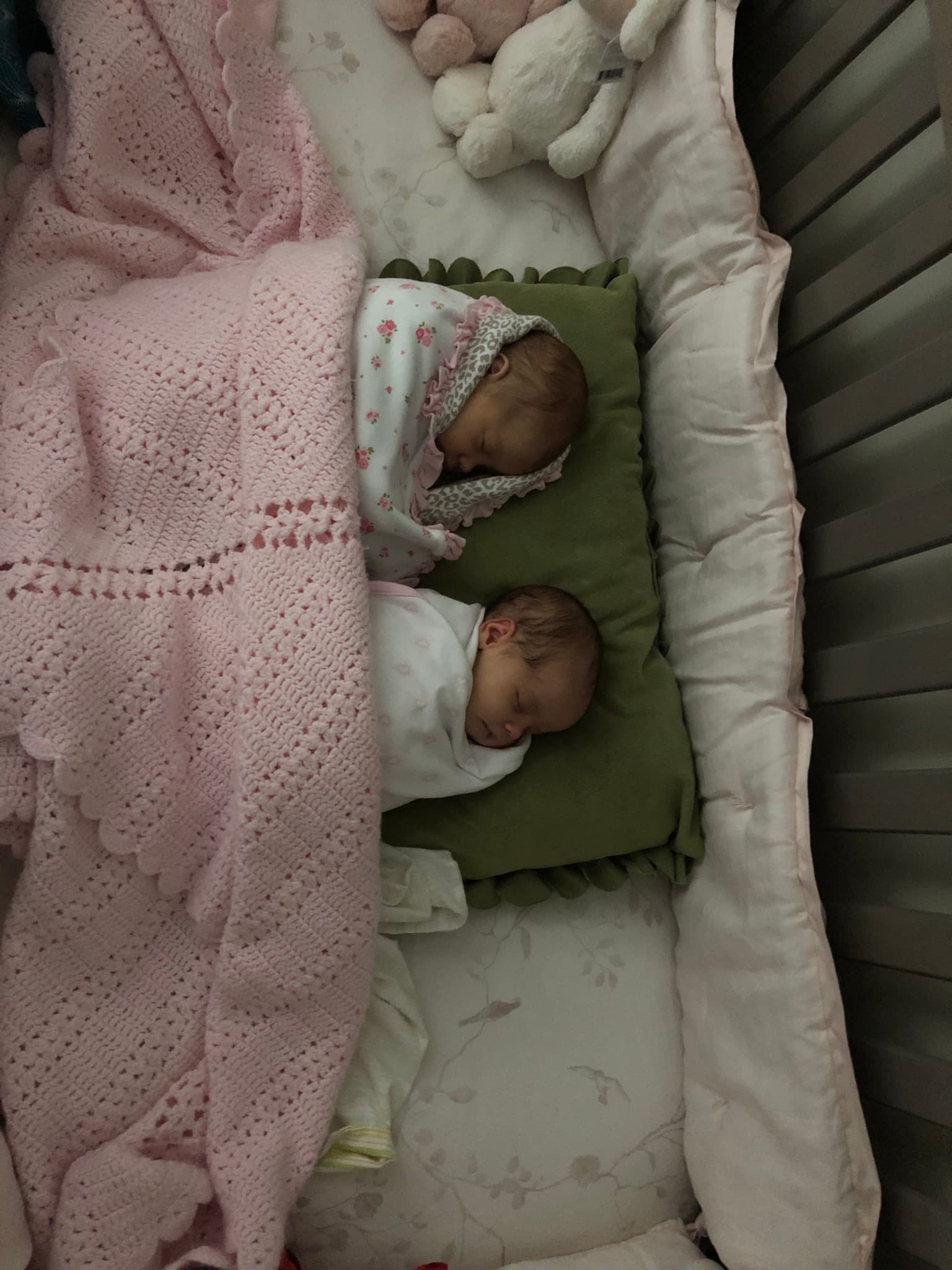
Can Twin Babies Sleep in the Same Bed? A 2026 Parent’s Guide to Safe Twin Sleep
If you’re expecting twins or recently welcomed them home, you’re likely facing one of parenting’s most critical decisions: where and how your babies will sleep. The pressure is real—between conflicting advice from family members, contradictory online forums, and guidelines that seem to change yearly, deciding whether twin babies can share a bed feels overwhelming. Add the stress of wanting to do everything “right” and the financial burden of dual nursery setups, and it’s no wonder this question keeps parents up at night (pun intended).
Twin babies begin their lives cuddled up together in the womb for approximately 40 weeks, never once leaving each other’s side. Naturally, this raises an important question: can twin babies sleep in the same bed after birth, and is it safe?
The Quick Answer: Yes, But With Important Caveats
Twin babies can sleep in the same bed, but current 2026 pediatric guidelines recommend limiting this practice to approximately the first 3-4 months of life, or until babies can roll over independently. Once they develop increased mobility, the risk of accidental suffocation rises significantly.
Key safety rules if you choose to co-bed your twins:
- Position babies facing away from each other to ensure independent airways
- Use a firm, flat sleeping surface (no pillows, blankets, or bumpers)
- Consider a breathable crib divider to create separate sleep zones
- Monitor room temperature carefully (babies should not overheat)
- Ensure both babies are on their backs during sleep
Important Note: This remains a controversial topic among pediatricians, sleep specialists, and parents. We’ll explore both perspectives to help you make an informed decision for your family.
Understanding the Twin Sleep Landscape in 2026
Having twins presents unique parenting challenges that singleton parents never face. Sleep arrangements top the priority list for most expectant twin parents—and rightfully so, given that newborns sleep 16-17 hours daily.
Most twins share close quarters before birth and often continue sharing space in hospital NICUs (Neonatal Intensive Care Units), particularly if born prematurely—which occurs in approximately 32% of twin pregnancies according to 2025 CDC data. This shared environment creates familiarity and comfort between siblings.
The central question parents grapple with: Should we replicate this closeness at home, or prioritize independent sleep spaces for safety?
Can Twin Babies Sleep in the Same Crib? What Research Shows
The Case FOR Co-Bedding Twins (First 3-4 Months)
Current pediatric consensus: Leading organizations including the American Academy of Pediatrics acknowledge that co-bedding twins in early infancy can be beneficial when done safely. However, they emphasize this should transition to separate sleeping spaces by 4-6 months of age.
Research shows that twins who co-bed in the first 3 months often experience improved sleep consolidation and reduced parental stress. However, the window closes quickly—once babies gain motor control and begin rolling, separate sleep spaces become essential for safety. Co-bedding is best viewed as a temporary bonding tool, not a long-term solution.
Benefits of early co-bedding include:
- Reduced parental stress during the exhausting newborn phase
- Lower equipment costs (one crib instead of two)
- Easier nighttime feeding and monitoring
- Potentially better sleep for both babies during the vulnerable newborn period
The Case AGAINST Co-Bedding (Safety Concerns)
Safety advocates raise legitimate concerns about co-bedding risks, particularly regarding:
- Sudden Infant Death Syndrome (SIDS): Any shared sleep surface increases SIDS risk compared to solo sleeping
- Accidental suffocation: Once babies can roll (typically 4-6 months), one twin may inadvertently cover the other’s face
- Infection transmission: Babies sharing confined spaces increase illness spread risk
- Sleep disruption: Contrary to some claims, some twins wake each other frequently
Risk Multiplier: Premature twins (born before 37 weeks) face additional SIDS risk factors, making separate sleeping arrangements even more important.
Room-Sharing vs. Bed-Sharing: Understanding the Difference
New guidance for 2026: This distinction has become increasingly important in pediatric recommendations.
Room-sharing without bed-sharing (recommended by AAP through age 1) means:
- Twins sleep in separate cribs/bassinets
- Both sleep in the parents’ room
- Maintains safety while preserving closeness
- Facilitates easier nighttime feeding and monitoring
This approach provides many co-bedding benefits while dramatically reducing safety risks. Many sleep experts now recommend room-sharing as the optimal compromise for twin parents.
The Documented Benefits of Twin Co-Bedding (When Done Safely)
Twins Sleep Better Together—Sometimes
Research from Pediatric Sleep Medicine Reviews (2024-2025) shows that co-bedded newborn twins frequently achieve deeper, more consolidated sleep periods during the first 8-12 weeks of life. This occurs because:
- Babies find comfort in familiar proximity (replicating womb conditions)
- Twin’s breathing and movements provide subtle sensory input
- Reduced startle reflexes in some co-bedded pairs
- Natural temperature regulation from close proximity
Important caveat: This benefit varies dramatically between twin pairs. Some sleep worse together, waking frequently due to each other’s movements and sounds.
Natural Temperature Regulation
Co-bedded twins naturally maintain each other’s body temperature without requiring blankets, pillows, or other SIDS risk factors. This is particularly valuable during the newborn phase when thermoregulation is still developing.
Safety alternative: Use wearable sleep sacks, like the Halo SleepSack Swaddle, rather than loose bedding—equally effective and safe for independent sleepers.
Reduced Parental Stress and Workload
During the intense newborn phase, co-bedding can reduce parental burden by:
- Requiring fewer equipment purchases (one large crib vs. two)
- Simplifying nighttime diaper changes and feedings
- Enabling faster response times when monitoring two babies
- Reducing parental anxiety about separation after NICU stays
Safety Guidelines for Co-Bedding Twins (If You Choose To)
If you decide that co-bedding is right for your family, these evidence-based safety measures are non-negotiable:
Essential Safety Requirements
- Firm, flat surface: Approved crib or bassinet—never sofas, armchairs, or adult beds
- Proper positioning: Both babies on their backs, heads on opposite ends or facing away from each other
- No soft objects: Zero pillows, blankets, bumpers, or sleep positioners
- Crib divider: Consider a breathable separator, like the Arm’s Reach Co-Sleeper Divider, to maintain individual sleep zones
- Temperature control: Room temperature 68-72°F; use sleep sacks instead of blankets
- Smoke/alcohol/drug-free environment: Absolutely essential for co-bedding safety
- Pacifier use: Offer after breastfeeding is established (1+ month) to reduce SIDS risk
- Vaccination: Ensure both twins and caregivers are current on vaccinations
When to Transition to Separate Sleep Spaces
Stop co-bedding immediately if:
- Either baby reaches 4 months or begins rolling over
- Either baby shows increased mobility or strength
- Twins reach 10-12 lbs (outgrowing safe co-bedding size)
- You notice increased sleep disruption rather than improvement
- You feel unsafe or uncomfortable with the arrangement
Recommended transition approach: Move to separate cribs in the same room (room-sharing without bed-sharing) to maintain closeness while ensuring safety.
Practical Alternatives to Co-Bedding
Many twin families find these approaches provide similar benefits with fewer risks:
Side-by-Side Cribs
Position two separate cribs directly adjacent, allowing visual and auditory contact without physical contact. Many parents describe this as “the best of both worlds.”
Co-Sleeping Bassinets with Dividers
Products like the Chicco LullaGo Portable Bassinet allow side-by-side placement with clear separation.
Room-Sharing Setup
Both cribs in the parents’ bedroom, recommended by AAP through age 1. This arrangement shows:
- 20-30% reduction in SIDS risk compared to separate rooms
- Easier nighttime responsiveness
- Maintained twin connection and parental proximity
- Easier transition to independent rooms later
Frequently Asked Questions About Twin Co-Bedding
Q1: Will twins feel separated and traumatized if we move them to separate cribs?
A: No. Babies don’t experience psychological trauma from separate sleeping arrangements. In fact, research shows no long-term emotional or developmental differences between co-bedded and separately-sleeping twins beyond infancy. The transition is typically smoother when done gradually (around 4-6 months) and accompanied by other comfort measures like proximity, white noise, and consistent routines.
Q2: Is co-bedding safer in larger cribs?
A: Larger cribs extend the safe co-bedding window slightly—sometimes to 4-5 months instead of 3-4 months—by providing more space between babies. However, they don’t eliminate the fundamental risks associated with shared sleeping surfaces. Once babies show rolling ability, separate spaces become essential regardless of crib size. Full-size cribs (standard 28″x52.75″) are the minimum for safe co-bedding.
Q3: What if one twin sleeps through the night but the other doesn’t?
A: This is one of the most common reasons parents abandon co-bedding plans. Research shows that approximately 40% of twin pairs disturb each other’s sleep significantly. If your twins are not sleeping better together by 4-6 weeks, separate sleeping may actually improve both babies’ rest. There’s no “failure” in discovering that separate sleep works better for your specific twins—every pair is different.
Q4: Does co-bedding increase SIDS risk?
A: Yes, modestly. Studies show co-bedding increases relative SIDS risk compared to solo sleeping, though absolute risk remains low when safety guidelines are followed. The increased risk comes from reduced independent airways and increased accidental suffocation potential. However, premature twins and those with lower birth weights face baseline SIDS risks that may outweigh co-bedding benefits entirely. Consult your pediatrician about your specific twins’ risk factors.
Q5: How long can we safely co-bed our twins?
A: Current 2026 recommendations suggest 3-4 months maximum, or until any sign of rolling ability appears. Some sources extend this to 5-6 months with extra-large cribs and careful monitoring, but this requires explicit pediatrician approval and vigilant observation. Once babies begin developmental milestones (rolling, increased strength), separate sleep spaces are essential. Err on the side of caution—earlier transitions are always safer than delayed ones.
The Bottom Line: Your Family’s Decision
Whether twin babies sleep in the same bed is ultimately a personal family decision that should balance:
- Your comfort level and parenting philosophy
- Your specific twins’ health history and risk factors
- Your pediatrician’s individualized recommendations
- Your observed sleep patterns and family dynamics
- Your mental health and stress management needs
Whatever you decide, remember:
- Safety always trumps bonding—choose the arrangement that feels safest
- Co-bedding is temporary (first 3-4 months maximum), not a permanent solution
- What works for other twin families may not work for yours
- Transitioning to separate sleep is healthy and normal, not a setback
- Your pediatrician should be your primary decision-making resource
Parenting twins is challenging enough without adding guilt about sleep arrangements. Make an informed decision, implement safety measures rigorously, and adjust as needed. Your twins will thrive with whatever arrangement you thoughtfully select.