
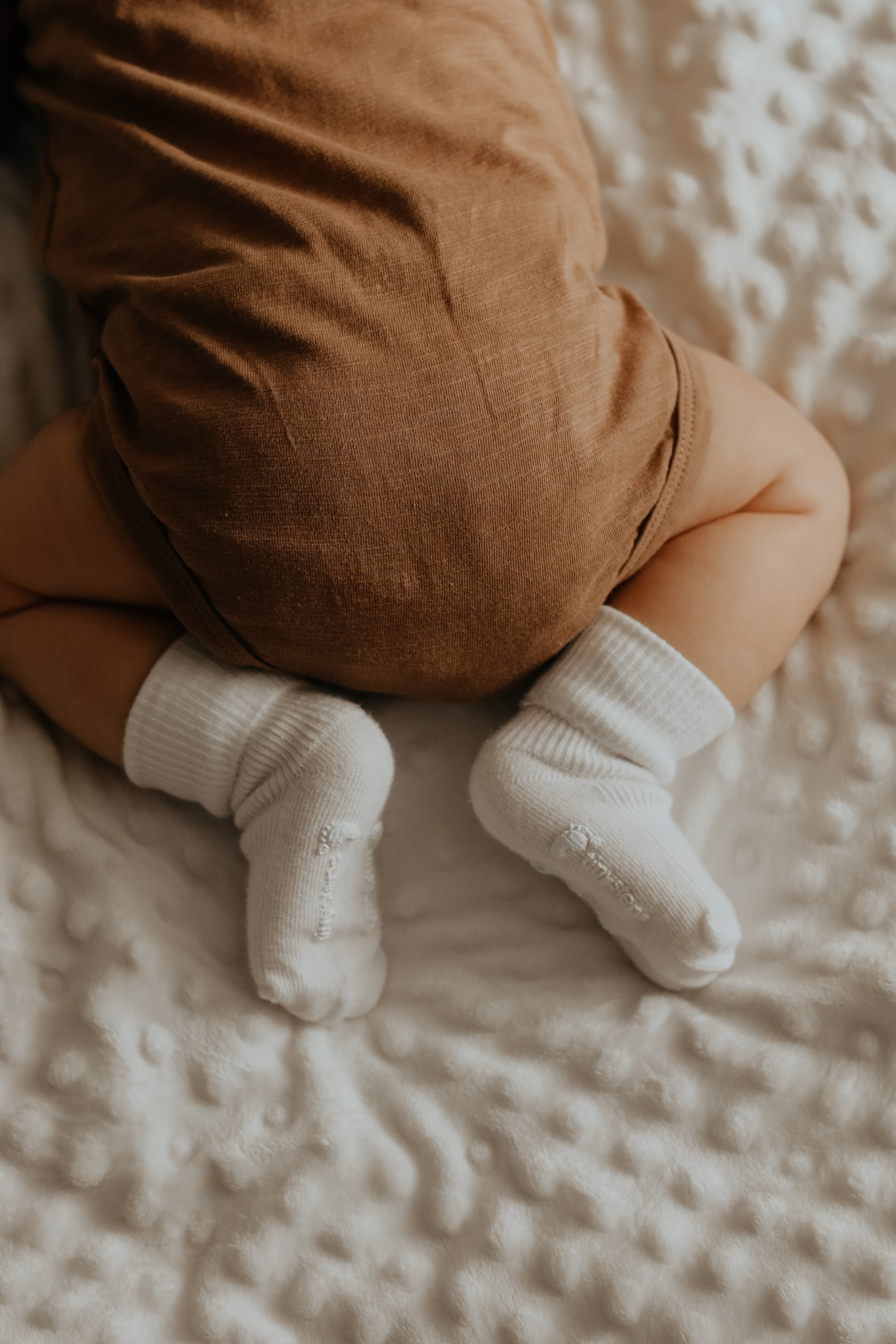
For comfort or protection, moms are usually inclined to put socks on their babies when they go to bed. But is this really a good idea?
When putting babies to sleep, one of the most common questions parents ask is whether or not they should put socks on their babies. Socks can keep a baby’s feet warm and cozy at night, which may help them get better sleep. On the other hand, wearing too many layers in bed can be dangerous for babies as it increases their risk of overheating.
So what’s a parent to do?
This article will detail the pros and cons of wearing socks to bed, looking at factors such as safety, comfort, temperature regulation, and more. We’ll also cover what the experts say, the best materials for baby socks, age-by-age guidance, and safer alternatives. Parents must balance these factors and make an informed decision regarding sock-wearing for their baby’s sleep.
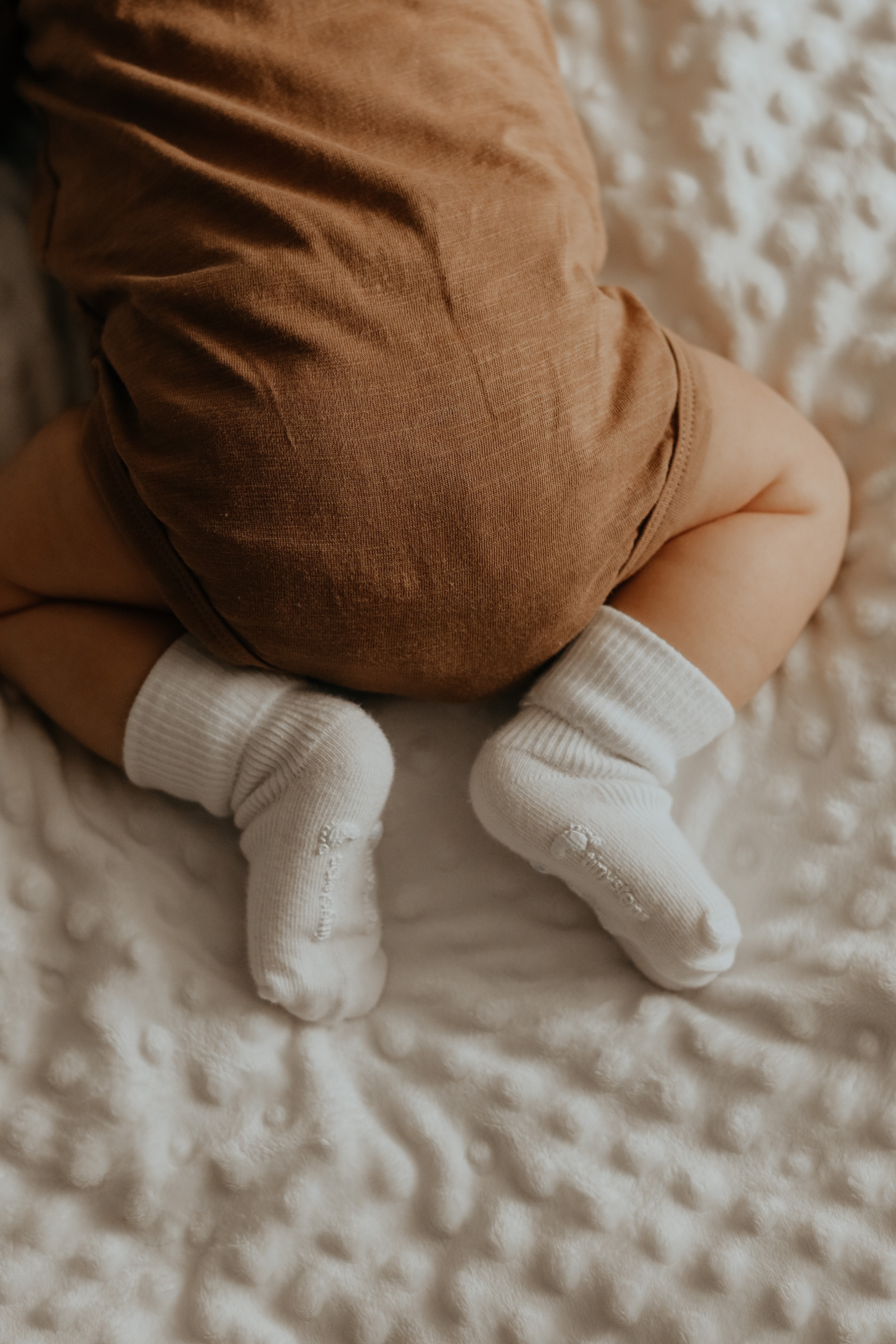
What Do Pediatric Experts Say About Babies Wearing Socks to Bed?
The American Academy of Pediatrics (AAP) guidelines on safe sleep focus primarily on reducing the risk of Sudden Infant Death Syndrome (SIDS). While the AAP doesn’t specifically address socks, their guidance on sleep clothing is clear: babies should be dressed in no more than one layer more than what an adult would wear to be comfortable in the same environment.
This means that in most home environments, a onesie or sleep sack is sufficient. Adding socks is generally safe as long as the baby isn’t overdressed or showing signs of overheating. The key takeaway from pediatric experts is that temperature regulation matters more than any single clothing item.
Many pediatric sleep resources, including Dr. Harvey Karp’s The Happiest Baby on the Block, emphasize that keeping a baby’s overall environment consistent and appropriately warm supports settling into sleep — but room temperature and total layers should always be the primary consideration, not any single item of clothing.
Why Wear Socks to Bed? The Benefits
There are several benefits to wearing socks to bed, but it all goes down to three primary reasons – comfort, warmth, and protection.
Temperature Regulation and Warmth
Parents commonly put socks on their babies to keep them warm at night, which can help regulate the baby’s body temperature and prevent them from getting too cold. Babies lose heat through their extremities faster than adults do, and their tiny feet can feel cold to the touch even when their core body temperature is normal.
Warming the feet promotes vasodilation (widening of blood vessels), which helps redistribute body heat. This is one reason many parents notice their baby settles down more quickly when wearing socks.
Comfort and Security
For some babies, wearing socks can be soothing, allowing them to drift off into a peaceful sleep quicker and easier. The gentle pressure of socks around the feet provides a subtle sense of security, similar to being swaddled. If your baby tends to startle awake when their bare feet touch cool bedding, socks can eliminate that problem.
Protection From Insects
Finally, wearing socks to bed can protect your baby’s feet against mosquito bites and other insects. This is especially important in warmer climates and during summer months when mosquitoes are more active and may carry diseases like Malaria, Dengue, and Zika virus.
Preventing Scratching
Babies who scratch their feet or legs during sleep (due to dry skin or mild eczema) may benefit from wearing soft socks. The socks act as a gentle barrier, preventing scratches that could lead to irritation or infection. Some parents even use socks on their baby’s hands for the same reason!
When to Avoid Socks: Risks and Concerns
Although socks are beneficial in many ways, there are times when parents should be cautious about putting them on their baby.
Overheating Risk
The main concern when it comes to wearing socks is that babies can quickly overheat if they sleep with too many layers of clothing, especially if they’re in a warm nursery or room. Babies can’t regulate their body temperature as efficiently as adults, so too many layers can be dangerous and lead to overheating — which the AAP identifies as a risk factor for SIDS.
Signs your baby may be overheating include:
- Sweating, especially on the back of the neck or head
- Flushed or red cheeks
- Damp hair
- Rapid breathing
- Restlessness or fussiness
- Skin that feels hot to the touch on the chest or tummy
If you notice any of these signs, remove a layer (including socks) and check the room temperature.
Skin Sensitivities and Eczema
It is best to skip the socks if your baby has sensitive skin or eczema, as even lightweight fabrics can irritate the skin. Synthetic materials, dyes, and tight elastic bands are common culprits. If your baby is prone to skin sensitivities, opt for 100% organic cotton socks without added designs, embellishments, or synthetic dyes.
Circulation Concerns
Socks that are too tight can restrict blood flow to your baby’s feet and toes. Always check that socks aren’t leaving marks or indentations on your baby’s skin. The elastic band should be snug enough to stay on but loose enough that you can easily slip a finger underneath.
Choking Hazard
For older babies (6+ months) who have discovered they can pull off their socks, loose socks in the crib can become a safety concern. If your baby regularly removes their socks during sleep, it may be time to switch to footed pajamas or a sleep sack instead.
What Temperature Should Baby’s Room Be for Sleeping?
The ideal room temperature for a sleeping baby is between 68°F and 72°F (20°C to 22°C), according to most pediatricians and the AAP. This temperature range reduces the risk of overheating while keeping baby comfortable.
Here’s a general guide for dressing your baby based on room temperature:
- Below 65°F (18°C): Long-sleeve onesie + sleep sack + socks
- 65–68°F (18–20°C): Long-sleeve onesie + sleep sack (socks optional)
- 68–72°F (20–22°C): Short-sleeve onesie + lightweight sleep sack (skip socks)
- 72–75°F (22–24°C): Short-sleeve onesie only (no socks, no sleep sack)
- Above 75°F (24°C): Diaper only or lightweight short-sleeve onesie
Use a room thermometer to monitor the nursery temperature, especially during seasonal changes when heating or cooling systems may cause fluctuations.
Signs Your Baby Is Too Cold at Night
Many parents worry about their baby getting too cold, which is often why they reach for the socks. Here are the signs that your baby may need an extra layer:
- Cool torso or tummy — This is the most reliable indicator. Cold hands and feet alone don’t necessarily mean baby is cold (this is normal for newborns).
- Fussiness or difficulty settling — A baby who can’t get comfortable may be too cold.
- Pale or mottled skin — Especially on the arms, legs, and chest.
- Sneezing — Surprisingly, frequent sneezing can be a sign that baby is chilly (it’s a natural response to drop in body temperature).
Important: A common misconception is that cold feet mean a cold baby. Babies naturally have cooler extremities because their circulatory system is still developing. The best way to check is to feel your baby’s chest, tummy, or back of the neck — these should be warm (not hot or sweaty).
Best Materials for Baby Sleep Socks
Not all socks are created equal, especially when it comes to sleep safety and comfort. Here’s what to look for:
Best Choices
- Organic cotton — Breathable, soft, hypoallergenic, and gentle on sensitive skin. The best all-around choice for most babies.
- Merino wool — Naturally temperature-regulating (keeps feet warm in winter, cool in summer). More expensive but excellent for babies who tend to overheat.
- Bamboo fabric — Silky soft, naturally antibacterial, and very breathable. Great for babies with eczema or skin sensitivities.
Avoid
- 100% polyester or nylon — These trap heat and moisture, increasing overheating risk.
- Socks with tight elastic bands — Can restrict circulation.
- Socks with decorations, buttons, or bows — Potential choking hazards if they come loose.
- Non-slip grip socks — The rubber grips are unnecessary for sleep and may contain chemicals or irritate skin.
Age-by-Age Guide: Socks to Bed
Newborns (0–3 Months)
Newborns have the hardest time regulating body temperature, so soft cotton socks can be a good addition in cooler environments. At this age, babies can’t remove their socks, so there’s no loose-fabric safety concern. Pair with a swaddle or sleep sack for the right warmth.
Infants (3–6 Months)
By 3 months, many babies start becoming more active during sleep. Socks are still generally safe at this age, but watch for signs that baby is kicking them off. If socks regularly end up loose in the crib, switch to footed pajamas.
Older Babies (6–12 Months)
Once babies can grab and pull things, loose socks become a potential concern. At this age, footed pajamas or a sleep sack are usually better choices than separate socks. If you do use socks, choose ones that fit securely and check them before and after sleep.
Toddlers (12+ Months)
Toddlers can generally wear socks to bed without safety concerns. Many toddlers actually prefer sleeping with socks, especially in cooler months. Let your toddler tell you what they’re comfortable with — at this age, they’ll pull off what they don’t want!
Alternatives to Socks for Keeping Baby Warm at Night
If you’re concerned about socks coming off or want a simpler bedtime routine, here are some great alternatives:
Footed Pajamas (Footie PJs)
Footed pajamas are one of the most popular alternatives to socks. They keep baby’s feet warm without the risk of loose fabric, and they can’t be kicked off. Look for pajamas with zippers (rather than snaps) for easier diaper changes at night.
Sleep Sacks (Wearable Blankets)
Sleep sacks are the gold standard for safe baby sleep. They keep baby warm without loose blankets (which the AAP recommends against for babies under 12 months). Many sleep sacks cover the feet, eliminating the need for socks entirely. They come in different TOG ratings for different room temperatures.
Leg Warmers
Baby leg warmers cover the legs and can extend over the feet. They’re harder for babies to remove than socks and provide more coverage. These are especially useful during transitional seasons.
Tips for Twin Parents: Managing Socks at Bedtime
As twin parents, we know the bedtime routine is already twice the work! Here are some twin-specific tips for the socks question:
- Each twin may have different preferences — Don’t assume both babies want the same thing. One twin may run warmer than the other.
- Buy matching socks in bulk — You’ll lose plenty of tiny socks. Buying identical pairs means you’ll always have matches.
- Use different colored socks for each twin — If your twins sleep in the same room, this makes it easy to tell whose socks are whose.
- Footed PJs save time — With two babies to dress, footed pajamas eliminate the sock step entirely.
Frequently Asked Questions
Can newborns sleep with socks on?
Yes, newborns can safely sleep with socks on as long as the room temperature is appropriate and they aren’t overdressed. Choose soft, breathable cotton socks and make sure the room is between 68-72°F (20-22°C).
Should babies wear socks in summer?
In most cases, no. During summer months when room temperatures are higher, socks add unnecessary warmth. If your home has strong air conditioning and the nursery gets below 68°F, a light pair of cotton socks is fine.
Can socks cause SIDS?
Socks themselves don’t cause SIDS. However, overdressing a baby (including too many layers with socks) can lead to overheating, which is a known risk factor for SIDS. Always dress your baby appropriately for the room temperature.
What if my baby keeps pulling off their socks?
If your baby regularly removes their socks during sleep, switch to footed pajamas or a sleep sack. Loose socks in the crib can be a safety concern for babies who are old enough to grab and pull objects.
Are grip socks safe for sleeping?
Grip socks (with rubber dots on the bottom) are designed for walking, not sleeping. The rubber can trap heat and may contain chemicals. For sleep, stick to plain cotton, merino wool, or bamboo socks.
Conclusion
So, should babies wear socks to bed? In most cases, yes — socks provide comfort, warmth, and protection while sleeping. However, parents should be aware of the risk of overheating and consider factors such as room temperature, total layers, material choices, and their baby’s age and skin sensitivity.
The most important thing is to monitor your baby’s temperature by feeling their chest or back of the neck (not their hands and feet). Keep the room between 68-72°F, dress them in no more than one extra layer than you’d wear, and watch for signs of overheating.
Remember, every baby is different. Some may be more comfortable without socks, while others may prefer them. Observe your little one and adjust as needed to ensure they get the best sleep possible.
Do you put socks on your baby at night? Let us know in the comments below!