
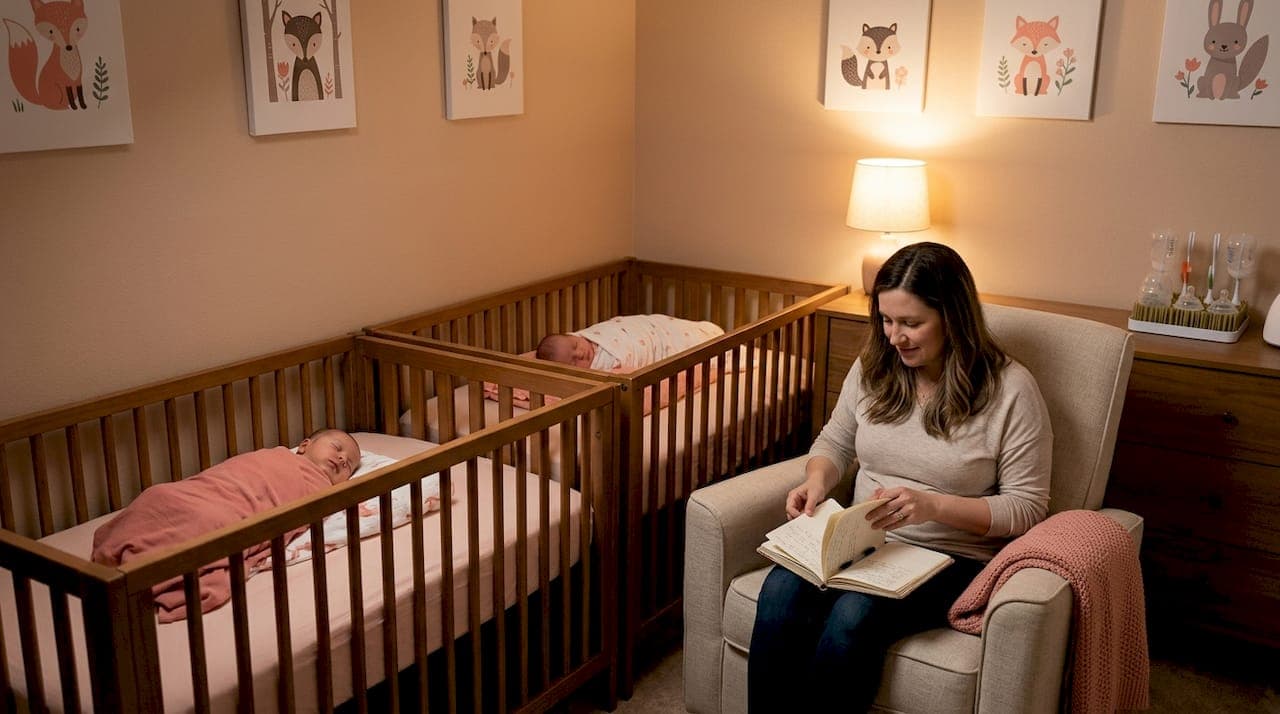
You just brought two babies home, and you’re already running on empty. Managing overlapping feeding cues, staggered wake-ups, and two sets of tiny needs at once is genuinely hard. This twin newborn sleep schedule guide exists because you deserve more than vague advice. Here, you’ll find specific, realistic strategies for syncing your twins’ sleep cycles, setting up the right environment, and troubleshooting the moments that throw everything off. Whether your babies are brand new or a few weeks old, this guide walks you through every stage of building a routine that actually holds.
Table of Contents
- Key Takeaways
- Understanding your newborn twins’ sleep needs
- Setting up the environment and schedule essentials
- Step-by-step guide to syncing twin sleep schedules
- Common challenges and mistakes to avoid
- Knowing when your schedule is working
- My honest take on twin sleep schedules
- More twin sleep resources from Twinsandcounting
- FAQ
Key Takeaways
| Point | Details |
|---|---|
| Sync feedings first | Aligning feeds within 10-20 minutes naturally pulls sleep cycles together over time. |
| Respect individual differences | One twin may sleep easily while the other struggles; use the same schedule but individualized soothing. |
| Environment matters early | White noise, dim lighting, and spaced cribs reduce night wakings for both babies. |
| Use the 10-15 minute rule | Wait before waking the second twin to see if they fall back asleep on their own. |
| Progress takes weeks | Expect gradual improvement, not overnight synchronization, and track small wins consistently. |
Understanding your newborn twins’ sleep needs
Before you can build a twin baby sleep routine, you need to understand what newborn sleep actually looks like. And the honest truth is: it’s fragmented by design.
Newborns aged 0-3 months need 14-17 hours of total sleep per day, spread across 4-6 short naps. Their sleep cycles last only 40-50 minutes, and they spend roughly 50% of that time in REM sleep. That’s why they wake so often. It’s not a problem to fix. It’s biology.
Here’s what that means practically for twins:
- Wake windows are short. Most newborns can only stay awake 45-90 minutes before they need sleep again. Miss that window and you’re dealing with an overtired baby, which makes falling asleep harder, not easier.
- Circadian rhythms aren’t developed yet. Your twins won’t have a true sense of day and night until around 3-4 months. Until then, frequent waking every hour is completely normal and not a sign of anything going wrong.
- Twins have similar but not identical needs. Both babies will follow the same general newborn sleep pattern, but one may settle faster, sleep longer stretches, or wake more easily than the other.
- REM-heavy sleep serves a purpose. All that light, active sleep supports rapid brain development. Trying to force deeper sleep too early works against your babies’ biology.
Understanding these patterns helps you stop blaming yourself for the chaos and start working with your twins’ natural rhythms instead of against them. That shift in mindset is where good scheduling actually begins.
Setting up the environment and schedule essentials
Getting your environment right before you try to sync schedules saves you a lot of frustration later. Think of this as laying the foundation.
Safe sleep setup for two
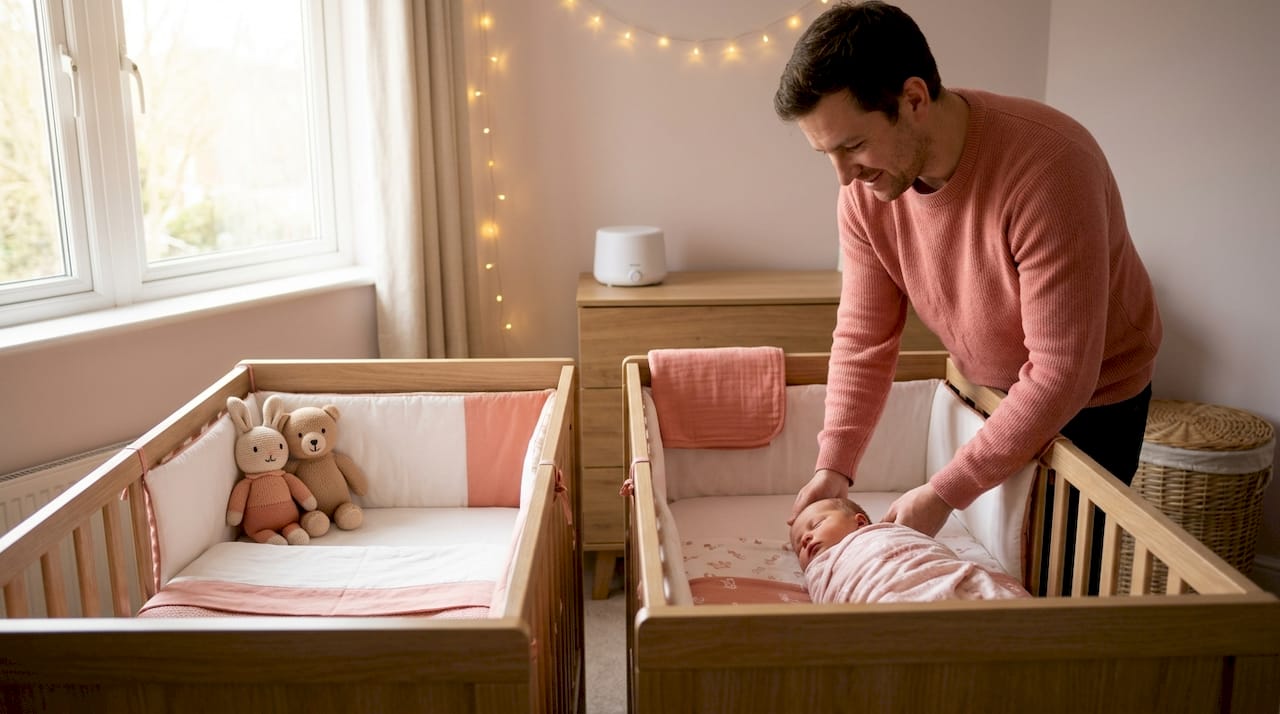
Each twin needs their own sleep surface. Separate bassinets or cribs are the safest option, and they give you flexibility to space the babies apart when one is a lighter sleeper. If you’re wondering whether your twins can share a room long-term, room sharing for twins has real benefits, but the setup matters.
Place cribs at least a few feet apart. This small distance helps each baby adjust to the other’s sounds without being directly disturbed by them. Research shows that babies acclimate to sibling noise when cribs are spaced apart and supported by white noise, which reduces night wakings over time.
Essential tools for the twin daily schedule
| Item | Why it helps |
|---|---|
| White noise machine | Masks sibling sounds and creates consistent sleep cues |
| Swaddles and sleep sacks | Reduce startle reflex, extend sleep stretches |
| Twin nursing pillow | Supports simultaneous feeding to align meal times |
| Blackout curtains | Signals sleep time, especially during daytime naps |
| Visual sleep tracker or app | Helps you monitor each twin’s wake windows and nap timing |
Building predictable sleep cues
Consistency is the engine of any good twin baby sleep routine. A short, repeatable pre-sleep sequence, such as a diaper change, a swaddle, a brief feed, and a song or white noise, teaches your babies that sleep is coming. You don’t need an elaborate ritual. You need the same 5-10 minute sequence every single time.
Learn each twin’s sleepy cues early. Yawning, staring off into space, and eye rubbing are signs that the sleep window is opening. Acting on those cues quickly, before the babies tip into overtiredness, makes the whole routine smoother.
Pro Tip: Use a color-coded tracking system or a simple app to log each twin’s feeds and naps separately. Seeing the patterns side by side makes it much easier to spot where their schedules are drifting apart.
Step-by-step guide to syncing twin sleep schedules
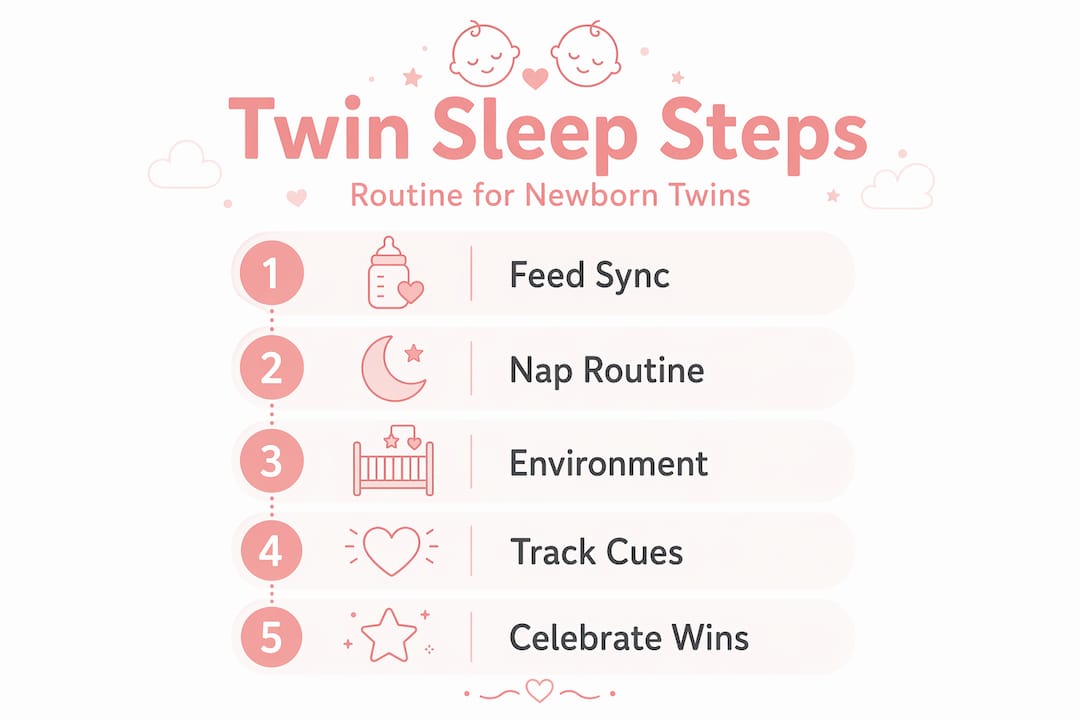
This is where the twin newborn sleep schedule guide gets specific. Syncing twins sleep cycles is less about forcing them onto a rigid timetable and more about creating enough overlap that you get real rest between rounds.
-
Start with simultaneous feeding. Feeding twins at the same time, or within 10-20 minutes of each other, is the single most effective way to align their sleep cycles. When they eat together, they get drowsy together. That’s your window.
-
Apply the 10-15 minute rule for naps. When one twin wakes from a nap, don’t immediately wake the other. Wait 10-15 minutes. If the sleeping twin doesn’t stir on their own, then gently wake them. This prevents unnecessary early waking while still keeping the schedule on track.
-
Run the same bedtime routine for both babies at once. Even if one twin is fussier, move through the routine together. Parallel routines reinforce the same sleep cues for both babies and save you from running two separate wind-down sequences every night.
-
Monitor wake windows carefully. Track how long each twin has been awake. When one hits 75-80 minutes, start the sleep routine for both, even if the second twin seems fine. Preventing overtiredness in one baby protects the other’s schedule too.
-
Use gentle waking when needed. Waking a sleeping baby feels wrong. But gently waking one twin to keep them aligned with their sibling is one of the most counterintuitive but effective tools in managing twin sleep patterns. A soft touch, a quiet voice, and a feeding cue usually do the trick.
-
Separate nap spaces during the day. Daytime naps and nighttime sleep don’t have to happen in the same location. Separating nap locations during the day, such as one twin in a Pack ‘n Play and one in a crib, reduces the chance that one baby’s fussing wakes the other mid-nap.
-
Adjust as your babies grow. At around 3-4 months, wake windows lengthen, nap counts drop, and night sleep starts consolidating. Revisit your schedule every few weeks and shift timing gradually rather than overhauling everything at once.
Pro Tip: If one twin is a significantly lighter sleeper, try starting their nap in a separate room during the day and transitioning them to the shared room once they’re in a deeper sleep phase, usually 15-20 minutes after they fall asleep.
Here’s a quick comparison to help you decide how to schedule twin naps based on the time of day:
| Nap type | Same space or separate? | Reason |
|---|---|---|
| Daytime naps | Separate when possible | Reduces sibling noise disruption |
| Early evening nap | Same space | Prepares both for shared night routine |
| Nighttime sleep | Same room, cribs apart | Supports routine while minimizing disturbance |
Common challenges and mistakes to avoid
Even with a solid plan, things go sideways. Knowing what to expect makes the hard moments less destabilizing.
-
One twin is a sensitive sleeper. Individual variation in sleep temperament is completely normal. Twin A may drift off easily while Twin B needs more soothing. Use individualized calming techniques for each baby while keeping their schedule timing the same. The routine stays consistent; the soothing adapts.
-
Overtiredness creates a cycle. When babies miss their sleep window, stress hormones kick in and make it harder to fall asleep. Overtired babies fuss more, wake more frequently, and resist settling. Catching sleepy cues early is your best defense.
-
Inconsistent night responses. How you respond to night wakings teaches your babies what to expect. Keeping lights low, voices quiet, and stimulation minimal during night feeds signals that nighttime is for sleep, not interaction.
-
Neglecting the quieter twin. When one twin cries louder, it’s natural to attend to them first. But checking the calmer twin occasionally makes sure their needs aren’t being consistently overlooked. Both babies deserve equal attention, even when one is less vocal about it.
-
Avoiding overstimulation before bed. Bright lights, active play, and loud sounds in the hour before bedtime make it harder for both twins to wind down. Dim the lights, lower your voice, and reduce activity as bedtime approaches.
-
Trying to do it all alone. Parental exhaustion is real, and it compounds quickly with twins. Sharing caregiver roles, even informally, protects your ability to stay consistent with the schedule.
“The goal isn’t a perfect schedule. It’s a predictable one. Predictability is what teaches babies to sleep, and it’s what keeps parents sane.” — Twinsandcounting
Knowing when your schedule is working
Progress with a twin newborn sleep schedule doesn’t announce itself loudly. It shows up in small, quiet ways.
You’ll start to notice that one or both babies fall asleep more easily during the routine. Fussiness before naps decreases. Night stretches gradually lengthen. You find yourself anticipating their wake windows accurately instead of reacting to crying. These are real signs of improvement, and they matter.
Most parents see meaningful schedule consistency within 4-8 weeks of intentional effort. That timeline varies based on your babies’ temperaments, feeding patterns, and whether any growth spurts or developmental leaps are happening. Sleep schedule progress is rarely linear. Two good days followed by a rough night doesn’t mean the schedule failed.
If you’ve been consistent for 6-8 weeks and one or both twins are still waking every 45-60 minutes through the night with no improvement, that’s a good time to consult your pediatrician. Some babies have underlying feeding or comfort issues that interfere with sleep beyond what scheduling alone can address.
Celebrate the small wins. A nap that lasted 20 minutes longer than yesterday is progress. A night feed that dropped from four to three is progress. Tracking these moments keeps you motivated through the harder stretches.
My honest take on twin sleep schedules
I’ve spent a lot of time working through twin sleep questions with parents, and the thing I keep coming back to is this: most parents don’t fail at twin sleep schedules because they’re doing it wrong. They fail because they’re expecting it to feel clean and controlled when it almost never does.
In my experience, the parents who do best are the ones who commit to the routine while staying genuinely flexible about the outcome. They wake the second twin when needed, even though it feels wrong. They separate nap spaces without guilt. They soothe Twin B differently than Twin A without treating that as a failure of consistency.
What I’ve learned is that the “perfect” twin schedule is a myth. What’s real is a good-enough schedule applied with patience and self-compassion. Some weeks the sync holds beautifully. Some weeks a growth spurt blows it apart. Both are normal.
My honest advice: stop measuring success by whether both babies sleep at exactly the same time. Start measuring it by whether you’re getting more predictable rest than the week before. That’s the real goal. And you’re closer to it than you think.
— Jay
More twin sleep resources from Twinsandcounting
If this guide gave you a clearer picture of where to start, Twinsandcounting has more to help you go deeper.

Whether you’re still in the preparation phase or already in the thick of managing two newborns around the clock, the resources at Twinsandcounting are built specifically for this experience. You can explore the twin care ultimate guide for a full picture of what to expect across feeding, sleep, and development. For parents ready to tackle longer nights, the guide on getting twins to sleep through the night walks you through the next phase. And if you want a single resource packed with practical strategies, the 9 tips for twin care page covers the essentials in one place. You don’t have to figure this out alone. Twinsandcounting is here for every stage of it.
FAQ
How many hours do newborn twins need to sleep?
Newborns aged 0-3 months need 14-17 hours of total sleep per day, spread across 4-6 naps. This applies to twins just as it does to singletons.
Should twins always go to sleep at the same time?
Yes, keeping twins on the same bedtime and nap schedule reduces parental exhaustion and helps synchronize their sleep cycles over time. Small variations of 10-20 minutes are fine.
Is it okay to wake one twin to feed or align schedules?
Gently waking one twin to align feeding and sleep timing is a widely recommended technique for syncing twins’ sleep cycles. It feels counterintuitive but is one of the most effective scheduling tools available.
When do twins start sleeping longer stretches at night?
Most twins begin consolidating night sleep around 3-4 months as their circadian rhythms develop. Consistent routines and aligned feeding schedules help this process along.
What do I do if one twin sleeps better than the other?
Use individualized soothing techniques for each baby while keeping their schedule timing the same. Experts recommend treating each twin as an individual within a shared routine rather than forcing identical responses.