
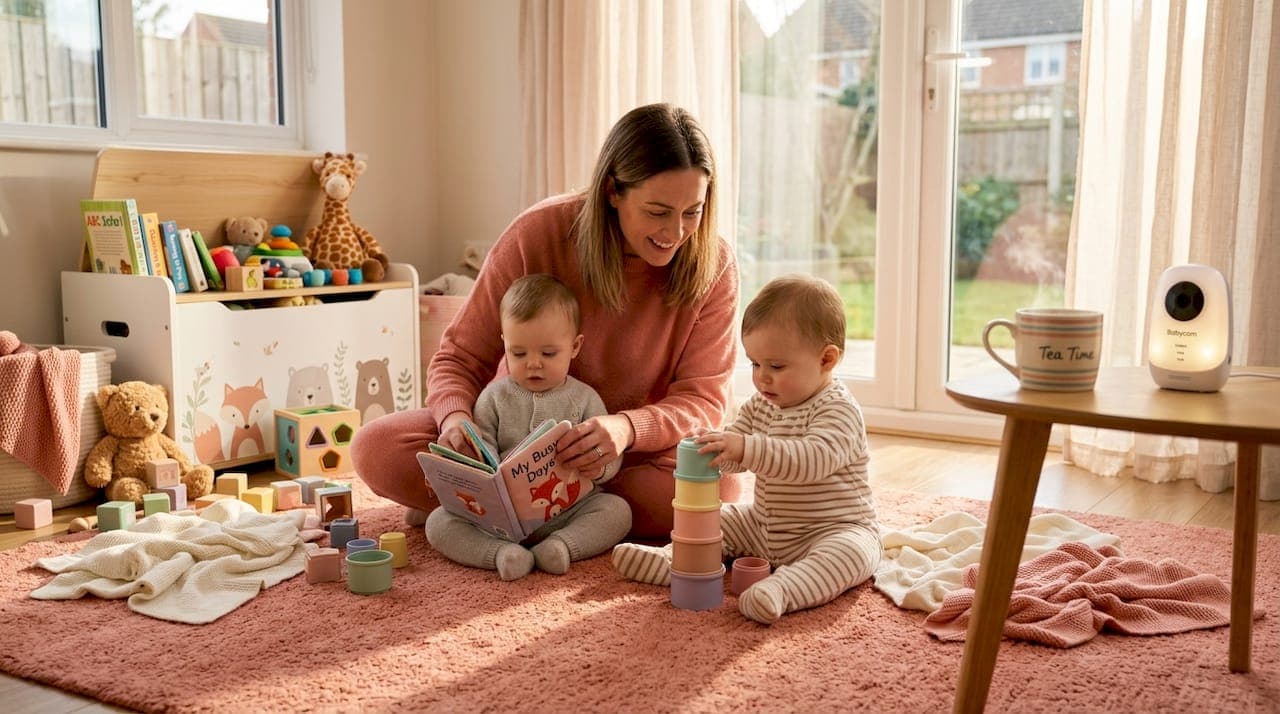
Raising twins is double the joy and double the exhaustion on the best of days. When you’re doing it alone, the challenge of managing two infants or toddlers simultaneously can feel like running two full-time jobs with no backup. The right solo parenting twins schedule tips don’t just help you survive the day. They help you reclaim predictability, reduce meltdowns, and find actual breathing room. This guide pulls from real-world twin parenting strategies and expert-backed approaches to give you a daily workflow that works, whether you’re in the thick of the newborn phase or transitioning twins to toddler routines.
Table of Contents
- Key takeaways
- 1. Build your solo parenting twins schedule around rhythm, not the clock
- 2. Master tandem feeding to reclaim your time
- 3. Synchronize sleep and protect your quiet windows
- 4. Give each twin individual attention every single day
- 5. Set up your environment to work for you
- 6. Handle schedule transitions without losing your rhythm
- 7. Protect your own bandwidth as part of the schedule
- My honest take on building a twin schedule solo
- You don’t have to figure this out alone
- FAQ
Key takeaways
| Point | Details |
|---|---|
| Rhythm beats rigid timing | A predictable sequence of feed, play, nap matters more than clock-perfect scheduling for twins. |
| Sync sleep to save yourself | Aligning both twins’ nap and bedtime creates critical quiet windows you cannot afford to miss. |
| Each twin needs solo time | Carving 10 to 15 minutes of one-on-one daily prevents enmeshment and supports individual identity. |
| Environment does the heavy lifting | Safe, contained play spaces let you supervise both twins without constant hands-on intervention. |
| Transitions need gradual adjustment | Toddler schedule shifts work best when introduced slowly, respecting that each twin may be ready at different times. |
1. Build your solo parenting twins schedule around rhythm, not the clock
The single most liberating shift you can make as a solo parent of twins is to stop chasing the clock and start building a rhythm. A predictable daily sequence of feed, play, nap, repeat is far more effective than pinning everything to specific times. Twins who know what comes next feel calmer, and calmer twins mean fewer meltdowns for you to manage alone.
Think of it this way: the sequence is your anchor, and the timing floats around it. If breakfast runs 20 minutes late because someone had a blowout, the rhythm still holds. Feed, then play, then nap. That predictability becomes your greatest tool for managing twins as a single parent.
Here is a simple framework to start with:
- Wake and feed both twins together
- Active play or outdoor time
- Quiet wind-down activity (books, low-stimulation toys)
- Synchronized nap
- Afternoon feed and play
- Evening routine: bath, feed, bed
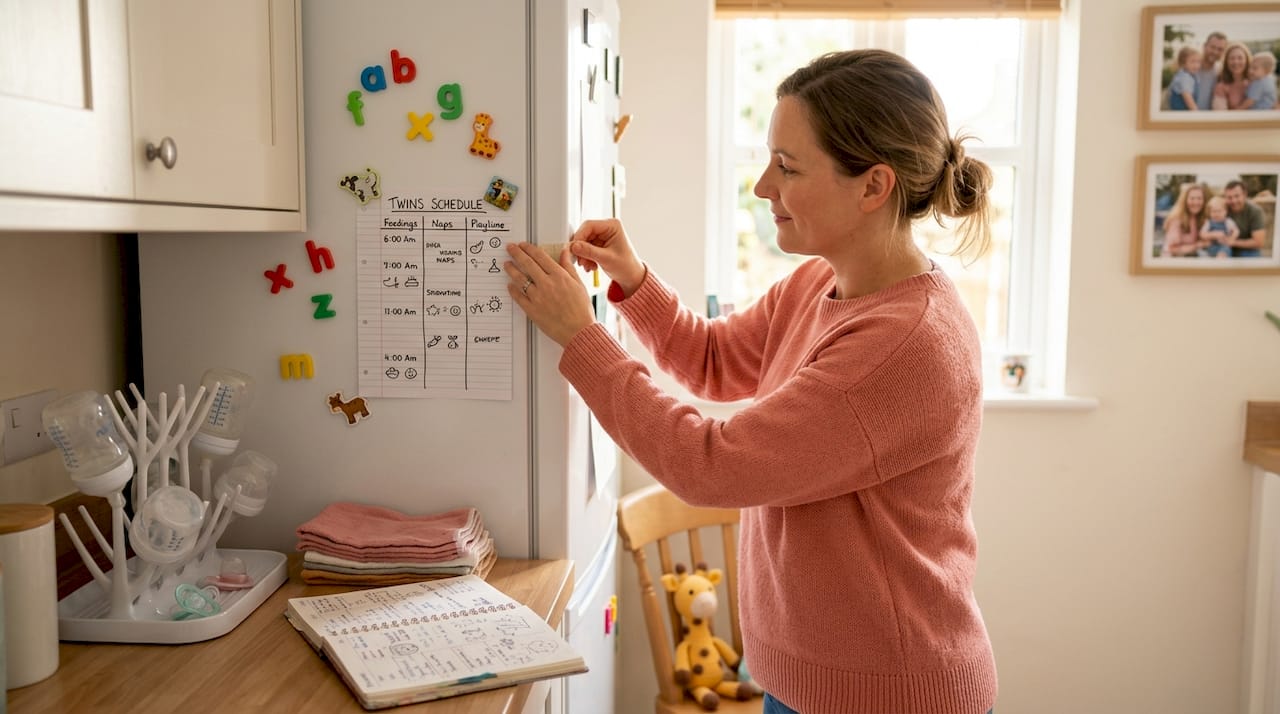
Pro Tip: Post your rhythm sequence somewhere visible, like the fridge. If another caregiver steps in, they can follow the same flow, which reduces transition stress for both twins and keeps your hard-won consistency intact.
2. Master tandem feeding to reclaim your time
Feeding two babies simultaneously is one of the defining challenges of solo twin parenting strategies, and getting it right changes everything. For breastfeeding parents, a twin nursing pillow like the My Brest Friend Twin Deluxe allows you to nurse both infants at the same time without an extra set of hands. That is not a small thing. It can cut your feeding time in half and give you back hours each week.
For bottle feeding, the technique takes a little practice. You can prop both bottles using a rolled towel or nursing pillow while staying close to monitor, then alternate burping. It is not hands-free parenting. It is smart positioning.
- Set up your feeding station before the babies wake up
- Have burp cloths, bottles, and pillows within arm’s reach
- Latch or position both twins before feeding begins
- Burp one twin while the other rests, then switch
- Log feeding times briefly so you can track who ate what
Pro Tip: Feed both twins at the first sign of hunger from either one. Waiting until both are crying is a recipe for chaos. One hungry baby is manageable. Two screaming babies while you’re alone is a different situation entirely.
Keeping feedings synchronized pays off beyond just saving time. When both twins are on the same feeding schedule, their hunger cues align, which means their nap windows align too. That connection between feeding and sleep is the foundation of your entire solo parenting twins daily workflow.
3. Synchronize sleep and protect your quiet windows
Sleep synchronization is not just convenient. It is, genuinely, how solo parents of twins stay functional. When both twins nap at the same time, you get a window to eat, rest, or handle the tasks that cannot happen with two toddlers underfoot. When their naps are staggered, that window disappears entirely.
Sound machines are one of the most underrated tools for making this work. White noise helps drown out the sounds of one twin stirring, which means the other stays asleep longer. Place a sound machine between their sleep spaces, not just in one corner, to create a consistent sound environment for both.
For getting twins to sleep at the same time, put both down together even if one does not seem tired. The routine itself signals sleep. Over time, their bodies adjust. You can find deeper strategies for syncing twins’ sleep on Twinsandcounting, including what to do when one twin consistently resists.
Pro Tip: When one twin wakes early from a nap, resist going in immediately. Give it two to three minutes. Often they resettle on their own. Going in instantly can train both twins to need you for every sleep transition.
4. Give each twin individual attention every single day
One of the quieter risks of raising twins, especially as a solo parent stretched thin, is treating them as a single unit. Parenting experts stress that each twin deserves individual attention to build a healthy, separate identity. Simple practices like carving out 10 to 15 minutes of one-on-one time with each twin daily can have significant developmental benefits.
This does not require elaborate solo outings or a second adult at home. It requires intentionality. Here are realistic ways to build individual time into your day:
- Rotate who gets the first morning cuddle or diaper change
- Read a short book one-on-one during the other twin’s independent play
- Take turns having one twin “help” you with a simple task like loading groceries
- Alternate which twin rides in the front carrier during walks
- Use bath time to have brief one-on-one conversations, even with babies
The goal is not equal time down to the minute. The goal is each child feeling seen as an individual, not just half of a pair. This also reduces enmeshment, which is when twins become so dependent on each other that separating them causes significant distress.
5. Set up your environment to work for you
Time management for solo parents of twins is not just about scheduling. It is about designing your physical space so that the environment does some of the work for you. A well-set-up home reduces the number of interventions you need to make every hour.
Safe, contained play areas using playpens, baby gates, or activity gyms allow both twins to play independently while you keep eyes on both without hovering over every move. Low-stimulation toys like stacking cups, soft blocks, and simple push toys keep twins engaged without requiring your constant participation.
Here is a quick comparison of play setup approaches that work well for solo twin parents:
| Setup type | Best for | Key benefit |
|---|---|---|
| Shared playpen | Infants and young toddlers | Contained space, easy supervision |
| Gated play zone | Mobile toddlers | Room to move, clear boundaries |
| Parallel activity stations | Older toddlers | Reduces competition, supports independent play |
| Outdoor sensory area | All ages | Physical outlet, reduces indoor chaos |
For errands and outings, a twin stroller with storage makes a measurable difference. Plan outings right after a feed and before a nap window opens so you have the most cooperative version of both twins with you.
Pro Tip: Prep everything the night before. Diaper bag packed, outfits laid out, stroller ready at the door. The morning scramble with two toddlers is brutal. Removing that friction saves your sanity and your schedule.
6. Handle schedule transitions without losing your rhythm
Transitioning twins to a toddler schedule is one of the trickier stretches of solo twin parenting. Children may be ready for toddler routines between 12 and 24 months, but readiness varies. And with twins, you will often find that one is ready before the other.
Here are the signs to watch for that suggest a twin is ready to shift schedules:
- Consistently fighting one of two daily naps
- Staying awake longer between sleep periods without showing overtired signs
- Showing interest in table foods and less reliance on bottle or breast
- Waking earlier in the morning despite a consistent bedtime
When one twin signals readiness and the other does not, the practical approach is to adjust gradually for both. Shift the nap slightly later for a week, then later again the following week. This gradual approach maintains the underlying rhythm you have worked hard to build, even as the specific timing changes.
Here is a simple transition timeline to follow:
| Week | Adjustment |
|---|---|
| Week 1 | Push morning nap 15 to 30 minutes later |
| Week 2 | Shorten afternoon nap by 10 to 15 minutes |
| Week 3 | Consolidate to one longer midday nap |
| Week 4 | Adjust bedtime 30 minutes earlier to compensate |
The underlying feed-play-sleep rhythm stays intact. Only the timing and structure shift. That consistency is what keeps both twins regulated through the change.
7. Protect your own bandwidth as part of the schedule
This one does not get said enough in single parenting twins advice: your energy is a resource, and it needs to be scheduled too. A twin schedule that looks perfect on paper collapses when you are running on empty. Parents of twins often face isolation and loneliness, and those feelings compound the physical exhaustion of doing this alone.
Build recovery into your day the same way you build in nap times. That might mean using one nap window entirely for rest rather than productivity. It might mean accepting help when it is offered, even if it feels uncomfortable. Alternating outings with one twin can also break isolation and give each child special time while giving you a lighter logistical load for that hour.
A schedule that accounts for your limits is a schedule that actually lasts.
My honest take on building a twin schedule solo
I’ve talked with a lot of solo parents of twins over the years, and the ones who struggle most are usually chasing perfection in their schedule, not building flexibility into it. I’ve seen beautifully color-coded charts abandoned by day three because one twin had a bad night and the whole thing fell apart.
What I’ve learned is that the rhythm matters far more than the plan. When the schedule breaks, which it will, the rhythm is what carries you through. Feed them, let them play, put them down. That sequence is your compass.
The counterintuitive thing I always come back to: doing less, deliberately, frees you up to be more present. When you stop trying to entertain both twins simultaneously every waking hour and instead set up an environment where they can play alongside each other, you stop burning out by noon. That’s not laziness. That’s good design.
And please, find your people. The loneliness of raising twins alone is real and it deserves acknowledgment. A supportive community, even an online one, is part of your care plan too.
— Jay
You don’t have to figure this out alone
Knowing the principles is one thing. Having a trusted, twin-specific resource to turn to when things go sideways is another. Twinsandcounting exists exactly for parents like you.

Whether you need help getting your twins on the same nap schedule, figuring out how to manage feeding alone, or just want to know you’re not the only one going through this, Twinsandcounting has you covered. Start with the practical guide on handling twins while alone for hands-on strategies that go deeper than general parenting advice. You can also explore the full collection of tips for caring for twins to build a complete toolkit around your specific situation. The support and guidance you need are right here. You are doing a remarkable job.
FAQ
What is the best daily schedule for solo parenting twins?
A rhythm-based sequence of feed, play, nap, repeat works better than a rigid clock-based schedule. Keeping both twins on the same rhythm reduces chaos and creates predictable quiet windows for the parent.
How do I get my twins to nap at the same time?
Put both twins down simultaneously, even if one seems less tired. Use a sound machine between their sleep spaces to prevent one twin’s stirring from waking the other. Consistency with the routine trains their bodies to sync over time.
When should I transition twins to a toddler schedule?
Most twins show readiness between 12 and 24 months, though one twin may be ready before the other. Signs include fighting one nap, staying awake longer without overtired cues, and increased interest in solid foods. Gradual weekly adjustments work best.
How do I give each twin individual attention as a solo parent?
You do not need long solo outings to build individual connection. Rotate who gets the first morning routine, take turns reading one-on-one, or let each twin “help” with a simple task. Even 10 to 15 minutes of focused one-on-one time daily supports healthy individual identity.
What tools help most with managing twins as a single parent?
A twin nursing pillow for tandem feeding, a sound machine for sleep synchronization, and a safe contained play area for supervised independent play are the three most impactful tools. A reliable twin stroller with storage makes solo outings manageable too.