
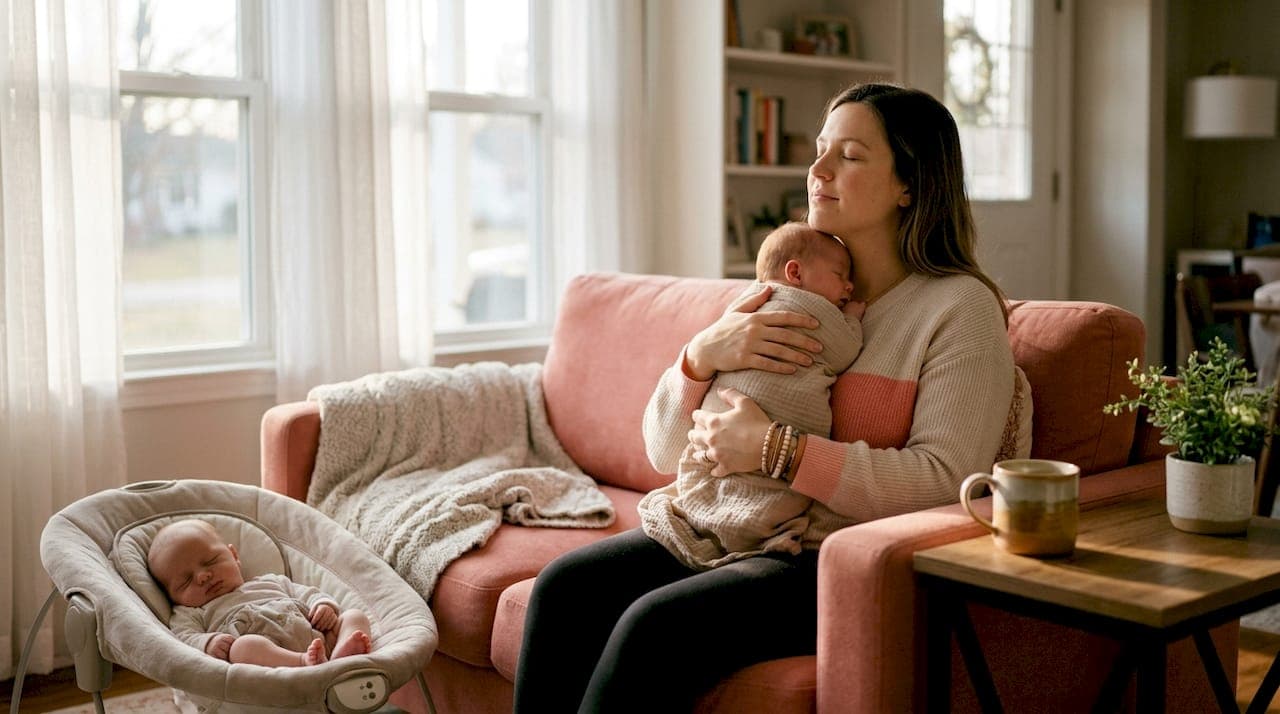
Twin parent self-care practices are evidence-based, micro-regulation routines designed specifically to meet the relentless demands of raising two infants simultaneously. Unlike generic parenting wellness advice, these strategies work within the chaos rather than requiring you to escape it. Raising twins means your nervous system is running at full capacity most of the day, and traditional long breaks are rarely realistic. What actually works is small, frequent, and intentional. This article draws on 2026 research, Kristin Neff’s self-compassion framework, Postpartum Support International, and clinical sleep science to give you a practical toolkit built for your life.
1. What twin parent self-care practices really mean
Self-care for twin parents is not a spa day or an uninterrupted hour of yoga. It is the deliberate practice of nervous system regulation woven into the moments you already have. Researcher Lauren Howe describes this as creating small moments of safety rather than waiting for rest to arrive. That reframe matters because it removes the guilt of “not doing enough” and replaces it with something you can actually do at 3 a.m. with two babies in your arms.
The core insight is this: twin mothers frequently live in chronic sympathetic activation, meaning their fight-or-flight response is essentially stuck in the “on” position. That state drives irritability, poor sleep quality, and emotional exhaustion. Micro-regulation practices interrupt that cycle without requiring a babysitter or a free afternoon.

2. Micro self-care practices for the busiest moments
The most effective micro self-care for twin parents involves three categories: breath-based resets, sensory grounding, and brief emotional processing.
- Breath-based resets: Notice your breath during nursing or bottle feeding. You are already sitting still. Three slow exhales activate the parasympathetic nervous system and reduce cortisol within minutes.
- Sensory grounding: Feel your feet on the floor during a stroller walk. Press your palms against a cold countertop. These physical anchors pull your attention out of anxious thought loops.
- Brief emotional processing: Voice-note a friend during nap time, or write three sentences in a notes app. Brief, repeatable micro-breaks like these are effective nervous system regulation tools, not indulgences.
Each of these takes under two minutes. That is the point. You do not need a block of time. You need a reliable trigger, such as the moment both babies latch, or the first step outside the front door.
Pro Tip: Attach one micro-practice to an existing twin routine. When you wake one twin to feed, use that 90-second window to take three slow breaths before waking the second. You have just created a self-care habit with zero extra time.
3. How synchronized routines and shift responsibilities support self-care
Scheduling is not just logistics. For twin parents, a synchronized routine is a mental health intervention. The Phoenix Health twin mom guide identifies structured routines as one of the most protective factors against burnout and postpartum depression in parents of multiples.
Here is how to build a routine structure that creates genuine recovery time:
- Adopt the “wake one, wake all” feeding strategy. When one twin wakes to feed at night, wake the second immediately. This consolidates night wakings into one event instead of two, protecting longer sleep blocks for both parents.
- Split overnight duties into defined shifts. One parent takes 9 p.m. to 2 a.m., the other takes 2 a.m. to 7 a.m. Protecting one consolidated sleep block, even 2 to 4 hours, measurably improves mood regulation and cognitive function the next day.
- Prepare the night before. Lay out clothes, pre-measure formula, and pack the diaper bag before you sleep. Decision fatigue is real, and every choice you eliminate in the morning is mental energy you keep for yourself.
- Schedule a daily solo parenting handoff. Even 20 minutes where one parent is fully off duty, phone included, counts as genuine recovery. Use solo parenting schedule tips to structure these handoffs so they actually happen.
The goal is not a perfect schedule. The goal is a predictable one. Predictability signals safety to your nervous system, and that signal alone reduces baseline anxiety.
4. What role self-compassion plays in twin parent mental wellness
Self-compassion is the single most evidence-supported psychological tool for twin parent mental health. A study of 500 caregivers found that stable self-compassion predicts fewer depressive symptoms across an eight-year period. That is not a short-term mood boost. It is a durable resilience factor.
Kristin Neff’s framework breaks self-compassion into three components:
- Self-kindness: Treating yourself with the same warmth you would offer a close friend who is struggling.
- Common humanity: Recognizing that exhaustion, frustration, and imperfection are universal to twin parenting, not personal failures.
- Mindfulness: Observing your emotional state without amplifying or suppressing it.
The simplest micro-practice comes from Arizona State University research: place a hand on your chest, take one deep breath, and say silently, “This is hard, and I am doing my best.” That brief practice carries a protective effect against depression that lasts up to a year in caregivers of twins.
“How would I talk to a friend who felt this way right now?” Asking yourself this question during moments of self-criticism is a rapid cognitive debiasing tool. It interrupts perfectionism spirals before they compound into prolonged distress.
Self-compassion also reduces decision fatigue. When you stop demanding perfection from yourself, you spend less mental energy on self-judgment and more on the actual work of parenting.
5. How mindfulness and grounding improve coping for parents of twins
Mindfulness practices for parents of twins work best when they are brief, repeatable, and tied to physical sensation. Abstract meditation is hard to sustain when two babies are crying. Grounded, sensory-based practices are not.
- The 4-5-6 breath: Inhale for 4 counts, hold for 5, exhale for 6. The extended exhale activates the vagus nerve and shifts your body out of sympathetic overdrive. The 4-5-6 breathing technique takes 30 seconds and can be done while standing at the changing table.
- Nature exposure during nap time: Stepping outside for five minutes, even just to stand in the yard, reduces cortisol and improves mood. You do not need a walk. You need daylight and fresh air.
- Sensory focus while pushing the stroller: Name five things you can see, four you can hear, three you can feel. This 54321 grounding technique interrupts anxiety loops and brings your attention into the present moment.
Pro Tip: Set a phone alarm labeled “step outside” for 10 minutes after both twins go down for their afternoon nap. The alarm removes the mental effort of remembering, and the label tells you exactly what to do.
The key principle across all of these is that you are not trying to empty your mind. You are giving your nervous system a brief, concrete signal that you are safe right now. That signal compounds over time.
6. What support systems and professional resources enhance twin parent self-care
Self-care for twin caregivers works best as part of a three-part support structure: partner support, peer community, and professional resources. No single leg of that stool holds the weight alone.
- Partner support: Define specific responsibilities rather than assuming division of labor. Vague agreements collapse under sleep deprivation. Written or spoken agreements about who handles which twin, which shift, and which tasks reduce conflict and resentment.
- Peer community: Parents of twins who connect with other twin families report lower isolation and higher coping confidence. Online groups, local twin clubs, and hospital-based twin parent programs all provide this. Twinsandcounting’s community resources are one starting point for finding your people.
- Professional resources: Postpartum Support International (PSI) offers multilingual real-time support through the National Maternal Mental Health Hotline, which has received over 70,000 calls since 2022 and connects callers with support in 60 languages. That number is 1-833-943-5746. Save it now, before you need it.
The stigma around seeking professional help is real, but the research is clear. Self-care aligns best with professional mental health pathways when used as a treatment extension, not a standalone solution. If you are experiencing persistent low mood, rage, or disconnection from your babies, that is a clinical signal, not a character flaw. Escalate early.
For parents managing the full load alone, twin care tips that address solo scheduling can reduce the structural pressure that makes professional help feel out of reach.
Key takeaways
Sustainable twin parent self-care requires micro-regulation practices, synchronized routines, ongoing self-compassion, and a three-part support system working together, not separately.
| Point | Details |
|---|---|
| Micro-practices over long breaks | Brief breath resets and sensory grounding fit into existing twin routines without extra time. |
| Synchronized schedules protect sleep | “Wake one, wake all” and shift-based night duties create consolidated rest blocks for both parents. |
| Self-compassion is a clinical tool | Stable self-compassion predicts fewer depressive symptoms over years, not just days. |
| Mindfulness needs a physical anchor | The 4-5-6 breath and 54321 grounding work because they engage the body, not just the mind. |
| Professional support is part of self-care | PSI’s hotline and CBT-based sleep interventions extend what daily self-care alone cannot reach. |
What I have learned about self-care as a twin parent
The hardest part of recommending self-care to twin parents is that the word itself carries so much baggage. Most parents hear “self-care” and picture something they cannot have right now. A full night of sleep. An afternoon alone. A quiet cup of coffee. That gap between the ideal and the reality is where guilt lives, and guilt is the enemy of actual recovery.
What I have seen work, consistently, is the shift from self-care as reward to self-care as maintenance. You do not wait until you have earned a break. You build tiny resets into the structure of your day because your nervous system needs them to function, the same way your body needs water. That reframe is not just motivational language. It is physiologically accurate.
I also want to say something about self-compassion that most articles skip. It feels awkward at first. Placing your hand on your chest and saying kind things to yourself feels strange, maybe even embarrassing. Do it anyway. The research from the Arizona Twin Project is clear: the protective effect is real, and it builds over time. You are not performing wellness. You are training a skill.
The parents I have seen thrive are not the ones who have perfect routines. They are the ones who forgive themselves quickly when the routine falls apart, ask for help before they hit a wall, and treat their own mental health with the same urgency they bring to their babies’ health. That is the standard worth holding yourself to.
— Jay
More twin parenting support from Twinsandcounting

Twinsandcounting exists because twin parenting is genuinely different, and generic parenting advice often misses the mark. The site’s library covers everything from synchronized feeding schedules to managing developmental milestones for two at once. If this article gave you a starting framework, the twin care guide on Twinsandcounting goes deeper into the daily logistics that make self-care possible in the first place. For parents managing stretches alone, the solo twin schedule resource offers time-tested structures that reduce overwhelm without requiring a co-parent to be present. You do not have to figure this out from scratch.
FAQ
What are the best self-care practices for twin parents?
The most effective twin parent self-care practices are micro-regulation techniques such as the 4-5-6 breath, sensory grounding, and brief journaling, combined with synchronized feeding routines and shift-based sleep schedules. These fit into existing caregiving moments without requiring extra time.
How does self-compassion help parents of twins?
Self-compassion predicts fewer depressive symptoms over time in caregivers of twins, according to a study of 500 caregivers tracked across eight years. A simple practice of placing one hand on your chest and breathing deeply carries a measurable protective effect against depression.
When should twin parents seek professional mental health support?
Twin parents should contact a professional when persistent low mood, rage, anxiety, or emotional disconnection from their babies lasts more than two weeks. Postpartum Support International’s National Maternal Mental Health Hotline (1-833-943-5746) provides free, multilingual support around the clock.
How can twin parents protect their sleep?
The “wake one, wake all” strategy consolidates night wakings into one event, and splitting overnight duties into defined shifts protects at least one 2 to 4 hour sleep block per parent. Even a single consolidated block measurably improves mood and cognitive function the next day.
Is mindfulness realistic for parents of twins?
Yes, when it is brief and body-based. The 54321 grounding technique and the 4-5-6 breath each take under one minute and can be practiced during diaper changes, stroller walks, or nap transitions. The goal is not emptying your mind. It is giving your nervous system a brief signal of safety.