

Dream feeding twins is defined as gently feeding both babies while they remain in a drowsy, semi-asleep state, typically between 10 p.m. and 11 p.m., to extend their longest sleep stretch of the night. This technique, sometimes called a “top-up feed” by pediatric sleep specialists, works by filling babies’ stomachs before their natural hunger cycle would wake them. For parents of twins, the stakes are doubled. One night waking is exhausting. Two staggered ones can unravel an entire night’s rest. Resources like Smart Sleep Coach and Seed to Sleep both highlight dream feeding as one of the most practical tools twin parents have for reclaiming sleep. Dream feeding doesn’t work for every family, but it is consistently worth trying.
What is dream feeding twins and how does it work?
Dream feeding is a strategy where you feed your infants while they are still in a drowsy or light-sleep state, typically between 10 p.m. and 11 p.m. The goal is not to fully wake your babies. You are simply topping up their calories so their bodies can sleep longer without triggering a hunger response. For twins, this means you are proactively managing two feeding cycles at once rather than reacting to two separate wake-ups at unpredictable times.
The mechanics are straightforward. You go to your sleeping babies before you go to bed, gently rouse them just enough to latch or accept a bottle, feed them, and return them to sleep. Most babies will feed with their eyes closed or barely open. This is normal and exactly what you want. The less stimulation during this feed, the better the outcome.
Timing matters more than most parents realize. Feeding too early, say at 9 p.m., means the top-up wears off before your deepest sleep window. Feeding too late, past midnight, disrupts the natural sleep architecture you are trying to protect. The 10 p.m. to 11 p.m. window is the sweet spot that most sleep specialists recommend, and it aligns with the natural dip in infant alertness during that period.
How to dream feed twins step by step
Getting the sequence right is what separates a smooth dream feed from a chaotic one. Follow these steps to keep both babies calm and drowsy throughout.
-
Prepare everything before you go to bed. Pre-measure formula or have pumped breastmilk ready in bottles at room temperature. Pre-prepared bottles allow you to feed one twin while holding the other’s bottle, cutting the time you spend out of bed significantly.
-
Enter the room quietly with minimal light. A dim nightlight is enough. Bright overhead lights signal “daytime” to infant brains and will work against you.
-
Gently rouse the first twin. Stroke their cheek, lift them slowly, or tickle their feet. You want just enough response to trigger a feeding reflex, not a full wake cycle.
-
Begin feeding the first twin. If you are breastfeeding, latch them while they are still drowsy. If bottle feeding, angle the nipple gently against their lips. Most babies will begin sucking instinctively.
-
Keep the second twin calm. Place them in a bouncer or safe containment space nearby. This keeps the environment calm and prevents the second baby from fully waking while you finish with the first.
-
Switch and feed the second twin. Use the same quiet, low-stimulation approach. Burp both babies gently and return them to their sleep space.
-
Return to bed without lingering. Resist the urge to check monitors repeatedly. Trust the process.
Pro Tip: Set up your feeding station the night before with two pre-filled bottles, a burp cloth, and a dim clip-on light. Doing this at 7 p.m. takes three minutes. Doing it at 10:30 p.m. while half-asleep takes fifteen and wakes everyone up.
Why synchronizing twin dream feeds changes everything

Synchronized feeding is the single most important concept in twin feeding techniques. When one twin wakes hungry at 2 a.m. and the other wakes at 3:30 a.m., you have lost two separate hours of sleep. When both wake together, you lose one. Over weeks, that difference is enormous.
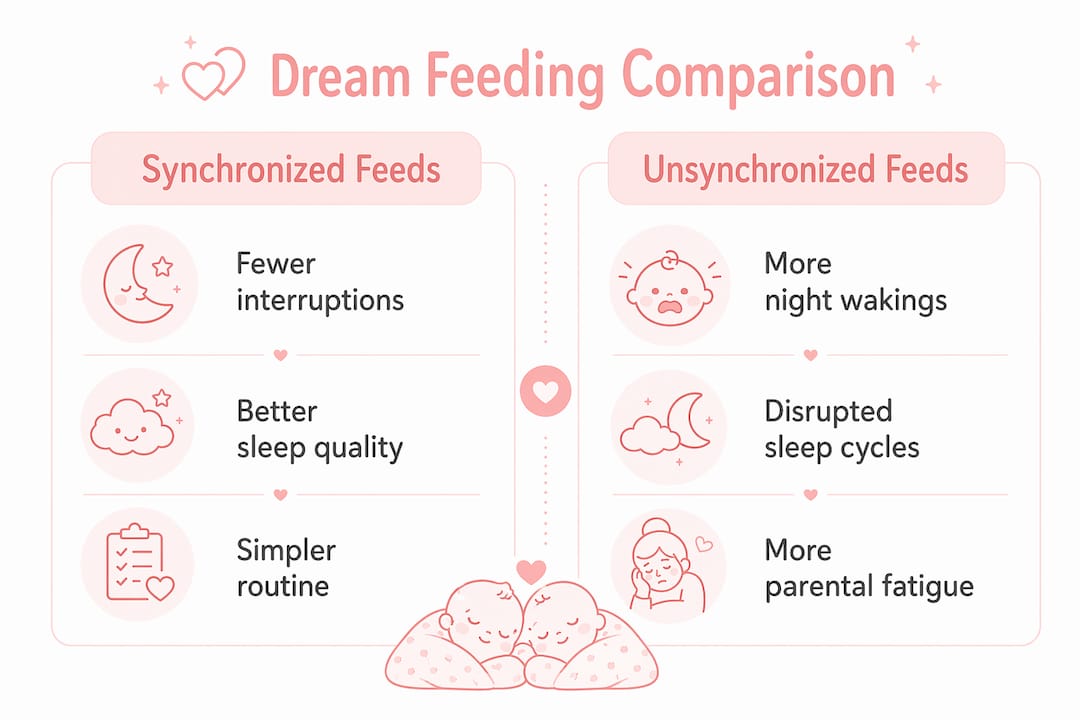
Waking both twins simultaneously for a dream feed is the standard recommendation from sleep coaches who specialize in multiples. If one twin stirs, you wake the other. If neither stirs, you still go in at your target time and rouse both. This feels counterintuitive. Waking a sleeping baby seems like the last thing a tired parent should do. But the math is clear: one coordinated feed beats two reactive ones every time.
Synchronization also protects your own sleep architecture. Deep sleep cycles in adults run roughly 90 minutes. A staggered twin wake-up pulls you out of deep sleep twice, often at the worst possible moments. A single coordinated dream feed, done efficiently, lets you return to bed and complete a full cycle before morning.
Pro Tip: If your twins sleep in separate rooms, consider temporarily moving them to the same space during the dream feeding phase. It cuts your response time in half and makes synchronization far easier to execute.
Here is a direct comparison of what synchronized versus unsynchronized dream feeds look like in practice:
| Factor | Synchronized dream feeds | Unsynchronized feeds |
|---|---|---|
| Number of night interruptions | 1 coordinated feed | 2 or more separate wake-ups |
| Parental sleep quality | One unbroken return window | Fragmented, never fully recovered |
| Time spent feeding per night | 20 to 30 minutes total | 40 to 60 minutes across two sessions |
| Predictability | High, builds a reliable schedule | Low, reactive to individual cues |
| Long-term schedule formation | Faster twin schedule alignment | Slower, harder to establish rhythm |
Setting up your environment for a smooth twin dream feed
The physical setup of your feeding space is not a minor detail. It is what determines whether a dream feed takes 20 minutes or 45. Every extra minute you spend searching for a bottle or adjusting a pillow is a minute that pulls your babies closer to full wakefulness.
Here is what a well-prepared twin dream feeding station includes:
- Two pre-filled bottles or a nursing pillow positioned within arm’s reach of where you sit. Nursing pillows and pre-prepared bottles reduce movement and noise, which are the two biggest triggers for full infant waking.
- A bouncer or safe infant seat for the twin who is waiting. This is not optional when you are feeding solo. It keeps the second baby contained, slightly reclined, and calm without requiring a second set of hands.
- A dim, directional light source. A clip-on book light or a low-lumen nightlight works well. Avoid anything that illuminates the whole room.
- Burp cloths within reach. Reaching across the room to grab one will jostle the baby you just fed back into alertness.
- White noise running continuously. If you use a white noise machine in the nursery, keep it on during the dream feed. It masks the sounds of bottle preparation and movement.
The goal of this setup is to make the entire feed feel like an extension of sleep rather than an interruption. Babies are remarkably sensitive to environmental cues. A quiet, dim, familiar space tells their nervous system that it is still nighttime, which is exactly the message you want to send.
When to adapt dream feeding for individual twin needs
Synchronization is the goal, but it is not always the right call. Prioritizing individual twin needs during developmental leaps or illness is a recognized best practice among pediatric sleep specialists. Rigid schedule adherence during a growth spurt or a fever can backfire badly, leaving you with two overtired, overstimulated babies instead of one manageable situation.
Watch for these signs that a twin may need a modified approach:
- Unusual fussiness at the dream feed time. If one twin is consistently harder to settle after the feed, they may be overstimulated or going through a developmental leap that requires more flexibility.
- Signs of illness. A congested or feverish baby feeds differently and may need a slower, more attentive session. Forcing synchronization in this case delays care for the baby who needs it most.
- Significant weight or growth differences. If one twin is smaller or feeding less efficiently, they may need more frequent feeds than their sibling for a period. Your pediatrician is the right person to guide this decision.
- One twin consistently waking earlier than the other. This can signal a genuine hunger difference rather than a schedule problem. Adjusting the dream feed time slightly earlier may resolve it.
Pro Tip: Track each twin’s feeding amounts and wake times in a simple notes app for one week. Patterns become obvious fast, and you will know whether you are dealing with a schedule issue or an individual need issue. This data is also useful to share with your pediatrician.
The twins dream feeding schedule you build should be a living document, not a fixed rule. Babies change every few weeks, and your approach should change with them.
Key takeaways
Dream feeding twins works best when both babies are fed simultaneously in a low-stimulation environment with everything prepared in advance.
| Point | Details |
|---|---|
| Timing is critical | Feed both twins between 10 p.m. and 11 p.m. to maximize the overnight sleep window. |
| Synchronization reduces interruptions | Waking both twins together for one feed beats two separate reactive wake-ups every night. |
| Environment drives success | A pre-set feeding station with dim light, white noise, and a bouncer makes the process fast and calm. |
| Flexibility protects both babies | Adjust the schedule during illness, growth spurts, or developmental leaps rather than forcing synchronization. |
| Preparation happens before bedtime | Pre-fill bottles and set up your station at 7 p.m., not at 10:30 p.m. when exhaustion sets in. |
What I actually learned from dream feeding twins
I want to be honest with you about something most guides skip. The first week of dream feeding twins felt like it was making things worse, not better. I was going in at 10:30 p.m., fumbling with bottles, accidentally waking both babies to full alertness, and spending 45 minutes in the nursery when I should have been sleeping. I almost gave up.
What changed everything was treating the setup as seriously as the feed itself. Once I had two bottles ready, the bouncer positioned, and the light sorted before I went to bed, the whole process took 20 minutes and both babies went straight back down. That shift from reactive to prepared is the real lesson here.
The other thing I learned is that synchronization is not a moral obligation. There were nights when one twin was clearly unwell or going through a leap, and forcing the schedule made both of us miserable. Giving yourself permission to flex on those nights is not failure. It is good parenting. The twin newborn sleep schedule you build should serve your family, not the other way around.
Dream feeding is not magic. It is a tool. Used consistently and adapted thoughtfully, it genuinely does reduce nighttime disruptions. Give it two weeks before you judge it.
— Jay
More twin sleep and feeding support from Twinsandcounting

Twinsandcounting is built specifically for parents in exactly your situation: two babies, one household, and not enough hours in the night. The site covers everything from night feeding strategies to full sleep schedule frameworks designed around the twin experience. If you are ready to go deeper, the essential tips for twin care guide covers feeding, sleep, and daily routines in one place. You do not have to figure this out alone, and you do not have to rely on advice written for singleton parents. Twinsandcounting exists to give you strategies that actually account for two.
FAQ
What is dream feeding and when should you start with twins?
Dream feeding is a planned feed given to sleeping or drowsy babies, typically between 10 p.m. and midnight, to extend their overnight sleep stretch. Most parents of twins can begin attempting it once their babies have regained their birth weight, usually around two to three weeks of age.
Do you wake both twins for a dream feed even if one is sleeping?
Yes. Waking both twins simultaneously for a coordinated dream feed is the recommended approach because it prevents two separate wake-ups later in the night. One managed interruption is far less disruptive than two unpredictable ones.
Can you dream feed twins if you are breastfeeding?
You can breastfeed during a dream feed, though many breastfeeding parents of twins find that pre-pumped bottles make the process faster and easier to manage solo. A twin nursing pillow helps if you prefer to nurse both babies at once during the feed.
How long does dream feeding typically last for twins?
A well-prepared dream feed for twins takes between 20 and 30 minutes from start to finish. If it consistently takes longer, the most common cause is an unprepared feeding station or too much light and stimulation in the room.
When should you stop dream feeding twins?
Most families phase out dream feeding between four and six months of age, as babies develop the capacity for longer overnight sleep on their own. Your pediatrician can confirm the right timing based on each twin’s weight and developmental progress.