
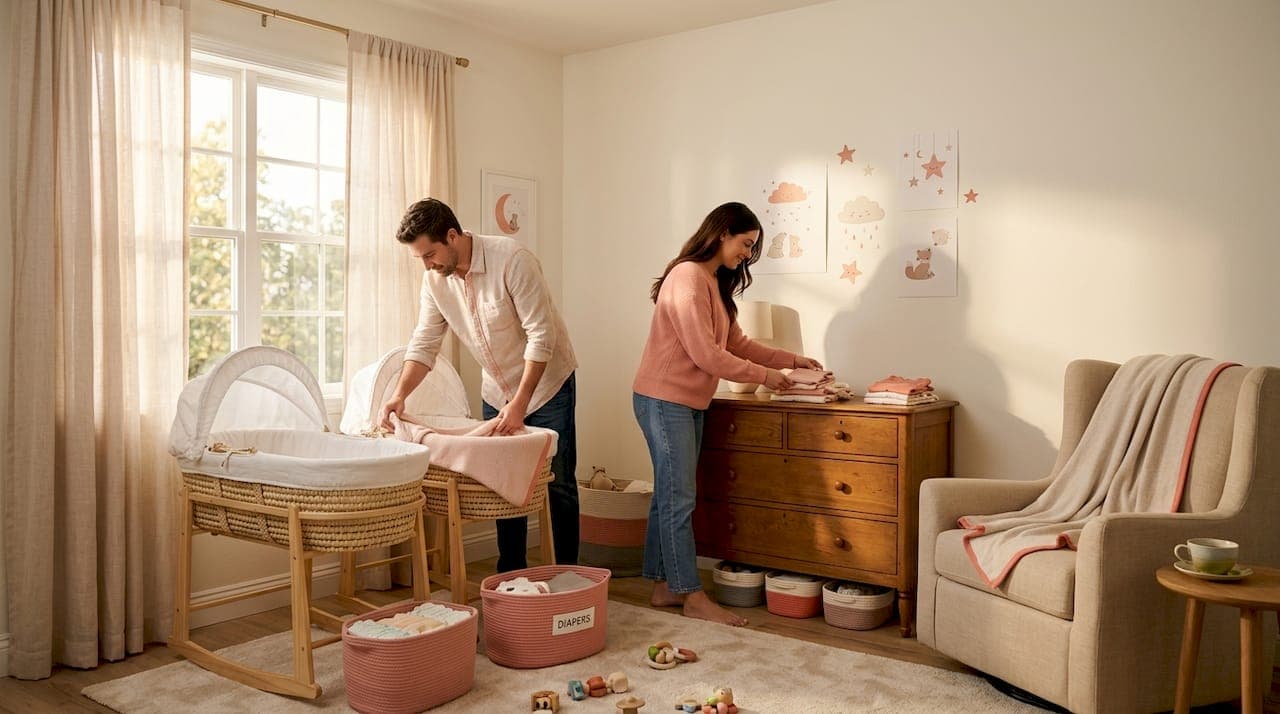
Preparing home for twins arrival means redesigning your living space from the ground up, not simply buying two of everything. Twin-specific home preparation is the process of creating a safe, organized, and operationally efficient environment built around the simultaneous care of two infants. Unlike singleton preparation, this requires multi-dimensional planning covering nursery layout, feeding stations, sleep safety, baby-proofing, and emotional readiness, all compressed into a shorter pregnancy timeline. This guide walks you through every category so you can walk through your front door with two babies and actually feel ready.
How to prepare your home for twins arrival
The single most important shift in mindset is this: twin preparation is not singleton preparation times two. It requires a ground-up approach that accounts for logistics, safety, and emotional readiness within a compressed timeframe. Twin pregnancies typically run shorter than singleton pregnancies, which means your preparation window is tighter. Most experts recommend having your home fully ready by week 30. That urgency is real, and the categories below give you a clear framework to work through without wasting time or money.
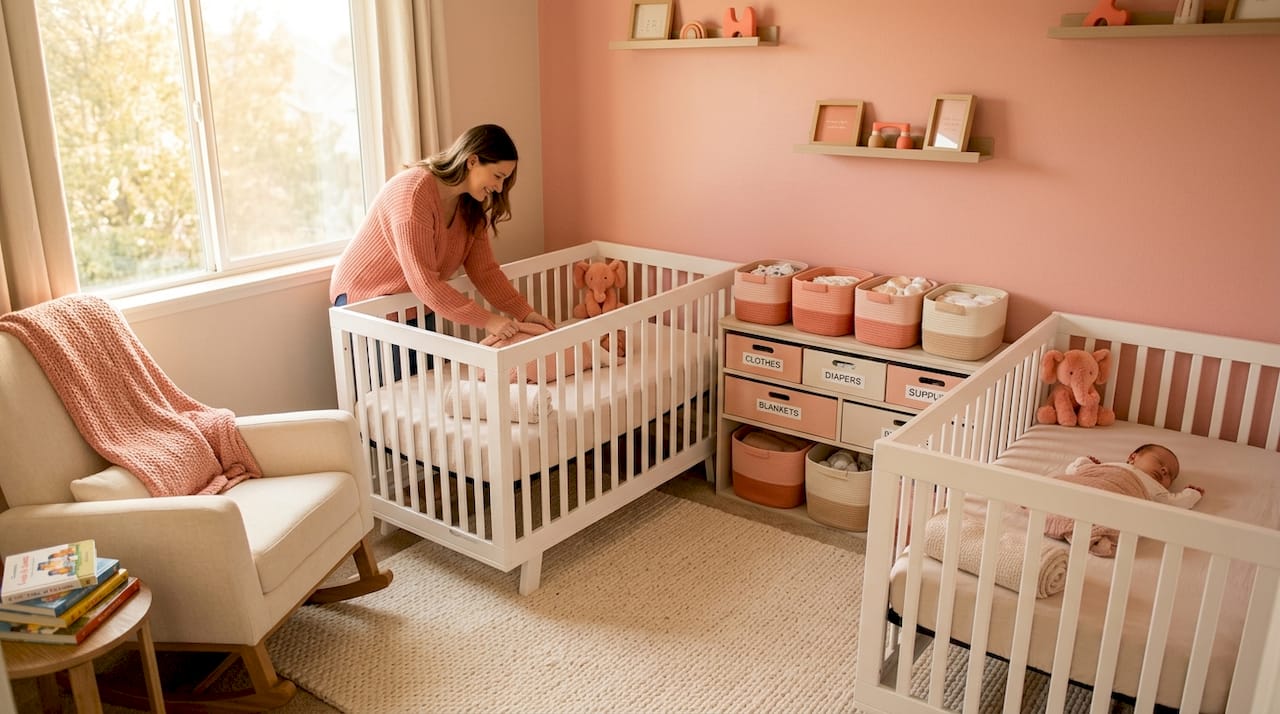
What does a functional twin nursery look like?
A twin nursery works best when it is organized around function first and aesthetics second. The American Academy of Pediatrics recommends room-sharing without bed-sharing for at least the first six months, using firm, flat sleep surfaces that meet Consumer Product Safety Commission (CPSC) standards. Sleep surfaces inclined more than 10 degrees are unsafe for infants. Each baby needs their own sleep space.
Starting with bassinets before cribs
Starting with two bassinets in your bedroom for the first three to six months saves nursery space and makes nighttime feeding far more manageable. Bassinets keep both babies within arm’s reach for monitoring while you recover from delivery. Once the babies outgrow bassinets, transition them to individual cribs in the nursery. Never place two infants in a single crib. The risk of positional suffocation is real, and room-sharing reduces SIDS risk while making feeding and monitoring easier, which matters even more with twins.
Here is a quick reference for nursery sleep setup:
| Sleep stage | Recommended setup | Timeline |
|---|---|---|
| Newborn to 3 months | Two bassinets in parents’ room | Birth to week 12 |
| 3 to 6 months | Bassinets or transition to cribs | Weeks 12 to 24 |
| 6 months and beyond | Two individual cribs in shared nursery | Month 6 onward |
For the nursery layout itself, position the two cribs along the same wall to create a clear walking path between them. Place a dresser and a single changing table within a few steps of both cribs. Add a glider or nursing chair in the corner. Keep the floor clear. You will be moving through this room at 3 a.m. with a baby in each arm, so every obstacle matters.
Pro Tip: Label each baby’s crib, drawer, and storage basket from day one. Color-coding by baby, such as blue for Baby A and green for Baby B, prevents mix-ups with medications, feeding logs, and clothing.
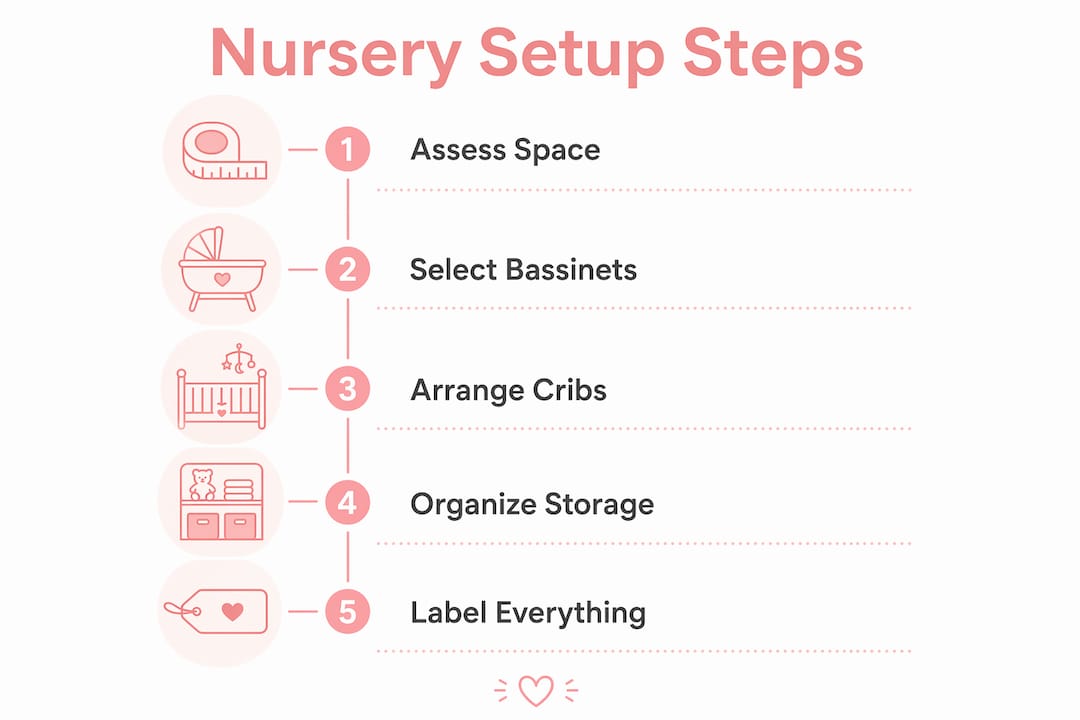
You can also read more about twins sharing a room on Twinsandcounting for a deeper look at the benefits and configurations.
What do you actually need to buy for twins?
The short answer: double what is safety-critical, share what is logistically practical. Here is how that breaks down.
Items you must buy two of:
- Cribs or bassinets (one per baby, no exceptions)
- Infant car seats (legally required, one per baby)
- Baby bottles and nipples (at minimum six per baby)
- Swaddle blankets (at least four to six per baby)
- Going-home outfits (two per baby, plus backups)
Items you can start with one of:
- Changing table (one works if you set up secondary stations elsewhere)
- Twin nursing pillow (one pillow supports both babies simultaneously)
- Baby monitor (one unit with dual camera capability covers both cribs)
- Bottle warmer (one unit is sufficient if you stagger feeds)
- Bouncer seats (start with two but one brand like Fisher-Price Rock ‘n Play alternatives or BabyBjörn Bouncer works for soothing one at a time)
For a detailed breakdown of what to stock, Twinsandcounting has a dedicated list of 13 things to buy when expecting twins.
Pro Tip: Buy diapers in multiple sizes before the babies arrive. Newborn sizes may only last two to three weeks. Having a stash of Size 1 and Size 2 diapers ready prevents a frantic store run in week three.
Using vertical storage and labeling by category keeps twin supplies organized and reduces clutter. Install wall shelves above the changing table. Use over-door organizers on the nursery door for wipes, creams, and extra onesies. Assign one basket per category: diapers, feeding, bath, and outfits. This system saves you from digging through a pile of mixed supplies at midnight.
How do you set up feeding and diapering stations for twins?
Multiple diaper-changing stations placed in key living areas reduce the back-and-forth trips that drain your energy across a 12-hour caregiving day. Set up one station in the nursery and a second in your main living space or bedroom. Each station needs the same supplies: diapers, wipes, a changing pad, diaper cream, and a small trash bin. You should never have to carry a baby across the house to change them.
For feeding, the setup depends on whether you are nursing, bottle-feeding, or combining both.
- Designate one chair or couch spot as your primary feeding zone. This is where you will spend hours each day.
- Place a twin nursing pillow (the EWedel or My Brest Friend Twin Nursing Pillow are both designed for tandem nursing) within reach of that spot.
- Stock a small caddy next to the feeding zone with burp cloths, a water bottle for yourself, snacks, your phone, and a feeding log.
- If bottle-feeding, set up a bottle prep station in the kitchen with a drying rack, bottle brush, formula dispenser, and a bottle warmer. Batch-prep bottles in the evening to cover overnight feeds.
- Keep a secondary set of burp cloths and a spare bottle in the living room so you are never caught without supplies mid-feed.
A multi-zone setup improves operational flow and directly reduces fatigue. Centralizing all baby care in one room sounds organized but creates inefficiency when you are managing two babies across multiple rooms throughout the day.
Pro Tip: Prep six to eight bottles the night before and refrigerate them. Warming a pre-made bottle takes 90 seconds. Making a bottle from scratch at 4 a.m. with two crying babies takes five minutes you do not have.
How do you baby-proof a home for twins?
Baby-proofing for twins follows the same principles as singleton proofing but demands earlier action and more thorough coverage. Twins reach mobility milestones at roughly the same time, which means two crawling babies exploring simultaneously. Start proofing at least four weeks before your due date.
Mayo Clinic recommends these core safety measures:
- Anchor all heavy furniture (bookshelves, dressers, TV stands) to wall studs using anti-tip straps
- Install smoke detectors and carbon monoxide detectors on every floor
- Add window stops or guards to prevent windows from opening more than four inches
- Cover all electrical outlets with sliding plate covers (not plug-in caps, which are choking hazards)
- Place bassinets and play yards on the floor only, never on elevated surfaces
- Never rely on window screens as a fall barrier
“Avoid relying on window screens and never leave babies unattended on elevated surfaces.” — Mayo Clinic
If you have pets, create a designated safe zone for the babies using a play yard or baby gate. Introduce pets to baby scents before the babies arrive home. Keep pet food and water bowls in a gated area to prevent curious babies from accessing them once they start crawling.
Pro Tip: Get down on your hands and knees and crawl through every room. You will spot hazards at infant eye level that you completely miss standing up, including loose cords, low cabinet handles, and furniture corners.
How do you manage home organization and your own well-being?
The operational side of twin parenting extends well beyond the nursery. Laundry doubles immediately. Meals become a logistical challenge. Mental fatigue sets in faster than most parents anticipate.
Here is how to set your home up for sustainability, not just survival:
- Laundry: Set up a dedicated laundry basket in the nursery and one in your bedroom. Wash baby clothes separately using a fragrance-free detergent like Dreft or All Free Clear. Do one load every day rather than letting it pile up.
- Meal prep: Batch cooking and freezer meals are critical to managing the feeding demands placed on twin parents. Spend two weekends before your due date cooking and freezing soups, casseroles, and grain bowls. Accept every meal train offer from family and friends.
- Decluttering: Remove non-essential furniture from high-traffic areas before the babies arrive. You need clear floor space for play mats, bouncer seats, and your own movement.
- Mental health: Create one small corner of your home that is yours. A chair, a lamp, and a book. Even five minutes of quiet in a calm space matters when you are running on broken sleep.
- Tracking tools: Use a shared app like Huckleberry or Baby Tracker to log feeds, diapers, and sleep for both babies. Keeping two schedules in your head is not sustainable.
For time management strategies that go beyond the nursery, the time management guide from Ashley Yeo offers a free printable that many twin parents find genuinely useful in the early weeks.
Pro Tip: Assign specific tasks to your support network before the babies arrive. “Can you do laundry on Tuesdays?” is more useful than “Let me know if you need anything.” Specific asks get specific help.
Key takeaways
Preparing your home for twins requires a multi-zone, safety-first approach built around operational efficiency, not just doubled supplies.
| Point | Details |
|---|---|
| Start with bassinets | Place two bassinets in your room for the first three to six months before transitioning to cribs. |
| Double safety-critical items | Each baby needs their own car seat, crib, and sleep surface without exception. |
| Build multiple care stations | Set up diaper and feeding stations in both the nursery and main living area to reduce fatigue. |
| Baby-proof early and thoroughly | Anchor furniture, cover outlets, and install detectors at least four weeks before your due date. |
| Protect your mental health | Batch cook, accept help, and use a tracking app to keep two schedules manageable. |
What I wish someone had told me before our twins came home
Here is my honest perspective after working with hundreds of twin families through Twinsandcounting: most parents over-prepare the nursery and under-prepare the rest of the house. They spend weeks perfecting the crib arrangement and forget to set up a single diaper station in the living room. Then they spend the first month walking back and forth to the nursery twenty times a day while exhausted.
The other thing I see constantly is parents who buy everything on a checklist without thinking about flow. A beautiful nursery with all supplies in one central location sounds logical. In practice, it means every diaper change, every feed, and every soothing session happens in one room. That is not how twin care actually works. You will be on the couch, in the kitchen, in your bedroom. Your supplies need to be where you are.
Flexible planning beats perfect planning every time. Set up your systems, then expect to change them in week two when you realize the bottle station is in the wrong spot or the laundry basket fills up in 36 hours. The parents who thrive in the early months are not the ones with the most organized nursery. They are the ones who built systems they could actually adjust.
One more thing: involve your partner in every setup decision. Not because it is fair, but because they need to be able to operate every station independently. If only one of you knows where the extra wipes are stored, you have created a single point of failure in a two-person operation.
— Jay
Ready to go deeper on twin care?

Setting up your home is the foundation, but the real work begins once your twins are home. Twinsandcounting has built a library of resources specifically for parents of multiples, covering everything from sleep schedules to solo parenting days. Start with the tips for caring for twins guide, which covers the practical day-to-day strategies that make the first months manageable. If you want a broader overview of twin baby care from feeding to developmental milestones, the ultimate twin care guide is the most thorough resource on the site. You have done the hard work of preparing your home. Now let Twinsandcounting help you prepare yourself.
FAQ
When should you start preparing your home for twins?
Start preparing your home by week 28 to 30 of your pregnancy. Twin pregnancies run shorter than singleton pregnancies, so your preparation window is compressed and earlier readiness is critical.
Do twins need separate cribs from birth?
Yes. Each twin requires their own firm, flat sleep surface from birth. The American Academy of Pediatrics and CPSC both advise against crib-sharing due to the risk of positional suffocation.
How many diaper stations do you need for twins?
Set up at least two diaper stations: one in the nursery and one in your main living area or bedroom. Multiple stations reduce unnecessary trips and significantly cut down on daily fatigue.
What baby items do you only need one of for twins?
You can start with one changing table, one twin nursing pillow, one bottle warmer, and one baby monitor with dual camera capability. These items serve both babies without needing to be doubled.
How do you baby-proof for twins specifically?
Baby-proof earlier than you think necessary, at least four weeks before your due date. Anchor all heavy furniture, install outlet covers, add window stops, and place all infant sleep surfaces on the floor. Twins reach mobility milestones simultaneously, so two crawling babies will find every hazard at the same time.