
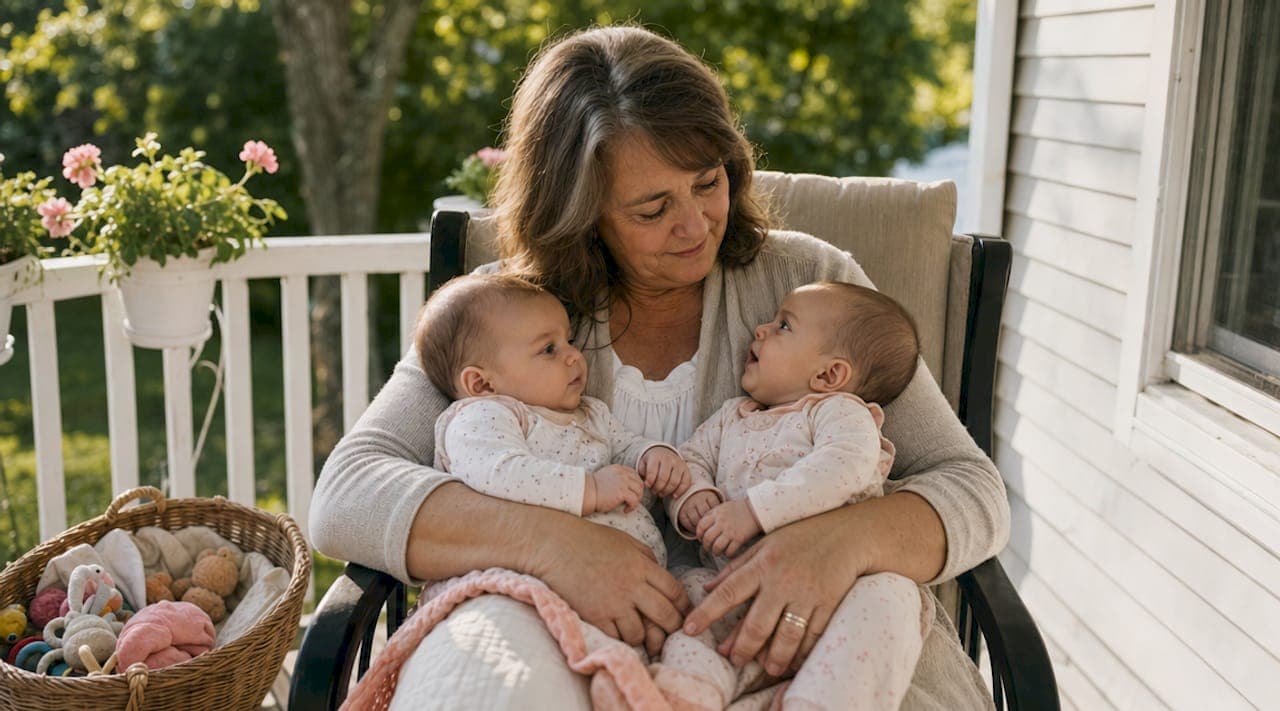
Grandparents raising twins serve as primary caregivers, emotional anchors, and logistical partners in one of the most demanding caregiving roles a family can share. The role of grandparents raising twins goes well beyond babysitting. It means managing two children of identical age simultaneously, each with their own temperament, needs, and developmental pace. Over 2.7 million children in the U.S. are raised full-time by grandparents or older relatives, and twins add a distinct layer of complexity to that responsibility. Whether you are stepping in full-time or providing consistent, significant care, this guide gives you the practical tools, honest perspective, and emotional grounding to do it well.
What are the benefits of grandparents raising twins?
Grandparent involvement in twin care produces measurable benefits for everyone in the family. Grandparents who feel purposeful in a caregiving role report improved health outcomes, including better mental well-being and a stronger sense of identity. That sense of purpose is not incidental. It is one of the most consistent findings in research on grandfamilies, and it matters more when the caregiving role is substantial.
For twins specifically, grandparent involvement offers something that paid childcare rarely can: unconditional, consistent emotional presence. Twins already share a powerful bond with each other, and grandparents who engage actively add a second layer of security. That stability is especially valuable during the early years when attachment patterns are forming.
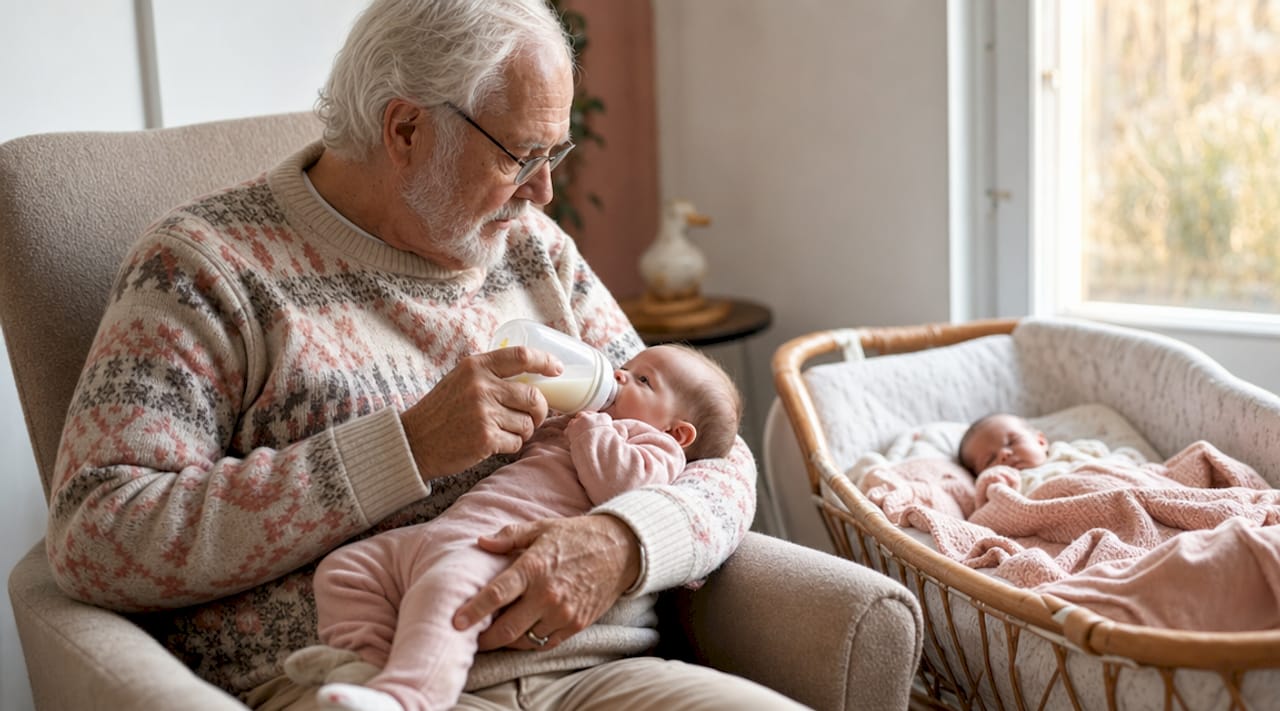
One of the most underappreciated advantages is what caregiving experts call the two-to-two bonding model. When two grandparents are present, each can bond with one twin, giving each child focused, individual attention. This reduces the competition and exclusion that twins can sometimes feel when adults struggle to divide attention equally. It also prevents the exhaustion that comes from one person trying to manage both children at once.
The multigenerational benefits extend further than day-to-day care. Support shared across generations, including emotional, practical, and financial, builds lifetime well-being for grandchildren. Twins raised with active grandparent involvement tend to have stronger family identity and a broader sense of belonging.
Here is what grandparents consistently report gaining from raising twins:
- A renewed daily purpose and structured routine that supports their own health
- Deeper, more individual relationships with each twin compared to occasional visits
- Strengthened family bonds across three generations
- The unique joy of watching two children grow in parallel, each at their own pace
- A sense of contribution that reinforces their value within the family
“Grandparents who step into caregiving roles are not just helping parents. They are shaping who those children become.” This is especially true with twins, where consistent, attentive care from a trusted adult makes a measurable difference in emotional development.
What unique challenges do grandparents face when raising twins?
Raising twins involves a fundamental shift in survival logistics that creates an immense cognitive load, and grandparents often underestimate this before they are fully in it. With a single child, you can respond to one need at a time. With twins, two children may be hungry, upset, or awake simultaneously, and there is no pause button. That reality is physically and mentally demanding at any age.
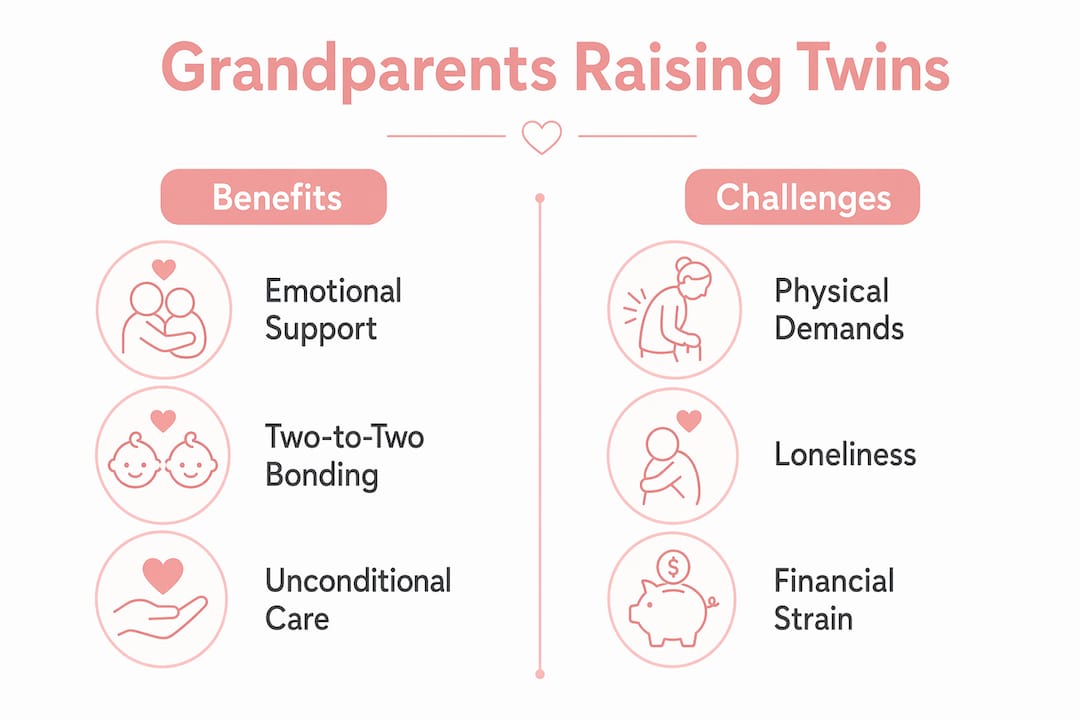
The physical demands are real and worth naming directly. Lifting two infants, managing double strollers, and keeping up with two mobile toddlers requires stamina that grandparents may not have anticipated. Fatigue accumulates faster than it does with a single child, and recovery time between caregiving sessions matters more.
Nearly 1 in 4 grandparent caregivers report feeling alone, and that number has been rising since 2020. Loneliness is a critical health risk, not a minor inconvenience. Grandparents raising twins can become so absorbed in caregiving that their own social lives shrink without them noticing.
Financial strain is another reality. Nearly half of grandparent caregivers report at least one negative financial impact, such as debt or stopping savings. With twins, costs double across gear, food, clothing, and activities. That pressure compounds quickly.
Family dynamics add another layer. When grandparents feel unenthused or make uncomfortable comments about the twins, it worsens parental mental health and strains the caregiving relationship. Grandparents who project their own discomfort with chaos onto the children or parents create friction that undermines the entire support system.
The most common challenges grandparents of twins face include:
- Managing two simultaneous schedules for feeding, napping, and play
- Physical exhaustion from lifting, chasing, and engaging two active children
- Social isolation as caregiving absorbs time previously spent with friends
- Financial pressure from doubled costs of twin-specific gear and care
- Navigating unclear boundaries with parents about decision-making authority
Pro Tip: Schedule one hour each week that is yours alone, whether it is a walk, a phone call with a friend, or a quiet cup of coffee. Protecting that time is not selfish. It is what keeps you functional for the long haul.
How can grandparents set healthy boundaries and communicate with parents?
Open conversations and written family agreements about caregiving roles are the single most effective way to prevent resentment from building. Unclear expectations are the root cause of most grandparent-parent friction. When everyone assumes the other person understands the arrangement, misunderstandings are inevitable.
The distinction between “helping” and “serving” is one that every grandparent raising twins needs to draw clearly. Helping means you contribute on agreed terms. Serving means you are available on demand, without limits, and without recognition. Grandparents who fall into automatic availability risk burnout and being treated like unpaid staff. That dynamic damages relationships over time, even when everyone involved has good intentions.
Here is a practical framework for setting boundaries that protect both you and the family relationship:
- Write it down. Create a simple family agreement that covers which days you care for the twins, what decisions you can make independently, and what requires parental input. A written document removes ambiguity.
- Name your limits early. Tell parents upfront what you can manage physically and emotionally. If overnight stays are too much, say so before it becomes an expectation.
- Schedule help sessions, not open availability. Experts recommend planning specific caregiving sessions rather than being the default option whenever parents need a break. This preserves your energy and your autonomy.
- Address uncomfortable comments directly. If family members make dismissive or critical remarks about the twins or your caregiving, name it calmly and immediately. Letting it slide creates a pattern.
- Revisit the agreement every few months. Twins change fast. What worked at six months will not work at eighteen months. Build in regular check-ins to adjust the arrangement as the children grow.
Pro Tip: Use “I” statements when discussing boundaries with parents. “I need Tuesdays to myself” lands very differently than “You ask too much of me.” The first opens a conversation; the second closes one.
What practical caregiving tips and resources can help grandparents of twins?
The most practical thing you can do before twins arrive at your home is set it up for them specifically. A dedicated “twin stash” at your home, including essentials like cots, high chairs, and child-proofing items, removes the logistical burden of parents packing and unpacking gear for every visit. It also signals to the twins that your home is their space too, which matters for their sense of security.
Dividing caregiving tasks between two grandparents, when possible, prevents both conflict and exhaustion. Assign clear roles: one handles feeding while the other manages bath time. Rotate regularly so neither person carries the heavier load consistently. The two-to-two model works for tasks as well as bonding.
| Caregiving area | Solo grandparent approach | Two-grandparent approach |
|---|---|---|
| Feeding | Alternate between twins with each meal | Each grandparent feeds one twin simultaneously |
| Nap time | Settle one twin, then the other quickly | Each grandparent settles one twin at the same time |
| Playtime | Rotate focused attention every 10 minutes | Each grandparent engages one twin independently |
| Outings | Use a double stroller with a structured route | Split twins between two adults for easier management |
Local support groups for parents of multiples reduce isolation by offering peer-to-peer advice on twin-specific challenges like sleep regressions and feeding. These groups exist in most mid-sized cities and many rural areas. They are not just for parents. Grandparents who attend report feeling less alone and more confident in their caregiving decisions.
Online communities on platforms like Gransnet and Facebook groups for grandparents of multiples offer the same peer support without requiring travel. For managing twin routines specifically, the solo parenting twins schedule strategies on Twinsandcounting translate directly to grandparent caregiving sessions.
Your own health is not optional. Grandparents who neglect their medical appointments, sleep, and social needs while caregiving for twins create a fragile system. When you go down, the whole arrangement collapses. Treat your health as part of the caregiving plan, not separate from it.
Key takeaways
Grandparents raising twins succeed when they combine clear boundaries, practical preparation, and consistent community support rather than relying on goodwill and availability alone.
| Point | Details |
|---|---|
| Define your role in writing | A family agreement prevents resentment and clarifies decision-making authority from the start. |
| Use the two-to-two bonding model | Each grandparent bonding with one twin gives both children focused attention and reduces competition. |
| Build a twin stash at home | Keeping essentials at your home removes logistical friction and helps twins feel settled in your space. |
| Protect your social life | Nearly 1 in 4 grandparent caregivers report loneliness; scheduled social time is a health requirement. |
| Join a multiples support group | Local and online groups for parents and grandparents of twins reduce isolation and build practical knowledge. |
What I’ve learned about grandparents and twins after years in this space
I want to be honest with you about something most articles on this topic skip. The hardest part of raising twins as a grandparent is not the physical exhaustion, though that is real. It is the identity shift. You spent decades building a life outside of full-time caregiving, and suddenly you are back in the thick of it, with double the demand and none of the cultural support that new parents receive.
What I have seen consistently is that grandparents who thrive in this role are the ones who refuse to disappear into it. They set limits. They ask for help. They keep one foot in their own life, even when caregiving takes up most of their week. That is not selfishness. That is sustainability.
The twin-grandparent bond is genuinely special. There is something about watching two children who share a face and a birthday develop into completely different people that grandparents describe as one of the most profound experiences of their lives. You get a front-row seat to that. But you only keep that seat if you protect your own well-being enough to stay in the game long-term.
If you are feeling overwhelmed, that is not a sign you are doing it wrong. It is a sign you are doing something genuinely hard. Seek support, name your limits, and let yourself enjoy the moments that make this role worth every difficult day.
— Jay
How Twinsandcounting supports grandparents raising twins
Twinsandcounting was built for exactly the kind of caregiving you are doing. Whether you are managing twin feeding schedules, figuring out how to prepare your home for twins, or looking for strategies to handle two toddlers on your own, the site offers practical, twin-specific guidance you will not find on general parenting sites.

The resources at Twinsandcounting go beyond generic parenting advice. You will find detailed guides on routines, sleep, feeding, and developmental milestones, all written with the twin dynamic in mind. Start with the twin care tips guide, which covers the most common caregiving challenges grandparents face and gives you concrete strategies to handle them with confidence.
FAQ
What is the role of grandparents raising twins?
The role of grandparents raising twins includes active caregiving, emotional support, and managing the unique dynamics of two same-age siblings simultaneously. Grandparents may serve as primary caregivers or significant supplemental caregivers, depending on the family arrangement.
How can grandparents avoid burnout when caring for twins?
Grandparents avoid burnout by setting written boundaries, scheduling specific caregiving sessions rather than being on-call, and protecting time for their own social and health needs. Nearly 1 in 4 grandparent caregivers report feeling isolated, making regular social connection a health priority.
What support is available for grandparents of twins?
Local multiples support groups, online communities like Gransnet, and twin-specific resources on sites like Twinsandcounting offer peer advice, practical strategies, and emotional support tailored to the twin caregiving experience.
How should grandparents divide caregiving tasks with twins?
The two-to-two model works best when two grandparents are available: each bonds with and cares for one twin during feeding, nap time, and play. Solo grandparents should rotate focused attention between twins in short intervals to keep both children engaged.
How do grandparents set up their home for twin visits?
A permanent twin stash at the grandparent’s home, including a cot, high chair, and child-proofed spaces, removes the burden of parents packing gear for every visit and helps twins feel comfortable and secure in that environment.