

A twin bedtime routine is a structured, consistent sequence of calming activities designed to prepare both babies for sleep simultaneously, addressing the unique logistical and developmental challenges that come with parenting two infants at once. Unlike a single-baby routine, the twin version requires more coordination, more preparation, and a clear understanding of each child’s individual sleep cues. The good news is that once you nail the twin bedtime routine basics, the whole family sleeps better. This guide pulls from pediatric sleep research and real twin parenting experience to give you a framework that actually works in 2026.
What are the twin bedtime routine basics?
Twin bedtime routine basics refer to the core set of steps, timing principles, and environmental setups that help two babies wind down and fall asleep with minimal disruption to each other or to you. The standard industry term for this practice is synchronized infant sleep conditioning, though most pediatric sleep specialists simply call it a structured twin bedtime routine. Both terms describe the same goal: building predictable sleep cues that two babies can follow together.
The foundation rests on three pillars. First, consistency in the sequence of steps. Second, a sleep environment that supports both babies. Third, realistic expectations about timing and individual differences. Routine consistency matters more than the specific steps you choose. Babies learn to associate the exact sequence with sleep, so maintaining the same order every night is what triggers the biological wind-down response.
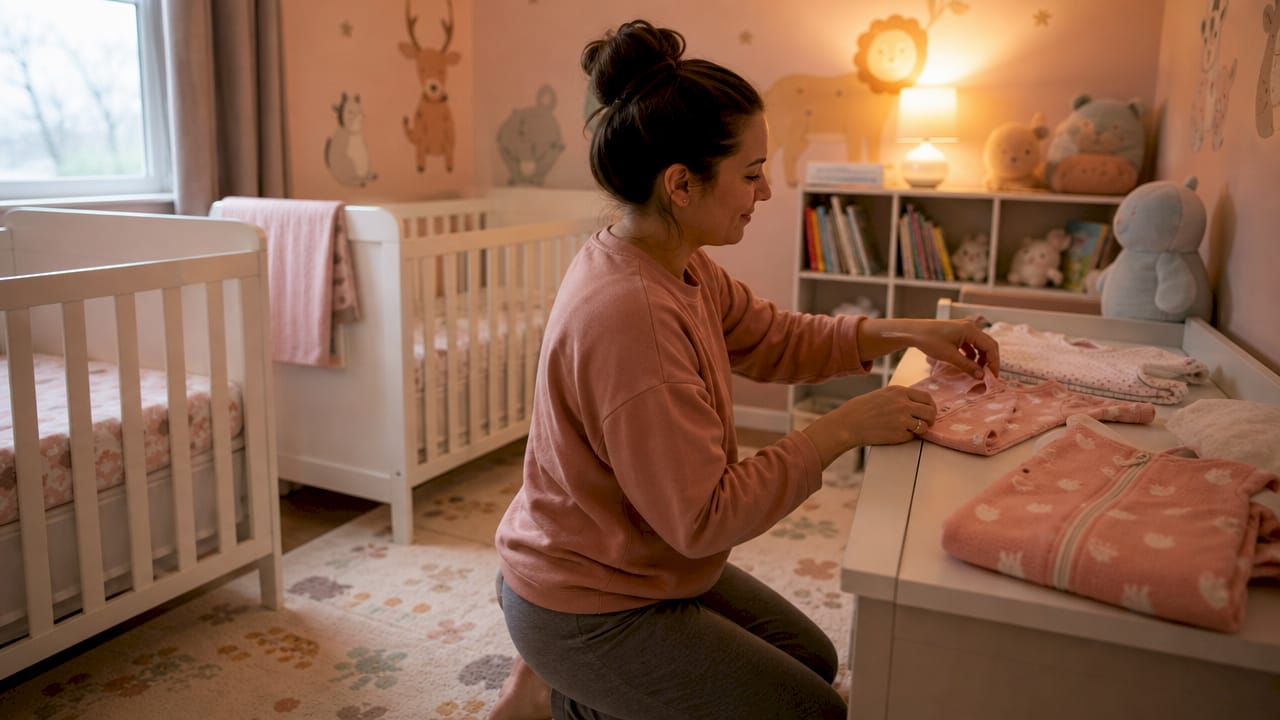
The unique challenge with twins is that you are doubling every task while managing two separate temperaments, hunger cycles, and sleep pressures at the same time. Treating both babies as a single unit without any individual adjustment is the most common mistake twin parents make, and it leads to frustration fast.
How long should a twin bedtime routine take?
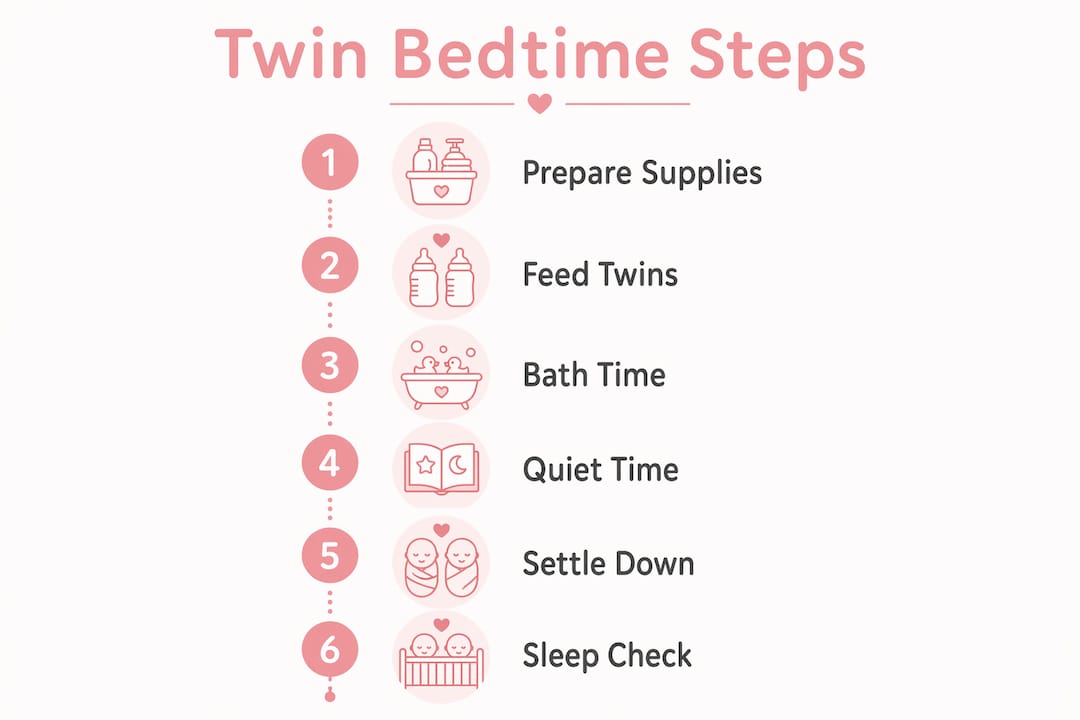
A twin bedtime routine realistically takes 30 to 45 minutes, compared to 20 to 30 minutes for a single baby. That extra time exists because every step is doubled. Two baths, two sets of pajamas, two feedings, two babies to settle. Knowing this upfront prevents the panic that sets in when 8 p.m. becomes 8:45 p.m. and you feel like you are failing.
Here is what eats up the most time and how to protect it:
- Bathing both babies. Bathing twins as part of an efficient nightly routine is faster when you use a twin bath seat or a large infant tub that fits both babies at once. If that is not possible, bathe one while the other sits safely in a bouncer nearby.
- Feeding. Feeding twins together when possible synchronizes their hunger cues and sleep schedules. Tandem nursing or using two bottles simultaneously cuts feeding time nearly in half.
- Settling. One baby may need five minutes of rocking while the other goes down with zero fuss. Build buffer time for this instead of assuming both will settle at the same speed.
- Environment prep. Set up the sleep space before you start the routine. White noise machine on, room darkened, sleep sacks ready. Every minute you spend searching for a pacifier at 8:30 p.m. is a minute of overtiredness building.
Pro Tip: Lay out both babies’ pajamas, sleep sacks, and any feeding supplies before the routine begins. A two-minute prep session at 6:45 p.m. saves ten minutes of scrambling later.
What steps should a twin bedtime routine include?
A well-sequenced routine gives babies the cognitive cues they need to recognize that sleep is coming. The order matters as much as the steps themselves. Here is a proven sequence for twins aged four months and older:
- Dim the lights and lower stimulation. Start winding down 45 minutes before target sleep time. Turn off screens, lower voices, and reduce play intensity. This signals the shift from active time to sleep time.
- Bath time. A warm bath is one of the most effective sleep cues because it lowers core body temperature as babies dry off, which promotes drowsiness. The twin bath night routine works best when kept calm and brief, around five to ten minutes.
- Pajamas and sleep sacks. Dress both babies in the same order every night. This repetition becomes a physical cue that sleep is next.
- Feeding. Feed both babies after the bath, not before, to avoid one falling asleep mid-feed and missing the rest of the routine sequence.
- Story or song. One short board book or a consistent lullaby gives babies a reliable auditory cue. You do not need two separate stories. One shared story works perfectly.
- White noise on, lights off. White noise creates an ambient sound buffer that minimizes disturbances between siblings. If one twin stirs at 2 a.m., white noise reduces the chance of waking the other.
- Put down sleepy but awake. This is the single most important step in twin sleep training basics. Babies who learn to fall asleep independently in their own sleep space are far less likely to need you to resettle them during the night.
Pro Tip: Use a staging area, such as a bouncer or a safe floor mat, to hold one twin while you settle the other. This solo parenting strategy prevents simultaneous fussiness from escalating and keeps the routine moving forward.
Safe sleep guidelines recommend that twins sleep in separate cribs in the same room during the early months. Co-bedding increases SIDS risk and is not recommended by the American Academy of Pediatrics.
What if twins have different sleep needs or temperaments?
Twins are two separate people, and their sleep readiness will not always align perfectly. One may be rubbing eyes at 7 p.m. while the other is still wide awake and chatty. Twin sleep training requires managing two unique temperaments and sleep pressures simultaneously. Treating them as identical in their sleep needs causes more problems than it solves.
Here is how to handle the differences without abandoning synchronization:
- Allow a 15 to 30-minute window. A flexible timing window of 15 to 30 minutes between when each twin falls asleep is completely normal and healthy. Aiming for strict simultaneous sleep is often unrealistic and increases parental stress significantly.
- Stagger the settling steps. If Twin A is clearly more tired, put Twin A down first. Start Twin B’s final settling steps five to ten minutes later. The overall routine still runs on the same schedule.
- Alternate who goes down first. Alternating which twin is laid down first each night prevents sibling rivalry and promotes fairness as they grow older and become more aware of the order of events.
- Adjust wake windows individually. If one twin consistently fights sleep at the same time every night, their wake window may need a small adjustment. A 15-minute shift in one baby’s nap end time can resolve a bedtime battle without disrupting the other twin.
- Solo parenting nights. When you are managing bedtime alone, use the staging area strategy consistently. Check out Twinsandcounting’s guide on solo parenting schedules for a full breakdown of how to sequence the routine when you are the only adult in the room.
What are the most common twin bedtime pitfalls?
Even well-established routines hit rough patches. Knowing the most common pitfalls in advance means you can address them before they derail weeks of progress.
Overtiredness is the number one enemy of twin bedtime success. Overtired babies produce more cortisol, which makes falling asleep harder, not easier. If your twins are consistently fighting sleep, move bedtime 15 to 20 minutes earlier rather than later.
The wake-one, wake-both dilemma is real in the early months. Pediatric sleep specialists recommend waking the second twin to feed when the first wakes at night during the newborn phase. This keeps their schedules aligned and prevents one twin from being perpetually ahead of the other on the hunger cycle. You can find more on managing night feeding twins without losing your mind on Twinsandcounting.
Rigidity without flexibility burns parents out fast. Strict routines improve sleep outcomes for twins, but flexibility and parental patience are equally important to avoid burnout. A routine that runs 10 minutes late because one baby needed extra comfort is not a failure. It is parenting.
“Consistency in routine matters more than perfection. Babies learn the sequence, not the clock.” This principle, supported by pediatric sleep research, is the most liberating thing you can internalize as a twin parent.
Pro Tip: If one twin wakes and disturbs the other, resist the urge to rush in immediately. Give both babies 5 to 10 minutes to self-settle before intervening. Many twins learn to sleep through each other’s brief night wakings within a few weeks of consistent routine practice.
Pediatric experts recommend starting formal sleep training at 4 to 6 months of age, once circadian rhythms are established. Always get your healthcare provider’s approval before beginning, especially if your twins were born prematurely, since adjusted age applies.
Key takeaways
A consistent, well-sequenced twin bedtime routine is the single most effective tool for synchronizing twin sleep, reducing nighttime disruptions, and protecting parental well-being.
| Point | Details |
|---|---|
| Routine duration | Plan for 30 to 45 minutes for twins, not the 20 to 30 minutes a single baby needs. |
| Sequence consistency | Follow the same order every night so babies build reliable cognitive sleep cues. |
| Flexible timing window | Allow 15 to 30 minutes between each twin falling asleep instead of forcing simultaneous sleep. |
| White noise and environment | Set up the sleep space before the routine starts to reduce mid-routine disruptions. |
| Individual adjustments | Stagger settling steps and alternate bedtime order to respect each twin’s unique temperament. |
What I have learned from watching twin parents get this right
I have seen a lot of twin parents come to Twinsandcounting exhausted and convinced that their situation is uniquely broken. It almost never is. What I notice consistently is that the families who crack the twin bedtime routine are not the ones who follow a script perfectly. They are the ones who commit to the sequence while staying genuinely curious about what each baby is telling them.
The conventional advice to “just sync everything” sounds logical, but it sets up an impossible standard. Two babies born on the same day are not the same baby. One of them will always be a slightly earlier sleeper, a slightly hungrier feeder, a slightly more sensitive settler. The parents who accept this early stop fighting the 15-minute gap between their twins falling asleep and start using it strategically.
What actually works is treating the routine as a container, not a checklist. The bath, the feed, the song, the white noise: these are the walls of the container. Inside those walls, you have room to respond to each baby as an individual. That flexibility is not weakness in your routine. It is the whole point.
Small wins matter more than you think. The first night both babies stay in their cribs until 5 a.m. is worth celebrating. The first week the routine runs without a meltdown is a genuine milestone. Patience with the process, and with yourself, is what separates twin parents who thrive from those who stay stuck.
— Jay
More twin sleep support at Twinsandcounting
Managing twin bedtime is one of the hardest parts of the first year, and you do not have to figure it out alone.

Twinsandcounting has built a library of practical, twin-specific resources covering everything from sleep schedules to feeding strategies to solo parenting nights. Start with the 9 essential twin care tips for a broad foundation, then explore the twin newborn sleep schedule guide to map out the first months with confidence. Every guide on the site is written specifically for twin parents, not adapted from singleton advice.
FAQ
What is a twin bedtime routine?
A twin bedtime routine is a consistent, sequential series of calming activities, such as bath, feeding, and a lullaby, designed to prepare both babies for sleep at the same time. The goal is to build predictable sleep cues that both twins recognize and respond to nightly.
When should you start sleep training twins?
Pediatric experts recommend starting sleep training at 4 to 6 months of age, using adjusted age for premature twins. Always consult your pediatrician before beginning any formal sleep training program.
Do twins need to fall asleep at exactly the same time?
No. A 15 to 30-minute window between each twin falling asleep is normal and healthy. Forcing strict simultaneous sleep is often unrealistic and increases parental stress without improving outcomes.
How do you handle twin bedtime as a solo parent?
Use a bouncer or safe floor mat as a staging area to hold one twin while you settle the other. This prevents both babies from escalating at the same time and keeps the routine moving efficiently. Twinsandcounting’s guide on solo twin schedules covers this in full detail.
What if one twin keeps waking the other at night?
White noise is the most effective buffer for this problem. Place a white noise machine between the two cribs to mask the sounds of one twin stirring. Most twins learn to sleep through each other’s brief night wakings within a few weeks of consistent routine practice.