

Weaning twins from breastfeeding is defined as the gradual transition away from nursing, treating each twin as a separate child with a unique developmental timeline. The American Academy of Pediatrics recommends gradual weaning aligned with infant readiness, not a fixed calendar date. For twins, this matters even more because two babies rarely hit the same milestones at the same time. The twin weaning process requires flexibility, patience, and a plan that accounts for both your babies and your own wellbeing. This guide gives you the practical steps to make that transition work for your whole family.
When should you start weaning twins from breastfeeding?
The right time to begin the twin weaning process is typically around 6 months, when solid foods enter the picture. Solids do not replace breast milk at this stage. They run alongside it, slowly shifting the nutritional balance over weeks and months. Weaning is often a gradual 6-month process that unfolds alongside solid food introduction, and by 11 months many infants nurse 4–5 times daily while eating regular meals. That timeline gives you a realistic picture of how long this takes.
Readiness looks different for each twin. Watch for these signs that a baby may be ready to reduce nursing sessions:
- Showing strong interest in solid foods and reaching for what you eat
- Nursing for shorter periods and pulling off the breast more easily
- Going longer stretches between feeds without distress
- Drinking well from a cup or bottle
- Sleeping longer stretches at night without waking to feed
One twin may show all of these signs at 8 months while the other still nurses eagerly at 10 months. That gap is normal. Respect it rather than forcing both babies onto the same schedule.
The practical first step is to drop one nursing session at a time, starting with the feed your twins seem least attached to. Midday feeds are usually the easiest to replace with a snack and a cup of water or formula. Wait at least a week before dropping another session. Rushing this process causes engorgement for you and distress for your babies.
Pro Tip: Keep a simple log for each twin. Note which feeds they take eagerly versus which ones they seem indifferent to. That data tells you exactly where to start cutting back.

How do you handle night weaning twins?
Night weaning twins is the hardest part of the whole process, and most parents agree it deserves its own plan. Babies typically need 0–1 night feeds by 6–9 months and rarely any by 12 months. That means most night waking after 6 months is habit, not hunger. Knowing that makes it easier to hold firm when the 3:00 AM cries start.
The four steps below give you a structured path through night weaning:
- Involve a non-nursing partner. Partner involvement at night breaks the feed-to-sleep association because the baby learns that comfort does not always come from the breast. Your partner goes in first, offers a pat or a shush, and gives nursing a chance to stop being the only solution.
- Feed both twins if one wakes. Feeding both twins simultaneously at night protects your sleep cycles and prevents a cycle where you are up every 45 minutes alternating between babies. Wake the sleeping twin, feed them both, and get everyone back down together.
- Shorten sessions before dropping them. Cut each night feed by 2–3 minutes every few nights rather than stopping cold. Your body adjusts gradually, and your babies adjust too.
- Build a consistent bedtime routine. Consistent bedtime routines reduce night waking and make the whole night weaning process faster. Bath, dim lights, a short nursing session, then sleep. The predictability signals to both twins that the night is for sleeping, not feeding.
“The goal of night weaning is not to ignore your babies. It is to teach them that sleep is safe and comfort comes in more than one form. A partner who steps in at night is not a replacement for you. They are your greatest tool.”
Pro Tip: Start night weaning on a weekend when your partner can take the first shift. You will both be tired, but having backup makes the first few nights manageable.
You can find more detail on managing overnight feeds in the Twinsandcounting guide to night feeding twins.
How do you individualize a weaning plan for two babies?
Each twin has a distinct breastfeeding style and developmental pace. Forcing a uniform weaning schedule creates stress for the twin who is not ready and frustration for the parent managing both. The most effective twin weaning schedule treats each baby as its own project.
Here is a practical framework for individualizing your approach:
- Track each twin separately. Use two columns in a notebook or a simple app. Note feeds, solids intake, and mood. Patterns emerge within a week.
- Use mixed feeding where it helps. Alternating nursing and bottle feeding expressed milk lets you reduce direct nursing for one twin while maintaining supply for the other. This is especially useful when one twin weans faster.
- Monitor growth, not just feeding frequency. Wet diapers, weight gain, and energy levels tell you whether a twin is getting enough nutrition during the transition.
- Check for feeding adequacy regularly. The Twinsandcounting resource on signs of adequate feeding gives you specific markers to watch during the weaning period.
Feeding progress should be measured over weeks, not days. A twin who eats almost nothing on Tuesday may eat well on Thursday. Weekly intake matters more than any single meal.
| Twin weaning approach | Best used when |
|---|---|
| Drop one session per week | Both twins are progressing at a similar pace |
| Mixed nursing and bottle feeding | One twin weans faster than the other |
| Nurse one, bottle-feed the other | Supply management is needed for one baby |
| Solids-first strategy | A twin shows strong interest in food but still nurses frequently |
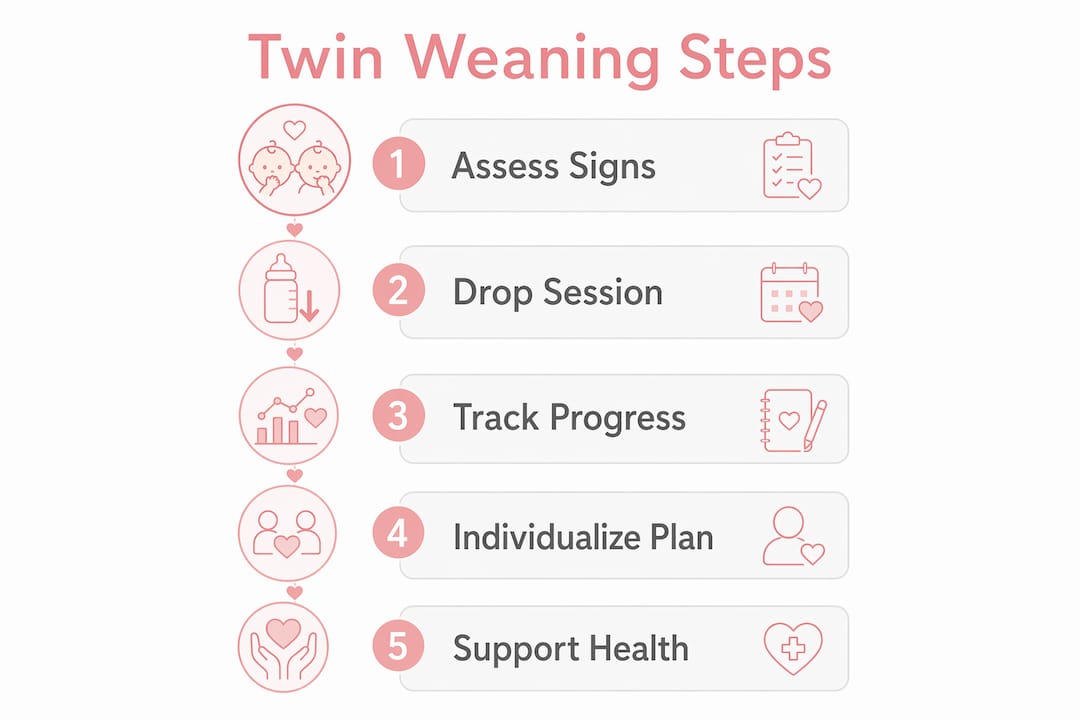
Keeping each twin on a consistent daily schedule also reduces the chaos of managing two different feeding timelines. Structure gives both babies predictability, which lowers fussiness during the transition.
How do you protect your health while weaning twins?
Maternal health during twin weaning gets overlooked far too often. Weaning two babies at once puts your body under real physical pressure. The good news is that a few targeted strategies reduce the most common risks significantly.
Managing milk supply and duct health:
- Take sunflower lecithin. Sunflower lecithin reduces clogged ducts and mastitis risk by keeping milk ducts lubricated during the reduction process. The recommended dose for twins during weaning is 4 capsules daily, compared to 2 for singleton mothers.
- Reduce sessions gradually. Cutting nursing duration by a few minutes every few days prevents engorgement and mastitis. Never drop two sessions in the same week.
- Try peppermint essential oil. Peppermint oil mixed with a carrier oil, applied to the chest while avoiding the nipples, may help reduce milk production naturally. Apply before dressing and at bedtime.
- Avoid tight bras. Compression restricts milk flow and raises mastitis risk. Wear a supportive but not restrictive bra during the weaning period.
Emotional health matters just as much as physical health. Weaning triggers hormonal shifts that can cause mood dips, anxiety, or unexpected grief, even when you are ready to stop nursing. These feelings are normal and temporary. Talk to your doctor if they persist beyond a few weeks. Twinsandcounting has a dedicated guide to twin parent self-care that addresses the mental health side of major feeding transitions.
Key Takeaways
Weaning twins from breastfeeding works best when you treat each baby as an individual, reduce sessions gradually, and protect your own health throughout the process.
| Point | Details |
|---|---|
| Start around 6 months | Introduce solids alongside nursing and drop one session at a time over weeks. |
| Night wean with a partner | A non-nursing partner breaks feed-to-sleep habits and protects your sleep. |
| Individualize each twin’s plan | Track each baby separately and use mixed feeding when their paces differ. |
| Use sunflower lecithin | Four capsules daily for twin mothers reduces mastitis risk during weaning. |
| Measure progress weekly | Weekly intake and growth matter more than what a twin eats on any single day. |
What I have learned from watching parents wean twins
Weaning twins is genuinely harder than weaning a singleton, and pretending otherwise does not help anyone. The part that surprises most parents is not the logistics. It is the guilt. You feel guilty for weaning the twin who still wants to nurse. You feel guilty for not weaning the one who seems ready. You feel guilty for being exhausted by all of it.
Here is what I have seen work, again and again: parents who let go of the idea that both twins must wean on the same day. The moment you give yourself permission to have Twin A fully weaned while Twin B still nurses once at bedtime, the whole process gets lighter. That is not failure. That is good parenting.
The other thing I would push back on is the idea that weaning is something you do to your babies. The most successful transitions I have seen happen when parents follow the babies’ lead and use the gradual session-shortening method consistently. It takes longer. It works better. And it leaves everyone, including the mother, in a much better place emotionally.
Partner involvement is not optional if you have a partner available. The nights are where most parents stall out. Having someone else go in first, even for just the first two weeks of night weaning, changes the outcome dramatically. Do not try to do this alone if you do not have to.
Celebrate the milestones. The first full night without a feed. The first week where both twins took solids well. These are real wins. Mark them.
— Jay
Support for every stage of your twin parenting experience
Weaning is just one chapter in the twin parenting story. The feeding challenges, the scheduling puzzles, and the self-care gaps do not stop once breastfeeding ends.

Twinsandcounting is built specifically for parents managing two babies at once. The site covers everything from caring for twin babies in the early months to sleep training, nap schedules, and solo parenting strategies. Every resource is written with the twin dynamic in mind, not adapted from singleton advice. If you are in the middle of weaning and need guidance on what comes next, the Twinsandcounting library has practical, experience-backed answers waiting for you.
FAQ
When is the right age to start weaning twins?
Most pediatric guidelines, including those from the American Academy of Pediatrics, support beginning the weaning process around 6 months when solid foods are introduced. Each twin’s individual readiness matters more than a specific date.
Can twins wean at different times?
Yes. Each twin has a unique developmental pace, and one may wean weeks or months before the other. Forcing both to wean simultaneously often creates stress for the baby who is not ready.
How do you night wean twins without losing all your sleep?
Feed both twins if one wakes at night to prevent alternating wake cycles. Involve a non-nursing partner to handle the first response, and shorten each night feed by a few minutes every few nights rather than stopping abruptly.
What helps prevent mastitis when weaning twins?
Sunflower lecithin at 4 capsules daily reduces clogged duct risk for twin mothers. Reducing nursing sessions gradually, by a few minutes every few days, also prevents the engorgement that leads to mastitis.
How do you know if a twin is getting enough nutrition during weaning?
Track wet diapers, weight gain, and energy levels rather than counting individual meals. Weekly intake is a more reliable indicator than daily eating patterns, since infants eat inconsistently from meal to meal.