

One twin feeding slower than the other is caused by differences in blood flow, oral motor coordination, or developmental stamina. These are physiological realities, not signs that you are doing something wrong. Twin-to-Twin Transfusion Syndrome (TTTS), prematurity, and structural issues like tongue tie are the most common medical drivers of unequal feeding speeds. Understanding why one twin struggles to feed gives you a clear path forward. Twinsandcounting breaks down the causes and practical strategies so you can support both babies with confidence.
Why one twin feeds slower: medical and developmental causes
The most significant medical cause of twin feeding differences is Twin-to-Twin Transfusion Syndrome.
TTTS causes unequal blood flow through placental vessel imbalances, leaving the donor twin with less blood volume, slower growth, and reduced feeding stamina. That donor twin often feeds more slowly and tires faster at the breast or bottle because their body has fewer resources to draw on.
Prematurity compounds the problem. Suck-swallow-breathe coordination lags in late-preterm twins born between 36 and 38 weeks, making feeding less efficient and more exhausting. Feeding is a learned skill requiring coordination, not just a reflex. A twin born even two weeks early may need several more weeks to develop the muscle memory and stamina that full-term babies build in the womb. Parents managing premature twin feeding challenges often see this gap close gradually over the first two months.
Structural issues also play a major role. Tongue tie, lip tie, and weak oral suction all reduce the amount of milk a baby can transfer per suck. These conditions are not always visible to the naked eye, and many go undiagnosed in the newborn period. A pediatric dentist or lactation consultant trained in oral motor assessment can identify them quickly.
Key physical causes of slower feeding in one twin include:
- TTTS: Donor twin receives less blood, grows smaller, and feeds with less energy.
- Late prematurity: Immature suck-swallow-breathe reflex reduces feeding efficiency.
- Tongue tie or lip tie: Restricts tongue movement and limits milk transfer.
- Weak oral suction: Low muscle tone in the mouth slows the feeding process.
- Low birth weight: Smaller twins fatigue faster and consume less per session.
Pro Tip: Ask your pediatrician to check both twins for tongue tie at the first well-baby visit, even if neither twin appears to struggle. Mild cases are easy to miss and can cause weeks of feeding frustration.
When should you be concerned about slow feeding?
Not every variation in twin feeding speed signals a problem. Knowing the difference between normal variation and a genuine concern saves you from unnecessary worry and helps you act quickly when something does need attention.
Feeding sessions consistently over 30 minutes may indicate poor milk transfer and warrant evaluation for oral motor coordination or structural issues. Efficient feeding ideally wraps up within 30 minutes. A session that regularly stretches past that point suggests the baby is working harder than the calories they are taking in justify.
Watch for these specific warning signs:
- Fatigue during feeds: The baby falls asleep before finishing and wakes hungry within an hour.
- Choking or sputtering: Signals a coordination problem with the suck-swallow-breathe sequence.
- Poor weight gain: The slower feeder consistently gains less than their twin over several weeks.
- Clicking sounds while nursing: Often indicates a latch or tongue tie issue reducing suction.
- Excessive fussiness after feeds: The baby seems unsatisfied, suggesting inadequate milk transfer.
Inefficient milk transfer creates a cycle where babies burn more calories eating than they consume. That cycle is exhausting for both the baby and you. A lactation consultant can perform a weighted feed to measure exactly how much milk the slower twin transfers in a session. That single data point removes all the guesswork. You can also check signs your twins are feeding adequately to track progress between appointments.
If you notice any of the five signs above consistently over three or more days, contact your pediatrician or a certified lactation consultant. Early intervention for oral motor issues produces faster results than waiting to see if the baby “grows out of it.”
Practical strategies to support a slower feeding twin
Managing two babies with different feeding speeds is one of the hardest logistics challenges in early twin parenting. Most twin parents spend 90–120 minutes per feeding cycle because each baby averages 45–60 minutes individually. That time burden is real, and it shapes every strategy below.
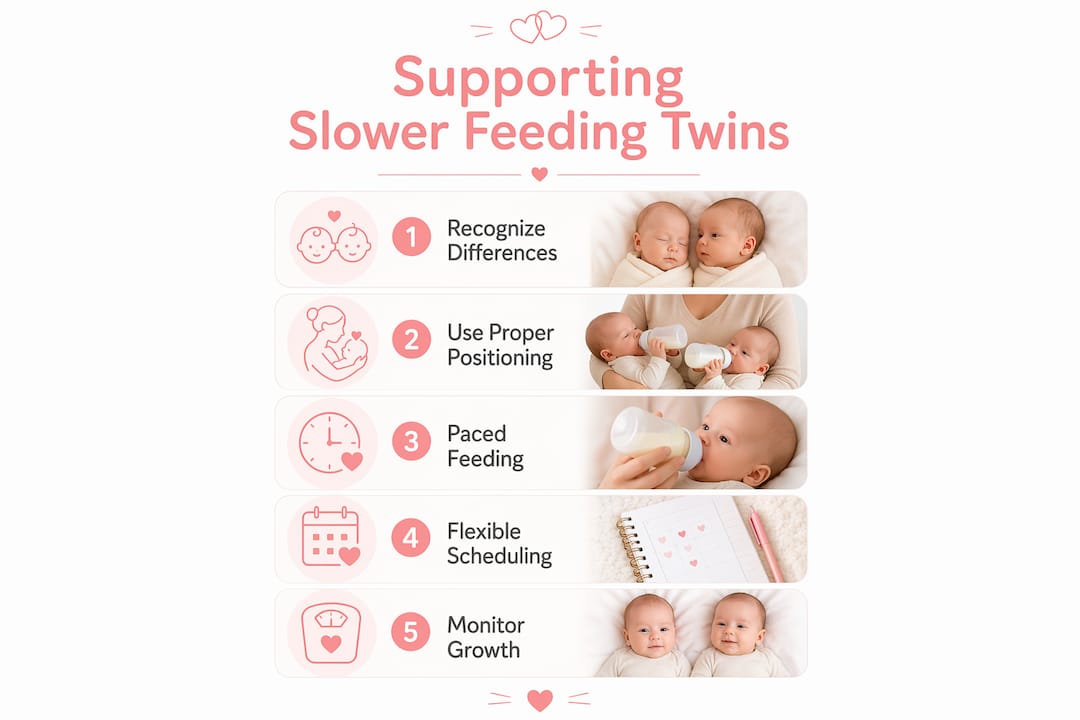
Tandem vs. individual paced feeding
Tandem feeding saves time but is not always feasible when one twin feeds slowly or has medical needs. Forcing tandem feeding too early increases stress and raises the risk of feeding refusal in the slower twin. A better approach in the first few weeks is to feed the slower twin first, individually, then latch or bottle-feed the faster twin. Once the slower twin builds stamina, you can attempt tandem sessions. For guidance on adapting your routine, dream feeding techniques can help you reduce nighttime feeding gaps without disrupting the slower twin’s pace.
Scheduling with built-in flexibility
Synchronizing feeds is the goal, but the slower twin needs a buffer. Feed both twins at the same start time, but allow the slower twin 10–15 extra minutes before moving on. Do not cut a feed short because the faster twin is done. Hunger in the slower twin leads to more frequent wake-ups and a longer overall feeding day.
Positioning and feeding aids
Positioning directly affects how efficiently a baby feeds. The cross-cradle hold and the football hold both give you more control over latch depth, which matters most for the twin with weak suction. A nursing pillow designed for twins keeps both babies at breast height without straining your arms. For bottle feeding, a slow-flow nipple reduces the risk of the slower twin choking or fatiguing from flow that is too fast.

Hybrid feeding approaches
Hybrid feeding combining breast, bottle, and formula is a valid strategy to meet both twins’ needs without burning out. No single feeding method suits every twin pair. You might breastfeed the stronger feeder while bottle-feeding pumped milk to the slower twin, then switch at the next session. This approach also lets a partner take a feed, giving you recovery time. Twinsandcounting covers breastfeeding challenges with twins in detail if you want to dig deeper into demand feeding logistics.
Pro Tip: Track each twin’s feed duration and output separately for the first four weeks. A simple notes app works fine. Patterns become visible within days, and that data is gold when you talk to your pediatrician.
How feeding differences evolve as twins grow
Feeding disparities between twins narrow significantly over the first two to three months. The slower twin’s suck-swallow-breathe coordination matures, oral muscles strengthen, and stamina builds with every feed. What feels like a permanent gap at week two is often a manageable difference by week eight.
Smaller newborn twins start at 30–60ml per feed, while typical newborns consume 60–90ml. Experts recommend against forcing the smaller twin to match the larger twin’s intake, as that causes digestive distress. Letting each twin set their own pace protects gut health and reduces spit-up.
| Age | Slower twin typical intake | Faster twin typical intake | What to watch |
|---|---|---|---|
| Week 1–2 | 30–45ml per feed | 60–90ml per feed | Weight regain to birth weight |
| Week 3–4 | 45–60ml per feed | 75–100ml per feed | Consistent wet diapers |
| Week 6–8 | 60–90ml per feed | 90–120ml per feed | Closing gap in session length |
| Week 10–12 | 90–120ml per feed | 120–150ml per feed | Both twins feeding within 30 minutes |
The gap in session length usually closes before the gap in volume does. A slower twin may still take slightly less per feed at three months but finish in a comparable time. That is a win. Feeding efficiency matters more than matching volumes exactly.
Key Takeaways
Slower feeding in one twin is almost always caused by a physiological or developmental factor, not parental technique, and most causes respond well to early identification and targeted support.
| Point | Details |
|---|---|
| TTTS is a primary medical cause | The donor twin receives less blood, grows smaller, and feeds with less stamina. |
| 30-minute rule for feeding sessions | Sessions consistently over 30 minutes signal poor milk transfer and need evaluation. |
| Hybrid feeding reduces stress | Combining breast, bottle, and formula meets both twins’ needs without exhausting one method. |
| Tandem feeding needs timing | Start individual paced feeds first; attempt tandem only after the slower twin builds stamina. |
| Feeding gaps close by 10–12 weeks | Most coordination and stamina differences narrow significantly within the first three months. |
What I’ve learned from watching twin parents navigate feeding
The parents who struggle most are the ones who measure success by whether both twins feed at the same speed. That comparison is the problem. Twins are two separate people who happened to share a womb. Their feeding timelines will differ, and that difference is not a failure.
What I have seen work, time and again, is parents who treat the slower twin’s feed as its own event. They do not rush it. They do not compare it to the faster twin’s last session. They sit down, remove distractions, and let the baby set the pace. That patience pays off faster than any technique or gadget.
The other thing I want you to hear: ask for help early. A lactation consultant visit in week two costs far less in time and stress than six weeks of guessing. Oral motor assessments are quick, and interventions like tongue tie releases often produce visible improvement within days. Waiting to see if the baby “figures it out” is the most common mistake I see.
Celebrate the small wins. The first time the slower twin finishes a feed in under 30 minutes is worth noting. Progress in twin feeding is rarely dramatic. It is a series of small improvements that add up to a completely different experience by month three.
— Jay
Twinsandcounting has the twin care support you need
Feeding two babies with different needs is genuinely hard work. You are not alone in it, and you do not have to figure it out from scratch.

Twinsandcounting has pulled together the most practical twin care advice in one place. The 9 tips and tricks for twin care guide covers feeding, routines, and daily logistics with the kind of specificity that actually helps at 3:00 AM. If you are also managing postpartum support needs alongside feeding challenges, that resource addresses the emotional and practical side of twin parenting together. Real strategies, real twin families, and advice built for two babies at once.
FAQ
Why does one twin always seem hungrier than the other?
Hunger differences between twins usually reflect different feeding efficiencies, not different appetites. The twin transferring less milk per session empties faster and signals hunger sooner.
Can tongue tie cause one twin to feed slower?
Yes. Tongue tie restricts tongue movement and reduces suction strength, directly slowing milk transfer. A pediatric dentist or lactation consultant can assess and treat it quickly.
Is it safe to let the slower twin feed at their own pace?
Paced feeding is safe and recommended, provided the slower twin shows consistent weight gain and adequate wet diapers. If weight gain stalls, consult your pediatrician promptly.
When should I see a lactation consultant about slow feeding?
See a lactation consultant if feeding sessions consistently exceed 30 minutes, the baby shows signs of fatigue or poor weight gain, or you hear clicking sounds during nursing.
Will the slower twin eventually catch up to the faster twin?
Most twins close the feeding gap significantly by 10–12 weeks as coordination and stamina improve. Twins with resolved tongue tie or TTTS-related differences often catch up even faster with targeted support.