
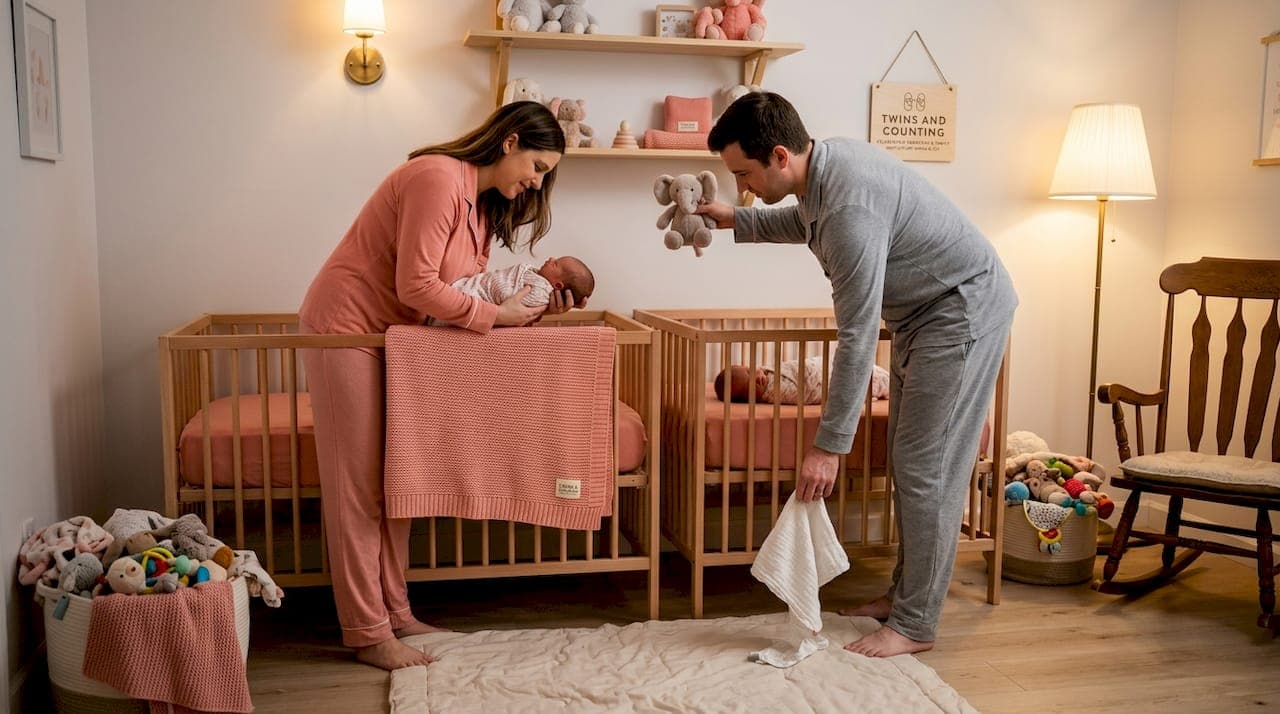
You expected two babies. What you didn’t expect was two completely different sleepers under the same roof. Understanding why twins sleep differently is one of the most confusing parts of early twin parenting, and it catches almost everyone off guard. Your twins share DNA, a birthday, and the same bedroom. Yet one wakes every 90 minutes while the other stretches to three hours. That’s not a sign something is wrong. It’s actually biology working exactly as it should. Here’s what’s driving those differences, and what you can do about it.
Table of Contents
- Key takeaways
- Why twins sleep differently: the biology behind it
- Recognizing each twin’s sleep cues
- Safe sleep when your twins are on different schedules
- Building flexible routines that actually work
- My honest take on twin sleep differences
- More support from Twinsandcounting
- FAQ
Key takeaways
| Point | Details |
|---|---|
| Biology drives differences | Prematurity, genetics, and growth spurts cause twins to develop distinct sleep patterns from birth. |
| Individuality is normal | It is common for one twin to sleep longer or consolidate sleep earlier, reflecting normal development. |
| Synchronization has limits | Forcing identical schedules can backfire; flexible routines that honor each twin’s cues work better. |
| Safe sleep is non-negotiable | Separate sleep surfaces are required for both twins regardless of how tempting co-sleeping feels. |
| Adaptation beats comparison | Adjusting your approach to each twin’s actual cues reduces stress and improves outcomes for everyone. |
Why twins sleep differently: the biology behind it
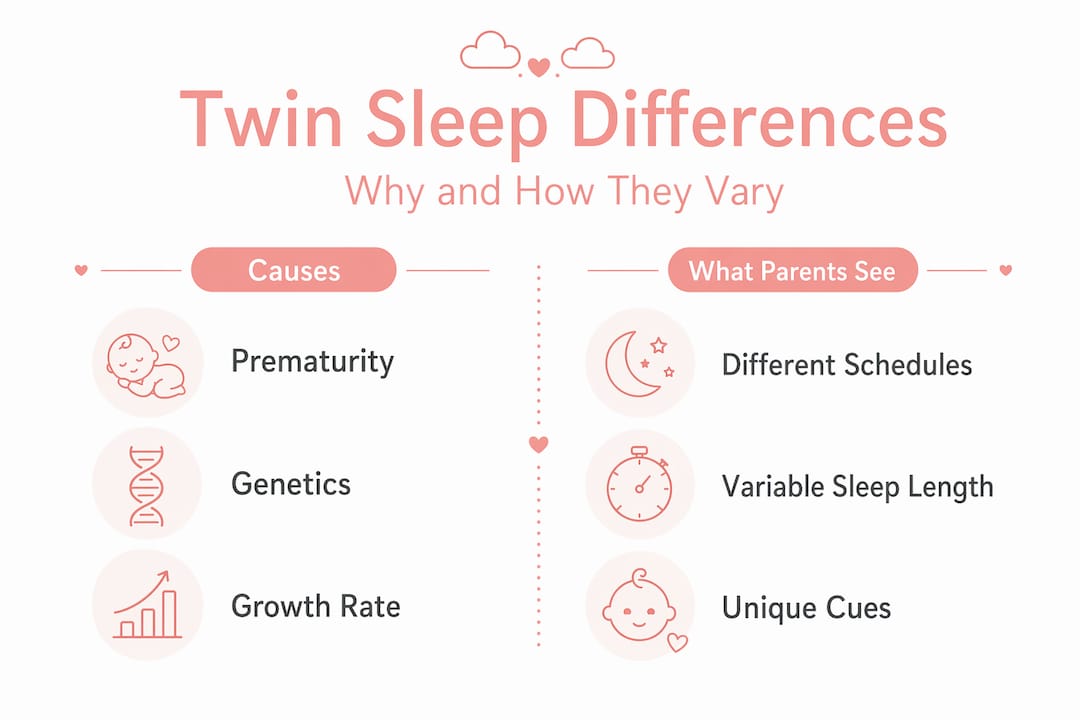
Most parents assume that because their twins were born at the same time, they’ll behave the same way. Sleep is where that assumption falls apart fastest. The truth is that several powerful biological forces are pulling each twin in a different direction from day one.
Prematurity and gestational age
Twin pregnancies carry a significantly higher risk of preterm birth than singleton pregnancies. When twins arrive early, their nervous systems are still maturing. Twins’ sleep trajectories align more with their corrected gestational age than their birth date, meaning a baby born at 35 weeks is neurologically closer to a 35-week-old fetus than a newborn born at term. If your twins were born at different gestational weights or had different NICU stays, that gap in sleep maturity can persist for months.
Normal sleep duration and consolidation
Newborns sleep 16 to 17 hours daily, but that sleep is fragmented into short bursts. By six months, total sleep drops to around 13 to 14 hours, and by twelve months it’s closer to 12 to 13 hours. The key detail here is that when each twin consolidates those sleep hours into longer stretches varies widely, even between siblings. One twin may start connecting sleep cycles at three months while the other takes until five months. Neither is behind. They’re simply on different timelines.
Genetics, sex, and growth spurts
Here’s a factor that surprises many parents: chronotype variation is roughly 40 to 50% genetic, meaning each twin may carry a slightly different genetic predisposition to when they want to sleep and wake. Even fraternal twins, who share only about 50% of their DNA, can inherit different circadian tendencies from each parent. On top of that, breastfeeding and infant sex explain 44% of variance in sleep irregularity, and growth spurts temporarily increase both sleep hours and the number of sleep bouts a baby needs. If Twin A hits a growth spurt two weeks before Twin B, their sleep patterns will diverge noticeably during that window.
- One twin may naturally be an earlier riser due to genetic circadian differences
- Growth spurts rarely happen in both twins at exactly the same time
- Feeding efficiency differences (especially with breastfeeding) affect how long each twin sleeps between feeds
- Sex-related hormonal differences can influence sleep architecture even in infancy
Pro Tip: When tracking your twins’ sleep, log each baby separately from day one. Seeing patterns in each twin’s individual data, rather than comparing them to each other, will help you spot growth spurts, developmental shifts, and emerging routines much faster.
Recognizing each twin’s sleep cues
Even parents who understand the biology still struggle in the moment. You’re sleep deprived, it’s 2 a.m., and you genuinely cannot remember which baby woke last or why. Understanding differences in twin sleep starts with learning to read each baby as their own individual.
Twins can develop completely different sleep-wake cycles. One twin may show drowsy cues early, like eye rubbing and slowing movements, while the other fights sleep until clearly overtired. You’ll also notice that why one twin sleeps less often has less to do with hunger and more to do with temperament and neurological development. It is common for one twin to consolidate sleep earlier or be a naturally stronger sleeper while the other takes longer to settle, and this reflects completely normal individual development.
Watch for these signs that one twin may need more individualized sleep support:
- Waking significantly more often than their sibling without a feeding reason
- Taking longer than 20 minutes to settle down at naptimes
- Showing extreme overtiredness (arching, inconsolable fussing) despite being on the same schedule as their twin
- Sleeping through feeds that the other twin wakes for consistently
- Reacting more strongly to environmental disruptions like noise or light
The tricky part of twin sleeping issues is that some parents respond by pushing both babies toward one twin’s schedule. This usually backfires. If Twin B needs to sleep 30 minutes earlier than Twin A, keeping Twin B awake to match their sibling creates an overtired baby who actually sleeps worse that night. Sleep consolidation changes at different rates between twins, so responsiveness to each baby’s actual cues will always outperform a rigid, one-size-fits-both approach. You can explore more about twins’ nap struggles to understand what’s developmentally normal at each stage.
Safe sleep when your twins are on different schedules
Managing two babies with different sleep needs means you’re often settling one while the other is awake or mid-feed. This makes safe sleep feel logistically complicated, but it is never optional.
The AAP recommends separate sleep surfaces and room sharing for at least the first six months. Bed sharing is not recommended for twins, even when it feels like the only solution at 3 a.m. The risks, including accidental suffocation and positional asphyxia, are the same for twins as for any baby. The question of whether twins can share a bed is one Twinsandcounting covers in detail, but the short answer from pediatric guidance is no.
Here is how to set up a safe, functional sleep environment for twins with different patterns:
- Use two separate sleep surfaces placed within arm’s reach of each other. Side-by-side bassinets or cribs in the same room allow you to respond quickly without crossing the room.
- Add a white noise machine between the two sleep spaces. White noise set to a consistent volume (around 60 decibels, similar to a shower) reduces the chance that one twin waking will disturb the other.
- Use blackout curtains in the shared room. Darkness cues melatonin production in both babies and reduces early morning wake-ups driven by light.
- Keep a small, dim light source accessible for nighttime feeds. Bright overhead lights wake both babies fully and make resettling much harder.
- Respond quickly to the first stirring twin. Catching a baby at the first sounds before full crying begins gives you the best chance of settling them without waking their sibling.
Pro Tip: If one twin consistently wakes earlier from naps, consider placing a lightweight muslin blanket over the outside of their crib to reduce visual stimulation when they rouse, without covering the baby. A slightly dimmer microenvironment can extend that transition from light sleep back into deeper sleep.
Building flexible routines that actually work
Here is the thing about routines for twins with different sleep patterns. A rigid, clock-based schedule often serves the parents’ need for predictability more than the babies’ need for rest. The goal is a flexible framework that keeps both twins moving in the same general direction while honoring individual differences.
Coordinated feeding is the most powerful lever you have. Using a nursing pillow for simultaneous feeds or partnering for bottle feeds at the same time aligns the post-feed sleepiness window for both babies, giving you a consistent starting point for each sleep period even if the actual sleep duration differs.
Here’s a practical approach to building your routine:
- Wake both twins at the same time each morning. A consistent wake time anchors the entire day’s sleep schedule, even if nights are still unpredictable. This is the single most effective thing you can do for aligning twin sleep schedules.
- Feed both twins together at every opportunity. Wake the sleeping twin to feed when the hungrier twin wakes, especially in the first three months. This keeps feeding windows aligned, which keeps sleep windows aligned.
- Observe and log each twin’s sleepy cues for one week without trying to change anything. You’ll likely see that your twins actually have a natural overlap window where both show drowsy cues within 20 to 30 minutes of each other.
- Adjust bedtime individually if needed. If one twin consistently shows overtiredness, move their bedtime 15 minutes earlier as a separate adjustment. You don’t need identical bedtimes to have a manageable evening routine.
- Introduce a shared bedtime ritual. Bath, lotion, a dim room, and bedtime stories for both babies create a shared environmental signal for sleep, even if one twin takes longer to actually fall asleep. Routine cues work on their nervous systems even at this age.
Sleep progress in twins is non-linear, with frequent regressions and shifts. Expect the routine to need adjusting every four to six weeks in the first year. That’s not a failure. It’s the system working.
My honest take on twin sleep differences
I’ve heard from so many twin parents who believe one twin is “broken” because they won’t match their sibling. I’ve never found that framing helpful. What I’ve actually learned is that the parents who struggle most are the ones who fixate on getting both babies to sleep the same way at the same time, treating any deviation as a problem to solve.
The families I’ve seen thrive are the ones who accept early that they have two distinct sleepers. They stop comparing and start observing. They track each baby separately, celebrate each small milestone individually, and build routines that are anchored around shared feeding times rather than identical sleep windows. That shift in mindset reduces an enormous amount of nighttime stress.
What I’d tell every parent reading this: the fact that sleep pattern mismatches in twins are normal doesn’t make the 3 a.m. hours any shorter. But understanding why this is happening, and knowing it isn’t your fault, genuinely changes how you move through those nights. Give yourself six months before drawing any conclusions about either twin’s sleep. The picture looks very different by then.
— Jay
More support from Twinsandcounting

If this article helped you understand the differences in twin sleep, Twinsandcounting has a full library of guides built specifically for parents managing two babies at once. From step-by-step strategies in the twin babies overnight sleep guide to the practical wisdom packed into 9 tips for caring for twins, every resource is written with the twin-specific challenges you’re actually facing in mind. You’ll also find the complete twin care guide helpful for getting the full picture on schedules, feeding, and development in one place. You don’t have to figure this out alone.
FAQ
Why do twins sleep differently if they share the same genes?
Even identical twins can carry different expressions of sleep-related genes, and chronotype variation is roughly 40 to 50% genetic. Environmental factors like feeding efficiency, growth spurts, and individual temperament account for the rest.
Is it normal for one twin to sleep much more than the other?
Yes. It is completely normal for one twin to consolidate sleep earlier or sleep longer stretches, as each baby develops their sleep architecture at their own pace.
Should I wake a sleeping twin to match the other twin’s schedule?
In the first few months, waking the sleeping twin for feeds helps align feeding and sleep windows. After about three to four months, you can start letting each twin sleep until they wake naturally, then adjust the morning wake time to anchor the day.
How do I stop one twin from waking the other at night?
Use a white noise machine between their sleep spaces, respond quickly to the first stirring before crying escalates, and use blackout curtains to reduce shared light stimulation. Separate cribs placed close together give each twin their own sleep microenvironment.
When do differences in twin sleep patterns get easier?
Most families see meaningful improvement in sleep consolidation between four and six months corrected age. Differences between twins often narrow by six to nine months as both babies develop more predictable sleep cycles.