

A pumping schedule for twin moms means pumping 8–12 times every 24 hours during the first 6–12 weeks postpartum, with sessions lasting 15–20 minutes using a hospital-grade double-electric pump. That frequency is not optional. It directly mimics the feeding demand two newborns would place on your body, and without it, your milk supply will not keep pace. Yes, it is intense. It is also completely doable with the right structure in place. This guide gives you the exact framework, from timing to troubleshooting, so you can feed your twins with confidence and still find moments to breathe.
What is the ideal pumping frequency for twin moms?
Pumping frequency is the single most important factor in building milk supply for twins. Feeding or pumping 8–12 times daily is the standard recommendation for the first 6–12 weeks, and experienced twin parent Jamie at Twin Parents confirms this is non-negotiable despite how demanding it feels. Each session sends a hormonal signal to your body: produce more milk. Miss sessions consistently, and your supply drops.
Spacing matters as much as total count. Pumping every 2–3 hours keeps your prolactin levels elevated throughout the day. Prolactin is the hormone responsible for milk production, and it responds directly to how often your breasts are emptied.
Here is what the research-backed timing looks like in practice:
- Pump every 2–3 hours during the day, starting from your first morning session
- Never go longer than 4–5 hours between sessions, even at night
- Schedule at least one overnight session between 1 AM and 5 AM, when prolactin peaks and your body is most responsive to supply signals
- Track your sessions using a simple notes app or a dedicated app like Baby Tracker or Huckleberry to spot gaps before they become supply problems
- After supply is established (typically around 6–12 weeks), you can reduce to 6–8 sessions per day
Pro Tip: Set phone alarms for every pumping session in the first two weeks. You will be too sleep-deprived to remember on your own, and consistency in those early days pays dividends for months.
The overnight window between 1 AM and 5 AM is genuinely worth protecting. Many twin moms skip it to grab sleep, and their supply suffers within days. Even one session in that window makes a measurable difference. For more on managing nighttime demands without losing your mind, Twinsandcounting has a practical guide on night feeding strategies worth bookmarking.
How to structure pumping sessions for maximum output
Session quality matters as much as session count. A standard pumping session runs 15–20 minutes with a hospital-grade double-electric pump, followed by an additional 2–5 minutes of pumping after your milk flow stops. That extra time signals your breasts to increase future production. It feels counterintuitive to keep pumping when nothing is coming out, but it works.
Choosing the right pump
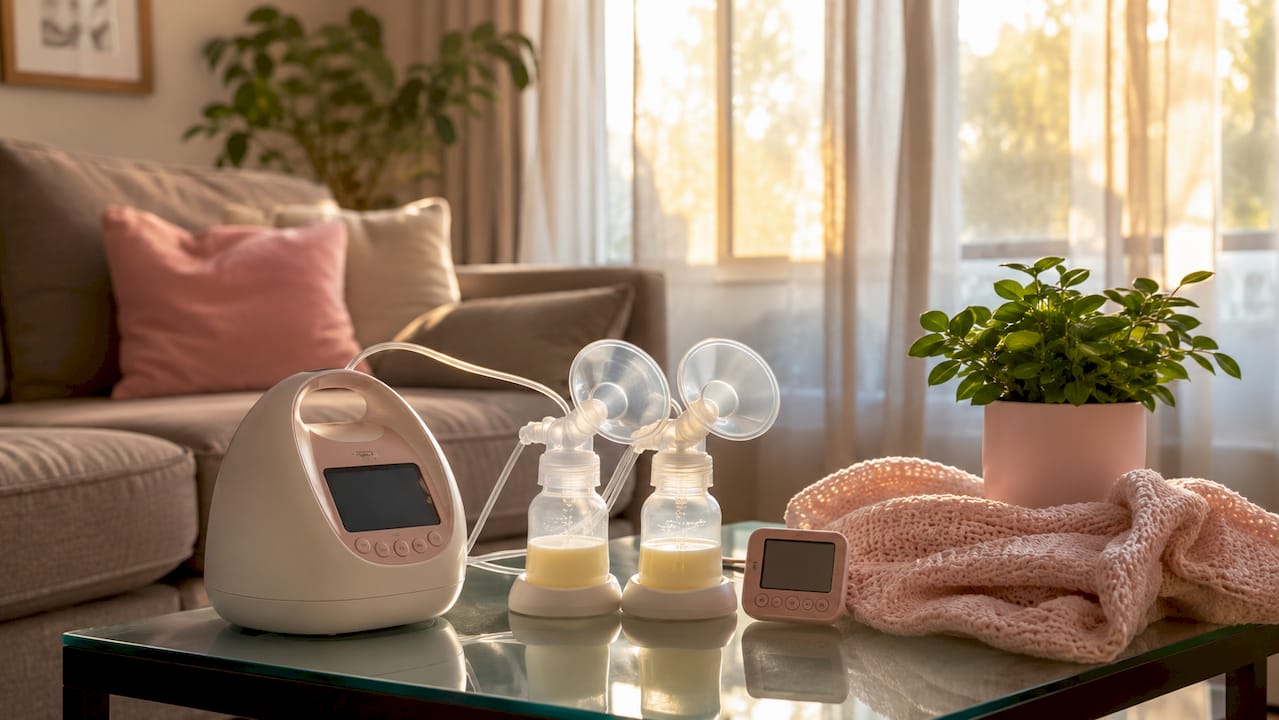
Hospital-grade pumps are significantly more effective than personal-use pumps for establishing supply in the early weeks. The difference is motor strength and cycle speed. Hospital-grade models like the Medela Symphony Plus or Spectra S1 Plus cycle faster and empty the breast more completely. Many hospitals rent them by the month, which makes the cost manageable.
Here is a quick comparison to help you decide:
| Pump type | Best for | Key advantage | Typical cost |
|---|---|---|---|
| Hospital-grade rental (Medela Symphony Plus) | First 6–12 weeks | Strongest suction, fastest supply build | $50–$80/month rental |
| Personal double-electric (Spectra S2 Plus) | Ongoing pumping after supply is set | Portable, insurance-covered | $150–$200 one-time |
| Wearable pump (Elvie, Willow) | Hands-free pumping during twin care | Discreet, no cords | $400–$600 |
Most twin moms benefit from renting a hospital-grade pump for the first 6–8 weeks, then transitioning to a personal double-electric for daily use. A wearable pump as a secondary option lets you pump while bottle-feeding one twin or doing other tasks.
Pro Tip: Flange fit is as important as pump brand. An incorrectly sized flange reduces output by up to 30% and causes discomfort. Ask a lactation consultant to check your fit before assuming your pump is the problem.
Making the most of every session
Start each session with a warm compress or gentle breast massage for 1–2 minutes to trigger letdown faster. Use the stimulation mode on your pump for the first 2 minutes, then switch to expression mode. After flow slows, continue pumping for those extra 2–5 minutes. Finish by hand-expressing any remaining milk. These steps together can increase output per session noticeably over time.
How to build a real-world pumping schedule for twins
A workable pumping schedule for twin moms does not come from a template. It comes from aligning your pumping sessions with your twins’ feeding windows, your sleep blocks, and whatever support you have available. The goal is a rhythm that prevents you from being in a constant state of reaction.
Here is a step-by-step approach to building yours:
- Start with your twins’ feeding times. Write down when each baby feeds over a 24-hour period. This is your anchor.
- Synchronize your twins’ schedules. Waking the sleeping twin to feed at the same time as the awake twin is the single most effective way to prevent around-the-clock feeding cycles. It feels harsh, but it protects your rest.
- Attach a pumping session to each feeding window. If you breastfeed one or both babies, pump immediately after. If you bottle-feed, pump while a partner or support person feeds.
- Block your overnight session. Choose a time between 1 AM and 3 AM and treat it as fixed for the first 12 weeks.
- Build in one flexible session. Life with twins is unpredictable. Designate one session per day as your “flex” slot that can shift by up to an hour without guilt.
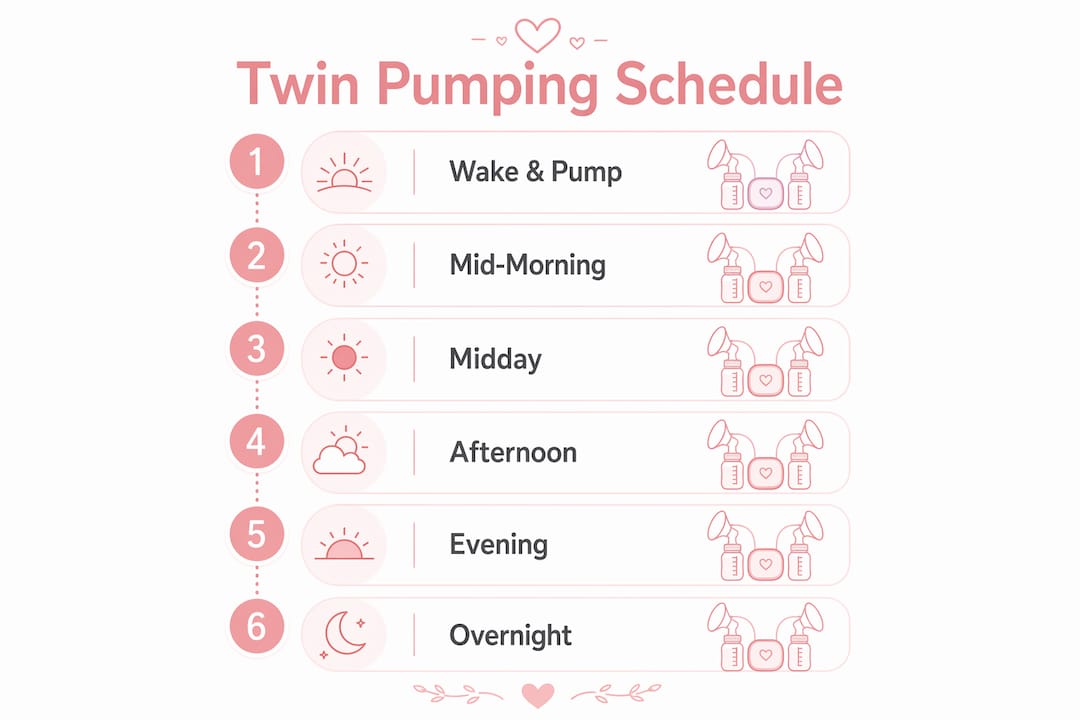
A sample 24-hour schedule might look like this:
- 6:00 AM: Feed twins, pump after
- 8:30 AM: Pump
- 11:00 AM: Feed twins, pump after
- 1:30 PM: Pump
- 4:00 PM: Feed twins, pump after
- 6:30 PM: Pump
- 9:00 PM: Feed twins, pump after
- 11:30 PM: Pump
- 2:00 AM: Overnight pump session
- 4:30 AM: Pump or feed twins
The nursing, pumping, and bottle-feeding cycle for twins can consume 90–120 minutes of every 3-hour window. That number is sobering, but knowing it upfront helps you plan support rather than being blindsided. For solo days, Twinsandcounting’s guide on managing twins alone offers specific strategies that work in the real world.
Common pumping challenges and how to fix them
Even with a solid plan, twin moms hit walls. Here are the most common problems and what actually helps:
- Supply drops after a missed session. Even a brief pumping session is better than skipping entirely. A 5-minute mini-pump maintains the hormonal signal when a full session is impossible.
- Fatigue making sessions feel unbearable. Set up a pumping station with everything you need within arm’s reach: water, snacks, phone charger, and a show you actually want to watch. Make it the one moment in your day that belongs to you.
- Stress reducing output. Cortisol directly inhibits oxytocin, the hormone that triggers letdown. Looking at photos or videos of your twins during sessions can trigger letdown faster and increase output.
- Skipped overnight sessions tanking supply. Rotate overnight duty with a partner when possible. One person handles a feeding while the other pumps. This keeps the schedule intact without both of you being awake simultaneously.
- Uncertainty about whether supply is adequate. Track wet diapers. Six or more wet diapers per baby per day is the clearest sign your supply is meeting demand. For more detail on what to watch for, Twinsandcounting’s guide on signs twins are feeding adequately breaks it down clearly.
“Parents deserve to find a pumping rhythm that fits their support level and household, not one based on an idealized model that ignores real life.” — Eat Play Say Blog
[Flexibility in session timing](https://milky-mama.com/en-ca/blogs/lactation-support/pumping-for-twins-when-and how-to-maximize-your-milk-supply) while maintaining overall frequency is what makes a schedule sustainable. Rigid perfection leads to burnout. Consistent effort, even imperfect effort, builds supply over time.
Key takeaways
A consistent pumping schedule for twin moms, built around 8–12 daily sessions with a hospital-grade pump, is the most reliable path to establishing and maintaining milk supply for two babies.
| Point | Details |
|---|---|
| Pump 8–12 times daily | Frequency in the first 6–12 weeks is the foundation of milk supply for twins. |
| Session length matters | Pump 15–20 minutes, then continue 2–5 minutes after flow stops to signal more production. |
| Protect the overnight window | Prolactin peaks between 1 AM and 5 AM, making this the highest-value pumping window. |
| Synchronize twin schedules | Waking the sleeping twin to feed together prevents continuous feeding cycles and protects rest. |
| Mini-pumps beat skipped sessions | A short session always beats no session when time runs short. |
What I’ve learned about pumping schedules that most guides won’t tell you
Most pumping guides for twin moms focus on the numbers: 8 sessions, 20 minutes, every 3 hours. Those numbers are correct. But they miss the part that actually determines whether you succeed or quit by week three.
The real challenge is not the schedule. It is the guilt that comes when you cannot hold to it perfectly. I have seen so many twin moms abandon pumping entirely because they missed two overnight sessions during a rough week and convinced themselves their supply was ruined. It was not. Supply is resilient when frequency is the norm, not the exception.
The other thing guides understate is pump quality. Renting a Medela Symphony Plus for the first 6–8 weeks is not a luxury. It is the difference between establishing supply and struggling to maintain it. Many insurance plans cover hospital-grade rental under the Affordable Care Act’s breastfeeding provisions. Call your insurer before you assume it is out of reach.
Finally, keeping twins on a synchronized schedule is not just a time-saving trick. It is a mental health intervention. When you are feeding one baby at 2 AM and another at 3 AM and pumping at 4 AM, you never sleep. Synchronization gives you back 45-minute blocks of rest that feel like gold at that stage.
Be realistic about what your support system allows. A schedule that works for a mom with a partner home full-time looks different from one designed for a solo parent. Both are valid. Both can work. The goal is frequency, not perfection.
— Jay
Keep going: resources to support you through every feed
Pumping for twins is one of the hardest things you will do in those early months. You are producing milk for two people while running on broken sleep and sheer determination. That deserves real support, not just a schedule on a page.

At Twinsandcounting, we know the feeding piece is only part of the picture. Your own well-being directly affects your supply, your patience, and your ability to show up for your babies. Explore our guide on twin parent self-care for practical strategies that fit into the margins of a twin-feeding day. And if you want a broader look at managing two newborns at once, our complete twin care guide covers feeding, sleep, and everything in between.
FAQ
How many times a day should a twin mom pump?
Twin moms should pump 8–12 times per 24 hours during the first 6–12 weeks postpartum. After supply is established, most moms can reduce to 6–8 sessions daily.
How long should each pumping session last for twins?
Each session should last 15–20 minutes, followed by 2–5 minutes of continued pumping after milk flow stops. That extra time signals your body to increase future production.
Is a hospital-grade pump necessary for twin moms?
Hospital-grade pumps are significantly more effective than personal pumps for building supply in the early weeks. Renting one for the first 6–8 weeks is the most reliable way to establish adequate milk supply for two babies.
What happens if I miss a pumping session?
Missing one session will not ruin your supply, but skipping consistently will. A short mini-pump session of even 5 minutes is better than skipping entirely, as it maintains the hormonal signal for milk production.
When is the best time to pump overnight for maximum milk supply?
The best overnight pumping window is between 1 AM and 5 AM, when prolactin levels naturally peak. At least one session in this window gives your supply the strongest possible boost.