

Sharing real twin parenting stories is the fastest way for twin parents to gain practical knowledge, emotional relief, and a genuine sense of belonging. No parenting book captures what it feels like to wake up at 3 a.m. with two screaming infants, or to feel a pang of envy watching a friend push a single stroller. Real stories from real families do. Resources like Twins Magazine and communities built around twin parenting experiences give parents a shorthand that no formal literature can match. At Twinsandcounting, we believe those shared narratives are not just comforting. They are genuinely useful.
What are common real twin parenting experiences shared by families?
Twin parenting experiences follow recognizable patterns, even when the details differ from family to family. Most parents describe the early months as a logistics problem wrapped inside an emotional storm. The sheer volume of feeds, diaper changes, and sleep deprivation creates a level of exhaustion that parents of singletons rarely encounter at the same intensity.
Several emotional themes come up repeatedly in real stories about twins:
- Envy toward singleton parents. Feelings of envy are common in early twin parenting and should be read as signals of unmet needs, not moral failings. Recognizing that distinction protects your mental health.
- Paternal struggles going unnoticed. Approximately 10% of new fathers experience postpartum depression, and those with multiples face greater pressure with fewer support pathways.
- Twin individuality surprises parents. Even identical twins develop at different rates and show distinct personalities from the first weeks. Parents who expect two synchronized babies often find two very different people.
- Sibling dynamics start early. Stories about twins frequently describe the moment one baby reaches for the other, or one cries when the other is taken away. That bond is real and it shapes how you parent both children.
“The moment I found another twin dad who got it without explanation, I felt the weight lift. That shorthand is everything.” — paraphrased from a twin father’s account in Twins Magazine
The emotional landscape of twin parenting is not just double the work. It is a qualitatively different experience. Hearing other parents name that difference is often the first step toward managing it.
How can parents share their twin parenting stories online and offline?

Sharing raw and unpolished advice from real twin parents in everyday conditions offers the most useful and practical guidance available. Formal parenting literature rarely captures the specific chaos of a Tuesday morning with two teething seven-month-olds. Community does.
Here are the most effective ways to share and find twin parenting stories:
- Join online twin parent communities. Facebook groups dedicated to parents of multiples, Reddit communities like r/parentsofmultiples, and Instagram accounts built around twin life give you immediate access to thousands of parents at every stage.
- Listen to and contribute to podcasts. Shows focused on twin parenting let parents hear full narratives, not just tips. They also accept listener stories and questions, which makes sharing twin parenting struggles online feel low-stakes.
- Connect with local multiples clubs. Connecting with other parents in local clubs is crucial to mental well-being for parents of multiples. Organizations like Multiples of America maintain local chapter directories.
- Write or blog about your experience. Even a private journal shared with a small group of twin parents creates accountability and connection. Public blogs attract parents who are searching for exactly your story.
- Attend twin-specific parenting events. Twins Trust in the UK and similar organizations in the U.S. host meetups, webinars, and support sessions where parents share real twin parenting milestone stories in person.
Pro Tip: When sharing your story online, decide upfront how much identifying detail you want to include. Many twin parents use first names only for their children and keep location vague. That boundary lets you share authentically without sacrificing privacy.
Authentic storytelling does not require polish. The most resonant stories are the ones that admit the hard parts without wrapping them in a tidy lesson.
What practical tips do real twin parents share for daily life?
Effective twin parenting requires being highly organized from the start with clear routines while recognizing each twin’s unique development. That combination of structure and flexibility is the core of every practical tip shared by experienced twin families.
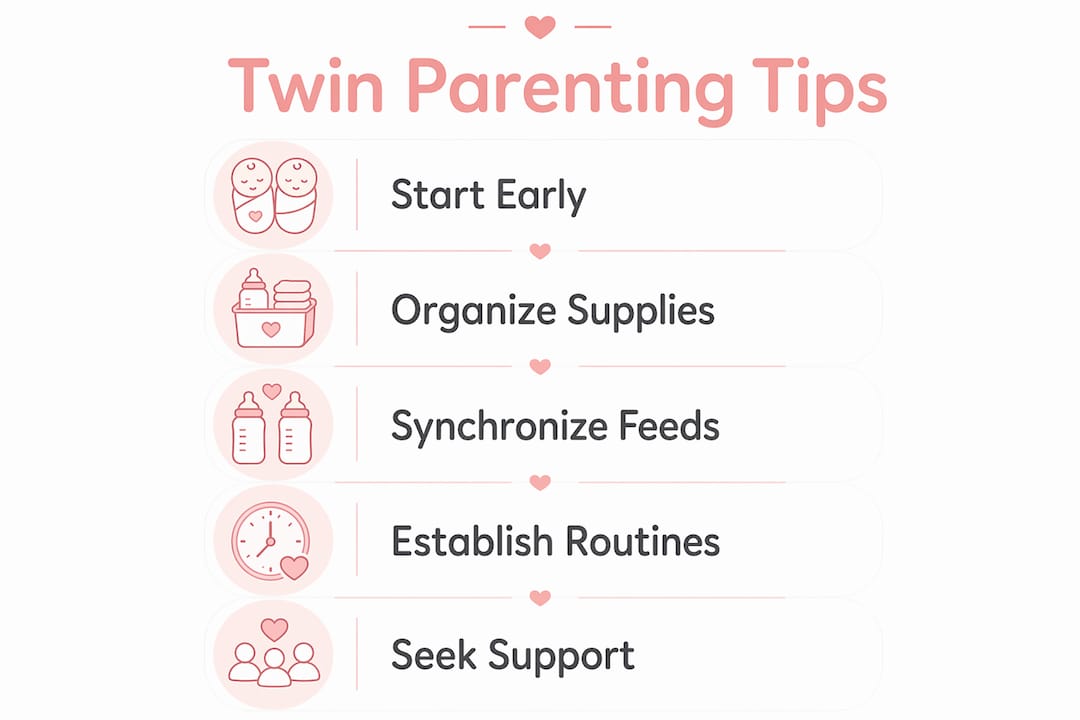
The table below captures the most commonly shared strategies, along with what parents say about each one.
| Strategy | What parents say | Why it works |
|---|---|---|
| Synchronize feeds | Wake the sleeping twin when the first wakes to feed | Synchronized schedules create longer sleep windows and prevent continuous individual feeds |
| Use a high-capacity bottle washer | Wash, sterilize, and dry 16+ bottles in about an hour | Saves significant daily labor compared to dishwasher cycles that take multiple hours plus manual drying |
| Set up two of everything in advance | Duplicate feeding stations, diaper stations, and sleep spaces | Eliminates the need to move between rooms during night feeds |
| Track feeds and diapers per baby | Use a simple app or notebook to log each twin separately | Prevents confusion about who ate last and how much |
| Adapt as milestones arrive | Revise routines when twins become mobile | Twin life gets harder as it gets easier as new milestones eliminate old struggles but introduce new ones |
The most common mistake parents report is waiting too long to build a routine. The first two weeks feel too chaotic to organize, but that is exactly when structure matters most. Parents who establish a feeding and sleeping system early consistently report lower stress levels in months two and three.
Pro Tip: Keep a small caddy stocked with diapers, wipes, and a change of clothes on every floor of your home. Twin parents who do this report spending far less time running between rooms during the newborn phase.
Twin parenting advice that comes from lived experience tends to be specific and unglamorous. That specificity is what makes it work.
How do real twin parents handle emotional and social complexity?
The emotional side of raising twins gets less attention than the logistics, but parents consistently describe it as the harder part. Envy, isolation, and identity loss show up in real twin parenting stories far more often than parenting books acknowledge.
Key emotional realities twin parents share:
- Envy is information, not failure. When you feel jealous of a friend who can nap when her baby naps, that feeling points to a real unmet need, usually rest or support. Treating it as data rather than guilt makes it easier to ask for help.
- Twin dads carry invisible weight. Paternal postpartum depression is underdiagnosed in all new fathers, and twin dads face compounded pressure. Postpartum support resources designed specifically for parents of multiples can make a measurable difference.
- Each twin needs individual attention. Parents who carve out one-on-one time with each child report stronger individual bonds and fewer behavioral issues as twins grow. Twins need individual attention to develop their own identities, even when they share everything else.
- Self-care is not optional. Parents who treat their own rest and mental health as non-negotiable report better patience and decision-making. Even 20 minutes of uninterrupted time daily shifts the emotional baseline.
“Parents feel relief and validation through connection with others who understand twin parenting’s unique stresses.” — Twins Magazine insight on community support
The social complexity of twin parenting also includes navigating other people’s assumptions. Strangers ask intrusive questions. Family members treat twins as a unit rather than two people. Real stories about twins help parents rehearse responses and set boundaries before those moments arrive.
Key takeaways
Sharing real twin parenting stories builds both emotional resilience and practical skill by connecting parents to lived experience that no textbook can replicate.
| Point | Details |
|---|---|
| Stories reduce isolation | Hearing other parents name the same struggles validates your experience and lowers stress. |
| Community is a mental health tool | Connecting with local clubs or online groups is directly linked to better well-being for twin parents. |
| Routine is the foundation | Synchronizing feeds and building early systems prevents the chaos that compounds exhaustion. |
| Envy signals unmet needs | Treat difficult emotions as information and use them to identify where you need more support. |
| Individuality matters from day one | Each twin develops differently and needs one-on-one time to build a secure identity. |
What I’ve learned from years of twin parenting stories
The piece of advice I wish someone had given me earlier is this: the stories that help most are the ones that do not have a tidy ending. The parent who admits they cried in the car for 20 minutes before going back inside. The dad who says he felt invisible while everyone asked about the babies. Those stories are the ones that actually prepare you.
What I have seen, both personally and through the Twinsandcounting community, is that parents who share openly tend to cope better. Not because sharing fixes anything, but because it breaks the silence that makes hard things feel shameful. When you read a real twin parenting milestone story and think “that was us last month,” something shifts. You stop wondering if you are doing it wrong and start asking what worked for them.
The practical stuff matters too. Synchronized feeds, a good bottle washer, a solid nap schedule. But the emotional permission to struggle, to feel envious, to grieve your pre-twin life a little, that comes from other parents, not from guides. My honest recommendation is to find your people early. A local multiples club, an online group, a podcast you listen to during night feeds. Show up, share something real, and let others do the same. That exchange is where the actual support lives.
— Jay
Twin parenting resources worth bookmarking
Twinsandcounting has built a library of guides written specifically for families raising two at once, not adapted from singleton parenting advice.

If you are in the thick of the newborn phase, the twin care ultimate guide covers feeding, sleep, and daily routines in one place. Parents managing schedules solo will find the solo parenting twins tips especially useful for building systems that hold up without a second adult in the room. For the emotional side of twin parenting, the self-care practices guide offers concrete steps that fit into a twin parent’s actual day. You can also read funny and real stories from twin parents who have been exactly where you are.
FAQ
Why do twin parents benefit from sharing their stories?
Sharing twin parenting experiences reduces isolation and provides practical knowledge that formal resources rarely cover. Parents who connect with others facing the same challenges report measurable relief and better coping.
Where can I find real twin parenting communities online?
Facebook groups, Reddit communities like r/parentsofmultiples, and organizations like Multiples of America all offer active spaces for parents to share twin stories and get support.
How do I handle envy toward parents of singletons?
Envy toward singleton parents is a common and recognized emotional response in twin parenting. Treat it as a signal of an unmet need, such as rest or support, rather than a reflection of your gratitude for your children.
When should I start building a twin routine?
Start building a synchronized feeding and sleeping routine in the first two weeks, even when it feels impossible. Early structure consistently reduces stress in the months that follow.
Does twin parenting get easier over time?
Twin life shifts rather than simply gets easier. As developmental milestones remove some challenges, they introduce new ones like increased mobility and sibling conflict. Adapting your strategies as twins grow is the key to staying ahead of each new phase.