
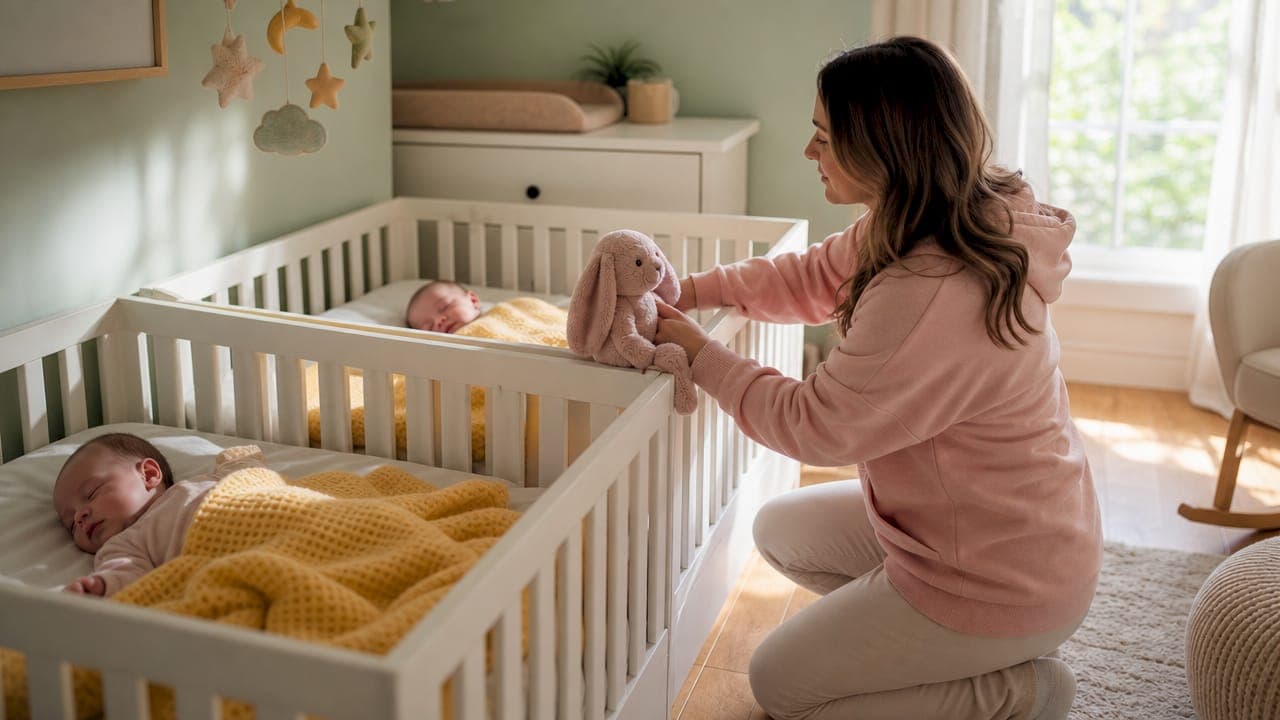
Synchronized twin nap strategies are approaches designed to align both babies’ sleep times close enough to create shared rest windows, reducing parental fatigue and improving daily family balance. Parents using coordinated feeding and sleep schedules report 5.1 hours of continuous sleep versus just 3.2 hours with unsynchronized approaches. That difference is not a small comfort. It is the gap between a parent who can function and one who cannot. Twinsandcounting has gathered the most practical, research-backed methods to help you build a nap routine that actually holds.
1. What are synchronized twin nap strategies and why do they matter?
Synchronized twin nap strategies, also called coordinated napping methods, aim to overlap both twins’ sleep windows rather than achieve clock-perfect simultaneity. The goal is a shared rest period, not a military schedule. When both babies sleep within the same general window, you get time to eat, rest, or simply breathe without holding an infant.
Synchronized feeding and naps in the first 6–8 months create predictable windows for parental rest and reduce total caregiving hours. Fewer caregiving hours means less physical and mental depletion. That directly supports your ability to stay present and patient through the harder stretches of twin parenting.
The term “synchronized” can mislead parents into thinking both babies must fall asleep at the exact same second. They do not. Alignment aims for shared sleep flow rather than clock-perfect schedules, which reduces parental burnout and prevents overtired babies. Letting go of perfection is the first practical step.
2. How the Strategic Gap Method works for twin nap syncing
The Strategic Gap Method is the most structured approach to twin nap syncing methods explained in current twin sleep research. It works by creating an intentional overlap in nap times rather than forcing both babies to start sleep at the same moment.
The method recommends shifting nap times by 10 minutes daily until a 30–60 minute overlap is achieved. That overlap becomes your “golden window,” the period when both babies are asleep at the same time. Even 30 minutes of simultaneous sleep gives you a real break.
Here is how to apply it step by step:
- Track current nap times. Log each twin’s natural nap start and end times for three to five days without intervention.
- Identify the gap. Note how far apart their nap starts are. A 45-minute gap is common in the early weeks.
- Shift the earlier sleeper. Push the earlier napper’s start time forward by 10 minutes every one to two days.
- Shift the later sleeper back. Simultaneously nudge the later napper’s start time earlier by 10 minutes every one to two days.
- Aim for overlap. Continue until both babies are napping within the same 30–60 minute window.
- Hold the window. Once overlap is consistent for five to seven days, stop adjusting and maintain that schedule.
Pro Tip: Use a simple notes app or paper log to track nap times. Patterns become visible within three days, and you will spot the gap much faster than relying on memory.
Environmental cues accelerate this process. White noise, dimmed lights, and a consistent pre-nap routine signal sleep to both babies at the same time. Consistency in those cues matters more than the exact clock time.
3. How to manage differing nap lengths and early waking
One of the most common reasons twin naps desync is that one baby wakes early and disturbs the other. This is not a failure of your system. It is a normal biological difference that requires a physical solution, not a schedule overhaul.
These strategies address the most frequent disruption patterns:
- Use separate sleep spaces. A pack-and-play in a closet or a different room corner creates enough distance to prevent one twin’s wakefulness from disturbing the other. Physical separation is the single most effective tool for preserving nap overlap.
- Add visual barriers. A room divider or a hung blanket between cribs reduces visual stimulation. Babies who cannot see each other are less likely to engage and wake each other up.
- Run white noise in both spaces. Separate sleep environments with white noise prevent early waking disturbance and allow the sleeping twin to stay asleep longer.
- Establish an anchor nap. Choose one nap per day, usually the midday nap, as your non-negotiable synced nap. Build everything else around protecting that window.
- Use quiet time for the early waker. When one twin wakes before the other, place them in a safe, contained space with soft toys or a mobile. This buys the sleeping twin more time and teaches the early waker to self-settle.
- Gently wake the longer sleeper. If one twin consistently naps 40 minutes longer than the other, wake the longer sleeper 15 minutes before their usual wake time. This gradually compresses the gap without forcing an abrupt schedule change.
The anchor nap concept is particularly useful in the early months. You do not need every nap to sync. You need one reliable overlap per day to protect your rest and your sanity.
4. What environmental and routine cues support simultaneous sleeping
The physical environment is not a background detail in twin sleep. It is an active tool. Consistent environmental cues teach both babies that sleep is coming, which makes settling together far more likely.
- Pre-nap ritual. A short, repeatable sequence, such as a diaper change, a brief feed, a song, and a swaddle, signals sleep to both babies at the same time. Doing the same sequence in the same order every nap builds a conditioned response within two to three weeks.
- White noise machines. Place one in each sleep space. White noise masks household sounds and creates a consistent audio environment that both babies associate with sleep.
- Room darkening. Blackout curtains or shades reduce light stimulation. Darkness supports melatonin production, which helps babies fall asleep faster and stay asleep longer.
- Nursery temperature at crib level. Temperature at crib mattress height differs from what the thermostat reads. Measure it directly. A cooler mattress surface supports deeper sleep and more consistent settling between both twins.
- Consistent feeding schedule. Feeding both babies at the same time before naps aligns their hunger cycles with their sleep cycles. When hunger and tiredness peak together, settling becomes much easier.
Pro Tip: A 15-minute buffer around target nap times accommodates natural daily variation without derailing your schedule. If one baby is not quite ready at the target time, wait up to 15 minutes before adjusting. Rigid adherence to the clock creates more stress than it solves.
The 15-minute buffer rule is one of the most underused tools in twin sleep training tips. Parents who allow this small flexibility report far less frustration and fewer schedule collapses after disruptions like illness or travel.
5. When to start syncing naps and how to adapt as twins grow
Timing matters when introducing coordinated napping methods. Starting too early, before babies have any circadian rhythm, produces frustration. Starting too late means you have already reinforced separate schedules that are harder to shift.
- Wait until 8–12 weeks. Experts recommend starting synchronized feeding and nap routines between 8 and 12 weeks. Before 8 weeks, newborn sleep is too irregular to shape reliably.
- Expect manageable rhythms by 4–6 months. Most parents find that rhythms become manageable by 4–6 months, even with monozygotic twins who can show 30–45 minute variations in sleep cycles early on.
- Adjust for temperament. One twin may need more soothing to fall asleep. The other may need less stimulation before nap time. Adjust your pre-nap ritual for each baby while keeping the overall schedule the same. You can adjust soothing techniques for each twin’s temperament without abandoning the shared routine.
- Account for solid food introduction. When you introduce solids around 4–6 months, hunger patterns shift. Feeding schedules need a brief recalibration to keep nap timing aligned with the new hunger cycle.
- Reduce nap frequency as babies grow. Most twins drop from three naps to two around 6–8 months, and from two to one around 12–18 months. Each transition is an opportunity to re-sync. Use the Strategic Gap Method again at each transition point rather than waiting for chaos to force a change.
A step-by-step twin nap schedule from Twinsandcounting can help you map out these transitions with specific time blocks for each developmental stage.
Key takeaways
Synchronized twin nap strategies work best when they target overlapping sleep windows rather than identical start times, using the Strategic Gap Method, environmental cues, and flexible timing rules.
| Point | Details |
|---|---|
| Start between 8–12 weeks | Introducing nap syncing before 8 weeks is too early; rhythms stabilize by 4–6 months. |
| Use the Strategic Gap Method | Shift nap times by 10 minutes daily until a 30–60 minute overlap is achieved. |
| Separate sleep spaces prevent desync | Physical separation and white noise stop one twin’s early waking from disrupting the other. |
| The 15-minute buffer prevents rigidity | Allowing a 15-minute window around target nap times reduces stress without breaking the schedule. |
| Anchor one synced nap daily | Protecting one reliable overlap per day is more sustainable than forcing every nap to align. |
What I have learned about “perfect” twin nap sync
The parents who struggle most with twin nap schedules are the ones chasing perfection. I have seen it repeatedly. They read about synchronized nap strategies, build a precise schedule, and then fall apart the first time one baby cuts a nap short. The schedule was never the problem. The expectation was.
Imperfect synchronization is the real goal. Close nap windows, not identical ones, are what reduce parental stress and keep babies from becoming overtired. A 20-minute overlap is a win. A 45-minute overlap is a great day. Expecting both babies to sleep from 1:00 p.m. to 3:00 p.m. every single day is a setup for frustration.
The other thing I would tell every new twin parent is this: your mental health is part of the strategy. A parent who is rigid and anxious about the schedule communicates that tension to their babies. Flexibility is not weakness. It is the mechanism that keeps the whole system running when real life intervenes, and with twins, real life always intervenes.
If you are sleep training twins simultaneously, build in grace periods from the start. The parents who succeed are the ones who treat the schedule as a guide, not a contract.
— Jay
Twinsandcounting has the twin sleep resources you need
Twin sleep is one of the hardest parts of the first year, and you should not have to figure it out alone. Twinsandcounting brings together expert-backed guidance and real stories from parents who have been exactly where you are right now.

The tips and tricks for twin care page covers sleep, feeding, and daily routines in one place, with practical advice that works in the real world, not just in theory. You will also find guidance on twin overnight sleep patterns to complement your daytime nap work. Twinsandcounting is built for parents who need answers that are specific to twins, not generic baby advice with the word “twins” added at the end.
FAQ
What does synchronized twin nap mean?
Synchronized twin nap means both babies sleep within the same overlapping window, not necessarily at the exact same time. The goal is a shared rest period that gives parents a break.
Why do twin naps desync over time?
Twin naps desync because each baby has a slightly different sleep cycle length and temperament. Illness, growth spurts, and schedule disruptions also shift individual nap timing away from the shared window.
When should I start syncing my twins’ naps?
Start between 8 and 12 weeks, when babies begin to develop more predictable sleep patterns. Most parents see manageable rhythms by 4–6 months.
What is the Strategic Gap Method for twin naps?
The Strategic Gap Method shifts each twin’s nap start time by 10 minutes daily until a 30–60 minute overlap is achieved. That overlap creates a shared rest window without forcing identical schedules.
Do twins need to sleep in the same room for nap syncing to work?
No. Separate sleep spaces with white noise actually improve nap syncing by preventing one twin’s early waking from disturbing the other. Physical separation supports, rather than undermines, synchronization.