
A twin sleep window is the period of wakefulness between naps during which a baby builds enough sleep pressure to fall asleep easily and stay asleep restfully. For parents of twins, understanding this concept is the difference between a manageable daily routine and a cycle of overtired, inconsolable babies. The formal term used by pediatric sleep specialists is “wake window,” and it refers to the precise amount of time an infant can stay awake before adenosine buildup and melatonin shifts make sleep both necessary and biologically supported. With twins, the challenge doubles: you are managing two separate biological clocks while trying to keep both babies on a synchronized schedule that gives you any breathing room at all.
What is a twin sleep window and why does it matter?
A wake window is the span of time between one sleep period ending and the next one beginning. Newborn wake windows typically last 30 to 90 minutes, extending to 4 to 5 hours as babies grow older. That range matters enormously because missing the window in either direction creates problems. Put a baby down too early and they will not have built enough sleep pressure to settle. Wait too long and cortisol floods their system, making them harder to settle despite being exhausted.
For twins, this dynamic plays out twice simultaneously. One baby may hit their window at 90 minutes while the other is still alert and content at the same mark. That 15-minute gap between two babies’ natural rhythms can feel like a logistical crisis at 3 AM. Recognizing that a twin sleep window is not a fixed clock time but a biological readiness state gives you the flexibility to work with your babies rather than against them.

The concept of sleep pressure, driven by adenosine accumulation in the brain, is what makes wake windows real and not just parenting folklore. As adenosine builds during wakefulness, the drive to sleep intensifies. When you respect that window, you are placing your babies into their crib at the exact moment their brain chemistry is working in your favor.
How biological sleep windows affect twin sleep patterns
Infant sleep is not random. Babies have biological nap windows that align with natural melatonin production peaks, typically occurring around 9 to 10 AM, 12 to 2 PM, and 6 to 7 PM. Naps placed inside these windows tend to be longer, more restorative, and easier to initiate. Naps placed outside them are often short, fitful, and followed by a fussier baby.
This biological rhythm is the foundation of any solid twin sleep schedule. When you align both babies’ naps with these windows, you are not just following a clock. You are working with their neurological wiring. The result is better quality sleep for them and more predictable downtime for you.
Here is what this looks like in practice for twin sleeping habits:
- Morning nap (9 to 10 AM): The shortest wake window of the day precedes this nap. Newborns may only manage 45 to 60 minutes of wakefulness before needing it.
- Midday nap (12 to 2 PM): This is typically the longest and most restorative nap of the day. Protecting it is a priority.
- Late afternoon nap (varies by age): Younger babies often need a third nap here. This nap is dropped first as babies mature, usually between 6 and 9 months.
- Bedtime (6 to 7 PM): The pre-bedtime wake window is the longest of the day, which helps build enough sleep pressure for a longer overnight stretch.
The challenge with twins is that their individual biological rhythms may not be perfectly synchronized from birth. Premature twins face an additional layer of complexity: preterm twins’ sleep patterns differ due to gestational age factors, often resulting in more frequent night wakings. This means parents of preemies need to adjust their expectations and calculate wake windows from corrected age, not birth age.
Pro Tip: If your twins were born prematurely, always calculate wake windows from their corrected gestational age. A baby born 6 weeks early at 3 months old is developmentally closer to a 6-week-old in terms of sleep capacity.
Why synchronized schedules matter and how to achieve them
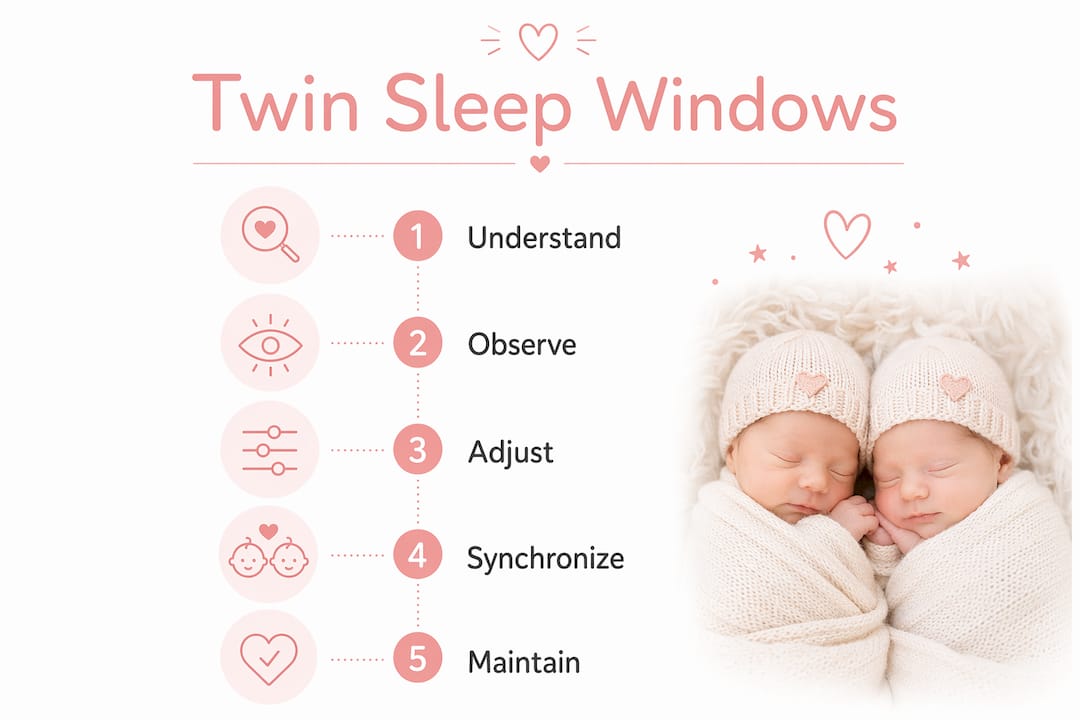
Synchronized twin sleep is not about forcing two individuals to be identical. It is about keeping their routines close enough that you get real rest between care sessions. Sleep coaches and twin specialists consistently recommend keeping twins’ routines within a 10 to 20 minute tolerance window. That small buffer respects individual differences while maintaining a family rhythm that is actually sustainable.
Here is a practical step-by-step approach to building synchronized twin sleep patterns:
- Start both babies at the same time. Begin the wind-down routine for both twins simultaneously, even if one seems less tired. Shared bedtime routines cue both brains for sleep and reduce the time between one baby settling and the other.
- Wake the second twin within 15 to 30 minutes. If Twin A wakes from a nap, wake Twin B within that window rather than letting them sleep on. Staggered schedules compound quickly and leave you with no recovery time.
- Feed both babies at the same time. Feeding and sleeping cycles are tightly linked in infants. Keeping feeds synchronized keeps the downstream sleep timing aligned.
- Use a 10 to 20 minute rule, not a minute-by-minute one. Trying to force identical-to-the-minute schedules creates stress and disrupts natural individual sleep needs. The tolerance window is your friend, not a failure.
- Adjust as they grow. Wake windows lengthen as babies mature. Revisit your schedule every 4 to 6 weeks and extend windows gradually rather than waiting for a full schedule breakdown to signal the need.
Pro Tip: Place both cribs in the same room and start the wind-down routine together: dim the lights, use white noise, and feed both babies before attempting to settle either one. The shared environment reinforces shared sleep cues.
Learning how to keep twins on the same schedule takes a few weeks of consistent effort, but the payoff is a predictable daily rhythm that makes everything from feeding to outings far more manageable.
Common challenges in managing twin wake windows and practical solutions
Even with the best plan, twin sleep patterns throw curveballs. The most common challenges parents face are predictable, and each has a workable solution.
One twin wakes early from a nap. This is the scenario that unravels most twin schedules. Waking a sleeping twin to match the early riser feels counterintuitive, but it is the right call. Letting one twin sleep significantly longer creates a staggered schedule that is nearly impossible to recover from within the same day.
Overtiredness and cortisol spikes. Overtiredness causes a cortisol spike that makes babies harder to settle, not easier. The fix is early intervention. Watch for first yawns, eye rubbing, or a brief stare into the middle distance. These are the first sleep cues, and they appear well before fussiness. Acting on the first cue rather than waiting for crying is the single most effective adjustment most parents can make.
Different sleep needs between twins. Even identical twins can have meaningfully different sleep capacities. One may consistently need 30 minutes less awake time than the other. The 10 to 20 minute synchronization rule accommodates this. You do not need perfect alignment. You need close enough alignment to function.
Fear of waking a sleeping baby. This is the most frequent mistake parents make with twins. The instinct to protect a sleeping baby is strong, but consistent schedules require timely waking. A brief disruption now prevents a full schedule collapse by evening. To wake a sleeping twin gently, try unswaddling slowly, turning up the lights gradually, or picking them up for a feed.
Twins waking each other up. This is a separate but related challenge. Understanding why twins wake each other up and addressing the root causes, whether noise sensitivity, sleep cycle timing, or room setup, is worth tackling early before it becomes a nightly pattern.
Sample twin sleep schedule framework by age
Wake windows lengthen predictably as babies grow. The table below gives you a realistic framework to build your twin sleep schedule around, with the understanding that individual variation is normal and a 10 to 20 minute buffer applies throughout.
| Age | Wake window length | Naps per day | Sample nap times |
|---|---|---|---|
| 0 to 8 weeks | 45 to 60 minutes | 4 to 5 | Every 1 to 1.5 hours |
| 2 to 4 months | 60 to 90 minutes | 3 to 4 | 9 AM, 12 PM, 3 PM, 5 PM |
| 4 to 6 months | 1.5 to 2.5 hours | 3 | 9 AM, 1 PM, 4 PM |
| 6 to 9 months | 2.5 to 3.5 hours | 2 | 9:30 AM, 2:30 PM |
| 9 to 12 months | 3 to 4 hours | 2 | 10 AM, 3 PM |
A realistic day for 4-month-old twins might look like this: wake at 7 AM, first nap at 8:30 AM, second nap at 12 PM, third nap at 3:30 PM, and bedtime at 7 PM. Each wake window runs roughly 90 minutes, with the final window before bed running slightly longer to build overnight sleep pressure.
For the sleep environment, white noise machines, blackout curtains, and a consistent room temperature between 68 and 72 degrees Fahrenheit all support better nap quality. Co-bedding twins in the early weeks may also help stabilize temperature and lower stress, supporting longer quiet sleep phases, though always follow current safe sleep guidelines from the American Academy of Pediatrics.
Pro Tip: Write your schedule down and post it somewhere visible. When you are running on broken sleep, having a physical reference for the next nap window removes one decision from an already full mental load.
If you are working through sleep training twins simultaneously, applying consistent wake windows is the foundation that makes any sleep training method more effective.
Key takeaways
Respecting twin wake windows is the single most effective strategy for preventing overtiredness, maintaining synchronized schedules, and giving yourself predictable rest between care sessions.
| Point | Details |
|---|---|
| Define the wake window | A twin sleep window is the awake period between naps; missing it causes cortisol spikes and harder settling. |
| Use the 10 to 20 minute rule | Keep twins’ routines within a 10 to 20 minute window to balance individual needs with family rhythm. |
| Wake the second twin | If one twin wakes early, wake the other within 15 to 30 minutes to prevent staggered schedules. |
| Act on early sleep cues | Yawning and eye rubbing signal the open window; waiting for fussiness means you have already missed it. |
| Adjust windows as babies grow | Wake windows extend from 45 minutes at birth to 4 to 5 hours by 12 months; revise your schedule every 4 to 6 weeks. |
What I have learned from watching parents manage twin sleep windows
From where I sit, the parents who struggle most with twin sleep are not the ones with the hardest babies. They are the ones who are trying to be too precise. They read that wake windows are 90 minutes at 3 months and treat that number like a law of physics. When Twin A needs 80 minutes and Twin B needs 100 minutes, they feel like they are failing. They are not. They are just working with two human beings who did not read the same chart.
The 10 to 20 minute tolerance window is not a compromise. It is the actual target. Flexibility within a consistent framework is what makes twin parenting sustainable. I have seen parents who run a tight ship with a 15-minute buffer between twins and get more sleep than parents who chase perfect synchronization every single day.
The other thing I want you to hear: waking a sleeping twin is not cruel. It is one of the most loving things you can do for your family’s long-term sleep health. Every time you let one twin sleep 45 minutes past the other, you are borrowing against tomorrow’s schedule. The short-term discomfort of a gentle wake-up is worth the long-term gain of a predictable routine.
Give yourself 2 to 3 weeks of consistent effort before you judge whether a schedule is working. Twin sleep patterns do not stabilize overnight. But when they do, the relief is real.
— Jay
Ready to take twin sleep further?
Managing twin sleep windows is just one piece of the puzzle. Twinsandcounting has built a library of guides specifically for parents in your position, covering everything from night feeding simplification to full overnight sleep strategies.

Whether you are in the newborn fog or approaching the 6-month sleep regression, the essential tips for twin parents at Twinsandcounting give you a grounded starting point. You will also find a dedicated guide on getting twins to sleep through the night that walks you through the process step by step. You do not have to figure this out alone.
FAQ
What is a twin sleep window exactly?
A twin sleep window is the period of wakefulness between naps during which a baby builds enough sleep pressure to fall asleep easily. For twins, managing these windows in sync is the foundation of a predictable daily schedule.
How long should wake windows be for newborn twins?
Newborn wake windows typically last 45 to 90 minutes and grow longer as babies age, reaching 4 to 5 hours by 12 months. Always calculate from corrected age if your twins were born prematurely.
Should I wake a sleeping twin to keep them on schedule?
Yes. Sleep experts recommend waking the second twin within 15 to 30 minutes if the first wakes early. Letting schedules stagger significantly makes the rest of the day much harder to manage.
How do I know if my twins are overtired?
Watch for early sleep cues like yawning, eye rubbing, or a brief glazed stare. Overtiredness triggers a cortisol spike that makes babies harder to settle, so acting on the first cue rather than waiting for fussiness is the most effective approach.
Do twins need to be on exactly the same schedule?
No. Sleep specialists recommend keeping twins’ routines within a 10 to 20 minute tolerance window rather than forcing minute-by-minute matching. This balance respects individual sleep needs while maintaining a family rhythm that is actually sustainable.