
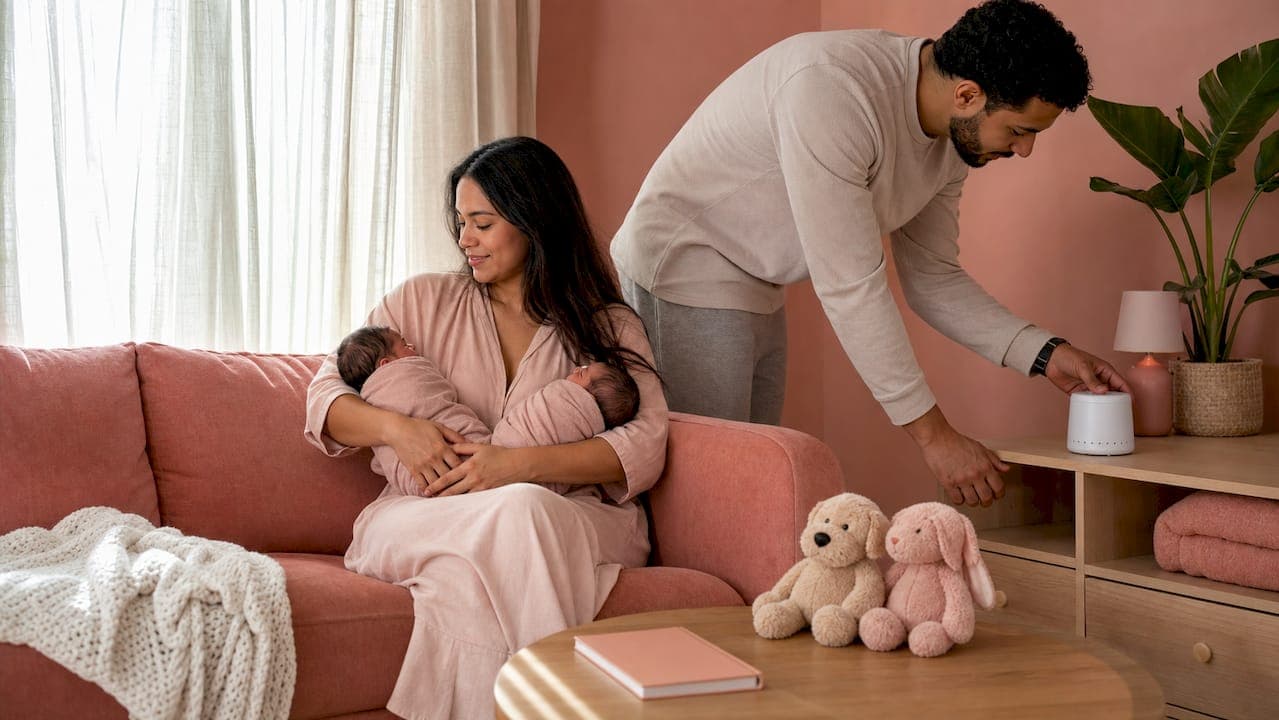
A twin nap schedule step by step is a structured, phased approach that helps parents synchronize two infants’ sleep cycles to create predictable rest windows for the whole family. The goal is not perfect timing but manageable overlap. Synchronizing twins’ feed and sleep cycles during the first 6–8 months leads to longer parental sleep, less maternal depression, and reduced caregiving hours. Parents averaged 5.1 hours of continuous sleep with synchronization versus 3.2 hours without. That difference is the entire case for building a twin nap routine guide from day one. Resources like Taking Cara Babies and TwinTactics have helped thousands of twin parents move from survival mode to a schedule that actually holds.
What do you need before starting a twin nap schedule?
Preparation is the difference between a plan that sticks and one that falls apart by day three. Before you attempt any step by step twin nap plan, set up the right environment and gather the right tools.
Sleep environment essentials
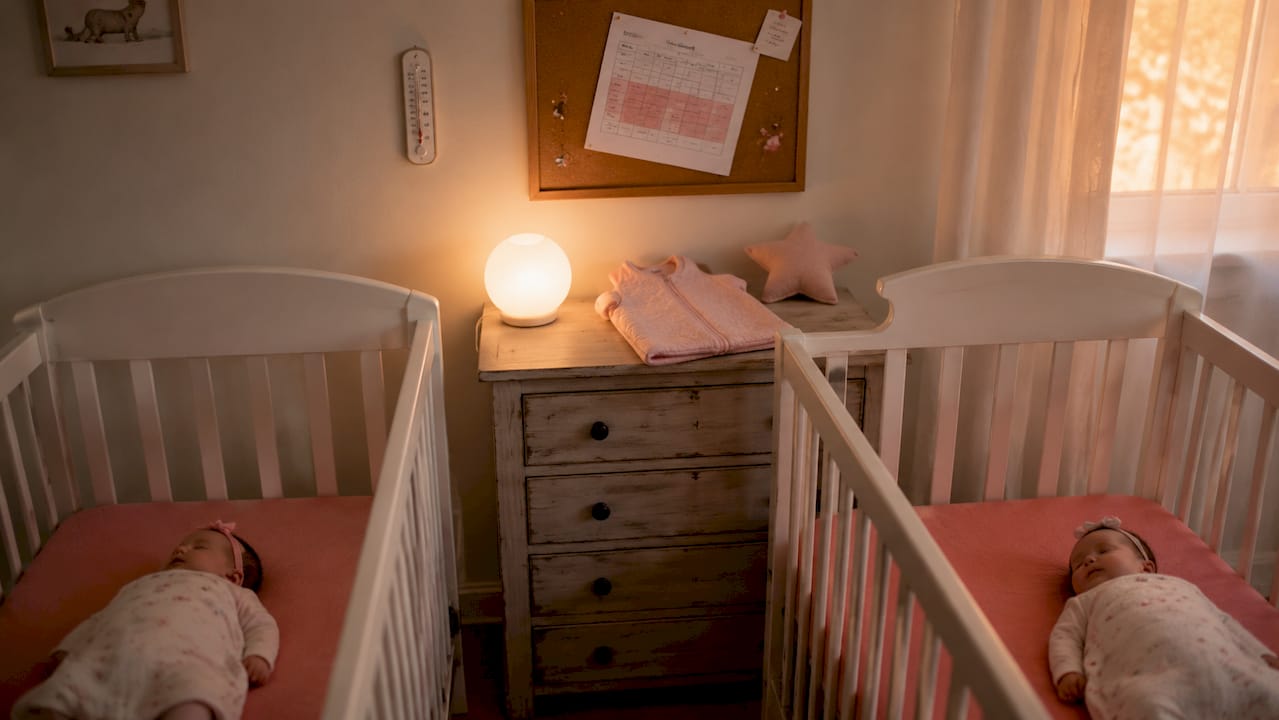
The room where your twins nap does most of the heavy lifting. Ideal nap environments include cool room temperatures of 68–72°F and white noise machines placed between cribs to support longer simultaneous naps. Cool air reduces restlessness, and white noise masks household sounds that would otherwise cut naps short. Blackout curtains are equally important, especially for daytime naps when sunlight signals wakefulness to infant brains.
Tools and materials you need
| Tool | Purpose |
|---|---|
| Sleep log or app (e.g., Huckleberry) | Track wake times, nap lengths, and feeding windows |
| White noise machine (e.g., LectroFan, Yogasleep Dohm Classic) | Mask sibling and household noise during naps |
| Blackout curtains | Block daylight to reinforce sleep cues |
| Twin nursing pillow (e.g., Twin Z Pillow) | Support simultaneous feeding before nap time |
| Timer or phone alarm | Signal nap start and end times consistently |
Understanding wake windows
A wake window is the period an infant can comfortably stay awake before becoming overtired. Newborn wake windows expand from 5–60 minutes in month one to 75–90 minutes by 12 weeks, with feeding every 2.5–3.5 hours. Missing a wake window means an overtired baby who fights sleep harder. For twins, tracking two separate wake windows simultaneously is where a sleep log becomes non-negotiable. The Huckleberry app lets you log both babies side by side, which makes spotting overlap opportunities much easier.
Taking Cara Babies recommends keeping twins’ routines within 10–20 minutes of each other to balance individual needs while promoting manageable synchronization. That 10–20 minute buffer is your working margin. It gives you room to respond to each baby without letting the schedule collapse entirely.
Pro Tip: Start your sleep log on day one, even before you attempt any schedule. Three to five days of raw data will show you natural overlap points you can build on, rather than forcing a timetable that fights your twins’ biology.
How do you build a twin nap schedule step by step?
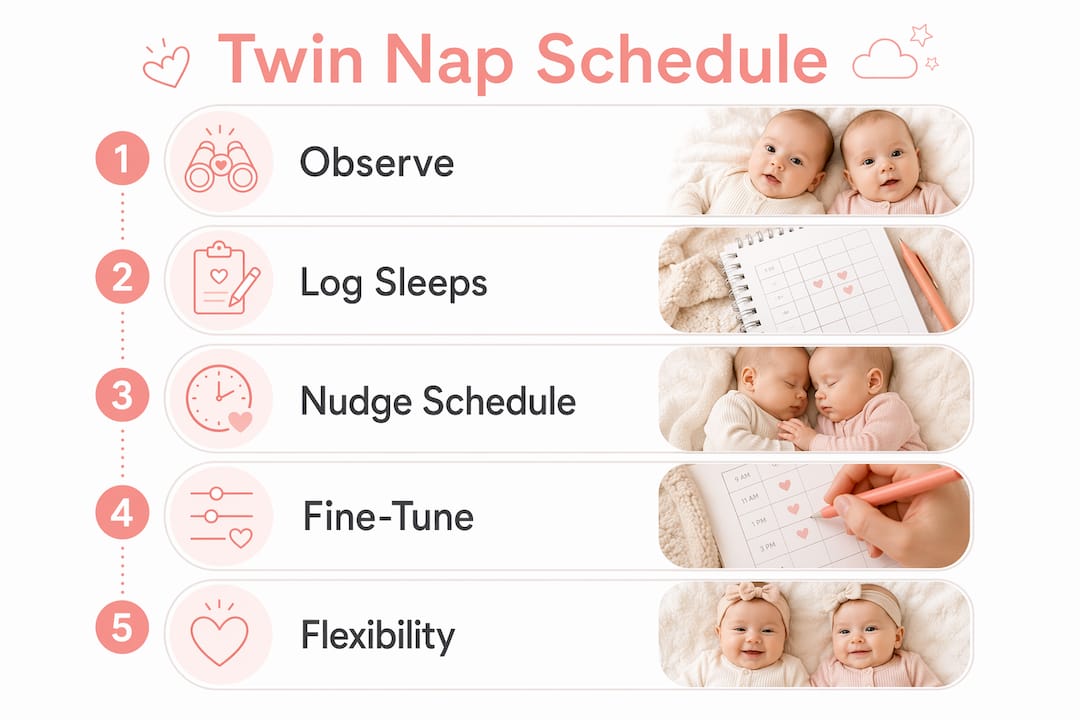
The most effective framework for how to schedule twin naps is the Gap Method, developed and popularized by TwinTactics. Rather than forcing exact simultaneous sleep, the Gap Method allows 30–60 minute overlapping sleep periods that fit twins’ natural rhythms and reduce caregiver burnout. It runs as an intentional four-week process: observe, nudge, fine-tune, and build in flexibility.
Week 1: observe natural sleep cues
- Log every nap start, nap end, and feeding time for both twins.
- Note sleep cues: eye rubbing, yawning, fussiness, or glazed eyes.
- Identify the natural nap windows each baby gravitates toward.
- Look for any existing overlap, even 15–20 minutes, between their naps.
- Do not force any schedule changes this week. Data collection only.
By the end of week one, you will see patterns. Most twins share at least one natural overlap window per day, even without intervention. That overlap is your anchor point for the next phase.
Week 2: gentle schedule nudging
Start shifting nap times by no more than 10–15 minutes per day toward your target overlap window. If Twin A naturally naps at 9:00 a.m. and Twin B at 9:30 a.m., nudge Twin B’s nap 10 minutes earlier each day until they align within 15 minutes of each other. Use consistent pre-nap cues, a short feeding, a diaper change, and a brief wind-down in the darkened room, to signal sleep for both babies at the same time.
- Keep the Eat-Play-Sleep cycle consistent for both twins.
- Use your white noise machine as a consistent auditory cue.
- Avoid letting either twin get overtired during the adjustment period.
- Feed both babies before each nap attempt, even if one is not hungry.
Pro Tip: If one twin resists the nudged nap time, try a slightly earlier start. Overtiredness is the most common reason a nudge fails. An overtired baby produces more cortisol, which makes falling asleep harder, not easier.
Week 3: fine-tune the overlap
By week three, your twins should be napping within 15–30 minutes of each other for at least one nap per day. Now you focus on extending that overlap. Cap naps at 90–120 minutes to protect nighttime sleep pressure, as longer naps in older infants can reduce overnight sleep quality. If one twin wakes early, use the 20-minute rule: allow up to 20 extra minutes before waking the other twin to start the next nap cycle from an averaged time.
Week 4: build in flexibility
No schedule survives contact with a growth spurt, a vaccination day, or a bad night. Week four is about creating backup plans.
- Identify a secondary nap window for days when the primary one fails.
- Accept that some days will be a 30-minute overlap instead of 60 minutes. That still counts.
- Adjust nap start times by up to 20 minutes on off-days without abandoning the schedule entirely.
- Return to the primary schedule the following day without guilt or overcompensation.
A phased approach like this prioritizes Eat-Play-Sleep cycles with flexible wake windows initially, transitioning to consistent clock-based naps by 16 weeks. That transition is natural and gradual, not a hard cutover.
How do you handle it when twins nap differently?
Different nap lengths between twins is the most common frustration parents report. One twin sleeps 45 minutes; the other sleeps 90 minutes. The schedule feels broken. It is not.
The first rule is patience. Practitioners advise waiting 2–3 minutes before intervening when one twin stirs, to allow possible self-soothing and avoid waking the sibling unnecessarily. Watch the clock, not the monitor volume. Many stirrings resolve on their own within two minutes, and rushing in resets the nap entirely.
“Synchronization isn’t about rigid perfection but managing schedules flexibly to create predictable rest blocks that reduce parental exhaustion.” — TwinTactics
When to use separate nap spaces
Using separate nap spaces for twins who wake at different times prevents one from disturbing the other and supports more restful naps for both. A pack-and-play in a second room is the most practical setup. This tactic is common knowledge but rarely used consistently. Parents who commit to it report significantly fewer disrupted naps within the first week.
- Move the lighter sleeper to a separate space once the pattern is clear.
- Keep white noise running in both rooms.
- Return to shared sleep space once nap lengths stabilize within 20 minutes of each other.
Pro Tip: If your twins consistently nap at different lengths, check whether one is getting more daytime stimulation than the other. Uneven activity levels often explain uneven nap lengths more than any scheduling issue.
For twins with developmental differences or established independent rhythms beyond 8 months, a divide-and-conquer approach may serve the family better than forced synchronization. Individualized schedules are not a failure. They are a practical response to two distinct people with distinct needs. You can find more on managing those differences in Twinsandcounting’s guide on why twins sleep differently.
Which twin nap strategy is right for your family?
| Strategy | Best For | Key Benefit | Main Drawback |
|---|---|---|---|
| Strict Synchronization | Twins with naturally similar rhythms | Maximum parental downtime | Rigid; breaks down with any disruption |
| Gap Method | Most twin families in months 2–8 | Flexible overlap; fits natural rhythms | Requires consistent tracking |
| Divide and Conquer | Twins with medical or developmental differences | Respects individual needs fully | No shared parental rest window |
The Gap Method works for most families because it does not demand perfection. Strict synchronization sounds appealing but creates a fragile system where one off-day feels catastrophic. The divide-and-conquer approach, while sometimes necessary, eliminates the shared rest window that makes twin parenting survivable in the early months.
The best nap schedule for twins is the one you can maintain consistently for more than two weeks. Consistency matters more than precision. A schedule you follow 80% of the time beats a perfect schedule you abandon after five days. Twinsandcounting’s guide on keeping twins on schedule walks through the practical techniques for maintaining that consistency long-term.
Key takeaways
A synchronized twin nap schedule built on the Gap Method, consistent wake windows, and a prepared sleep environment gives parents the most reliable path to shared rest and reduced burnout.
| Point | Details |
|---|---|
| Start with observation | Log natural nap times for 3–5 days before making any schedule changes. |
| Use the Gap Method | Aim for 30–60 minute overlapping naps rather than forcing exact synchronization. |
| Prepare the sleep environment | Set room temperature to 68–72°F and use white noise machines between cribs. |
| Apply the 20-minute rule | Allow up to 20 extra minutes before waking the second twin to average start times. |
| Separate nap spaces when needed | Move the lighter sleeper to a second room to protect both twins’ rest. |
What i’ve learned after watching hundreds of twin families try this
Most parents come to twin nap scheduling with the wrong goal. They want both babies asleep at the exact same second. That expectation sets them up for daily disappointment. What actually works is building a predictable window of overlap, even 30–40 minutes, where you can sit down, eat something warm, or simply breathe.
The Gap Method changed how I think about this entirely. It reframes the goal from “perfect sync” to “functional overlap,” and that shift matters more than any specific technique. I have seen families spend weeks chasing exact synchronization and burning out completely, while families using a flexible overlap approach sustain their schedules for months.
The other thing most articles skip: treat your twins as two separate people from the start. Treating twins as individuals while keeping routines closely aligned improves day-to-day manageability far more than rigid matching. One twin may always be a shorter napper. Fighting that reality costs you more energy than accepting it and planning around it.
Nap transitions are also harder than most parents expect. Moving to a single midday nap around 15–17 months is gradual and often involves setbacks like separation anxiety. Knowing that in advance means you will not interpret a rough week as evidence that your whole system has failed.
Give yourself four weeks. Track honestly. Adjust without panic. The schedule will come together.
— Jay
Twinsandcounting has the resources to keep you moving forward
Getting the nap schedule right is one piece of a much larger picture. Twinsandcounting has built a library of practical, twin-specific guides to support you at every stage, from the first chaotic weeks through toddlerhood.

If you are still in the early weeks, the twin care tips and tricks guide covers the foundational strategies that make everything else, including nap scheduling, easier to manage. For parents navigating nap schedules alone, the solo parenting schedule tips guide offers realistic, tested approaches for managing two babies without a second set of hands. You do not have to figure this out alone. Twinsandcounting is here with the specific, honest guidance twin parents actually need.
FAQ
What age should i start a twin nap schedule?
You can begin observing and logging sleep patterns from week one, but active schedule nudging works best after 6–8 weeks when wake windows become more predictable.
How long should twin naps be?
Cap naps at 90–120 minutes for infants older than 3 months to protect nighttime sleep quality. Shorter naps of 30–45 minutes are normal in the newborn stage.
What is the gap method for twin naps?
The Gap Method targets a 30–60 minute overlap in nap times rather than exact synchronization, reducing caregiver burnout while fitting each twin’s natural rhythm.
Should twins nap in the same room?
Sharing a room works well when nap lengths are similar. When one twin consistently wakes earlier, moving the lighter sleeper to a separate space protects both babies’ rest.
How do i handle a twin who always naps shorter?
Apply the 20-minute rule: allow the early waker up to 20 extra minutes before waking the other twin, then average the start time for the next nap cycle to gradually realign the schedule.