

A feeding log for twins is a structured record of each baby’s feeding time, duration, side or bottle, and quantity. The role of feeding logs for twins goes far beyond simple note-taking. It is a coordination system that prevents missed feeds, stops accidental double feeding, and gives you real data to share with your pediatrician. Twinsandcounting recognizes feeding logs as one of the most practical tools new twin parents can use, right from day one. Without a log, you are relying on sleep-deprived memory to manage two separate feeding schedules simultaneously. That is a setup for mistakes.
Why the role of feeding logs for twins matters so much
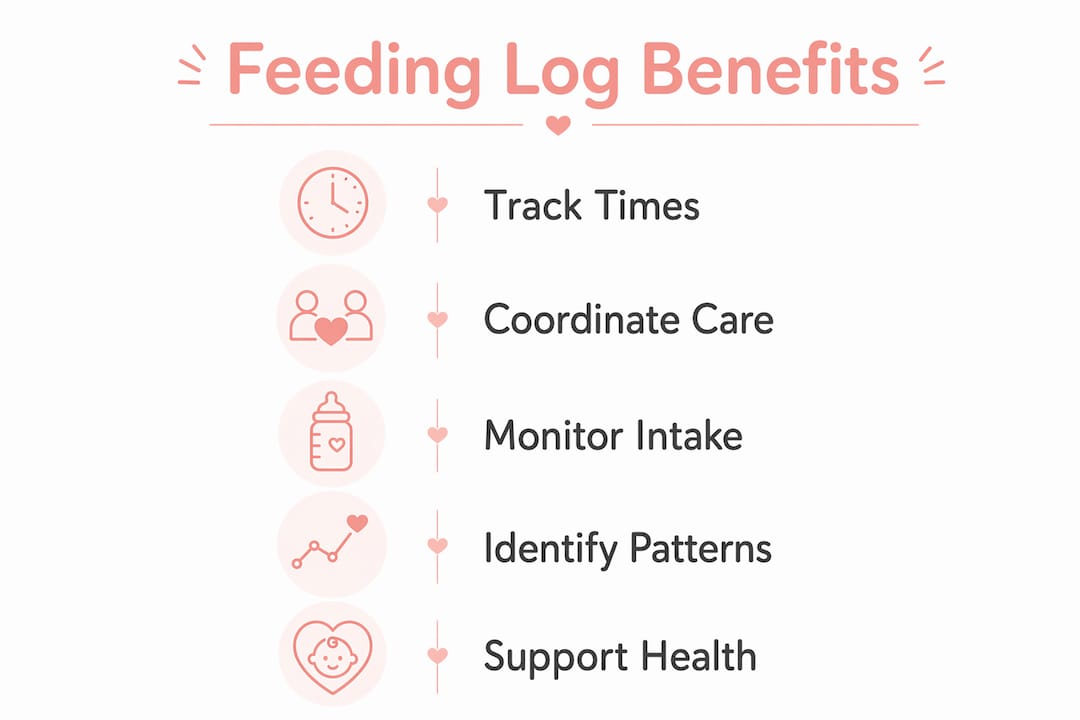
Feeding logs are the backbone of a workable twin feeding schedule. Newborn twins need 8–12 feeds in every 24-hour period to get adequate nutrition and support milk supply. That means you are managing up to 24 individual feeding events per day across two babies. No parent can track that reliably in their head.
The log gives you a single source of truth. When your partner takes over at 2 AM, they do not need to wake you to ask who ate last or which breast Twin B used. They check the log and get started. That handoff without conversation is what makes the difference between a manageable night and a chaotic one.
Feeding logs also protect milk supply for breastfeeding parents. Milk production responds to demand, not fixed capacity. Frequency is the most important variable. A log makes it easy to see at a glance whether you have hit your target sessions for the day, and where the gaps are.
- Track feeding time and duration for each twin separately
- Record which breast or bottle was used and the amount consumed
- Note diaper output alongside feeds to monitor hydration
- Flag any feeding difficulties, fussiness, or unusual behavior
- Log medications or supplements given to each baby
Pro Tip: Label your twins consistently from day one. Use Twin A and Twin B, or their first names, and never switch. Inconsistent labeling is the most common source of log errors in the first two weeks.
How synchronized feeding works with a feeding diary for twins
Synchronized feeding means waking both babies to feed at the same time, even if only one woke up naturally. Healthcare providers recommend this approach because it protects the 8–12 daily feeding frequency while giving parents predictable recovery windows between sessions.
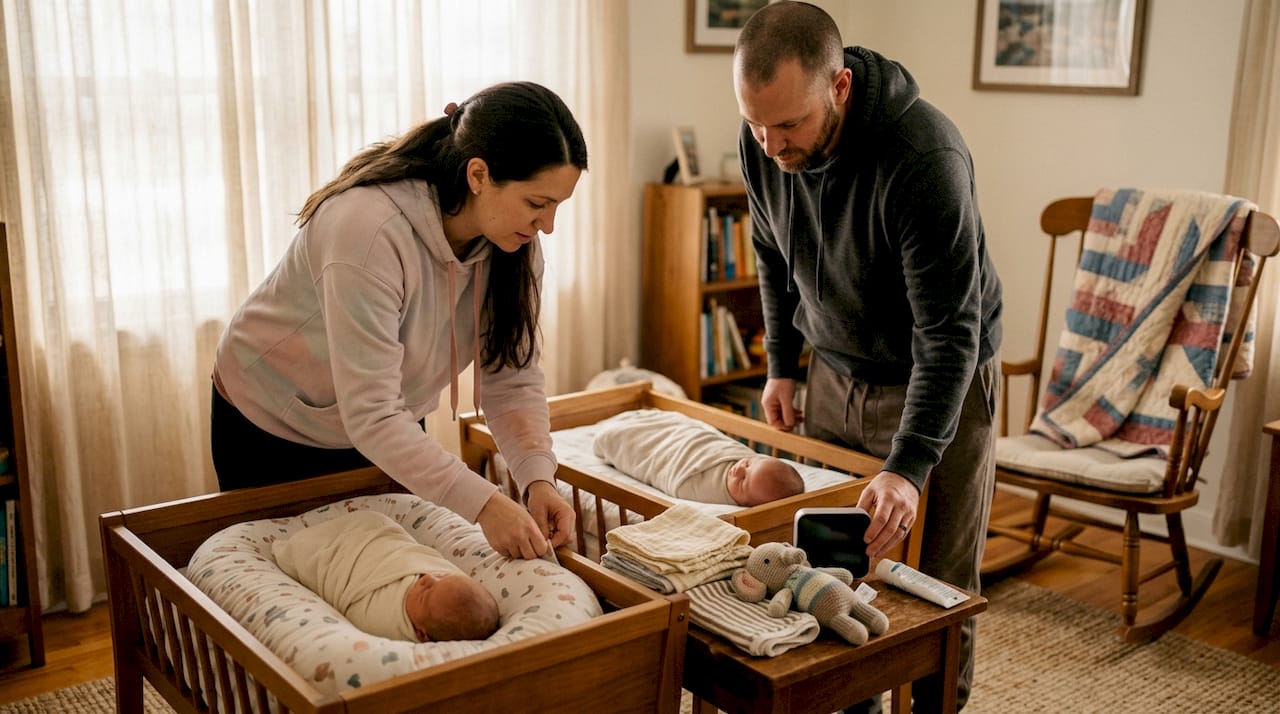
A feeding and burping cycle for twins can take up to 90 minutes. By 6–8 weeks, many families stretch intervals to 2–3 hours between feeds. Your feeding diary is what makes this rhythm visible. You can look back at the last 24 hours and see whether the spacing is consistent or whether one twin is pulling the schedule off track.
Without a log, synchronized feeding is nearly impossible to maintain. You cannot synchronize what you cannot see. The diary turns a chaotic stream of feeds into a pattern you can actually manage and adjust.
How to use your log to build a feeding rhythm
Write down the start time of each feed, not just the end time. Start times give you the true interval between sessions. When you see that Twin A started at 6:00 AM and Twin B at 6:05 AM, you know the sync is working. When you see a 45-minute gap between them, you know it slipped.
Use your log to spot natural cluster feeding windows too. If both babies consistently feed more frequently between 5 PM and 9 PM, that is a cluster pattern worth noting. Tracking it helps you plan, rather than react. For more on managing this pattern, Twinsandcounting covers cluster feeding strategies in detail.
What format works best for tracking twin feeding?
The format of your feeding log matters as much as the habit of using one. Three main options exist: digital apps, printable charts, and low-tech physical logs like whiteboards.
| Format | Best for | Main limitation |
|---|---|---|
| Digital app | Multiple caregivers sharing data in real time | Screen fatigue during night feeds |
| Printable chart | Simple daily overview, easy to post on fridge | Requires printing and replacing regularly |
| Wall-mounted whiteboard | Instant visibility, no screens needed at 3 AM | Limited space for detailed notes |
Wall-mounted whiteboards are often preferred during night feeds because both parents can check feeding status at a glance without unlocking a phone. Digital apps, on the other hand, allow caregivers in different rooms or different homes to stay synced in real time. That matters when a grandparent or babysitter is involved.
The best format is the one your whole household will actually use. A sophisticated app that only one parent knows how to operate defeats the purpose. Simplicity and shared access beat features every time.
- Digital apps: Best when multiple caregivers need real-time access; look for shared-account functionality
- Printable charts: Good for visual parents who want a paper backup; tape it at eye level near the feeding station
- Whiteboards: Ideal for night feeds; use a different color marker for each twin
Pro Tip: Many families use a hybrid approach. A whiteboard handles overnight feeds, and one parent transfers the data to a digital log each morning. This keeps nights low-friction and records complete.
Practical tips for keeping your feeding log accurate
Consistency is the hardest part of any logging system. The log only works if every caregiver uses it every time. These steps make that easier.
- Start with the basics. Record feed start time, duration, and diaper changes only. Add more detail after the first two weeks when you have the habit locked in.
- Keep the log at the feeding station. If it is not within arm’s reach, it will not get filled in. Tape a printable chart to the wall or prop a whiteboard next to the nursing pillow.
- Agree on terminology before the baby comes home. Decide whether you will say “left breast” or “L,” “Twin A” or a name. Everyone in the household uses the same terms.
- Share the logging responsibility equally. Shared logs eliminate verbal handoffs, which saves time and reduces errors. The caregiver who does the feed fills in the log, every time.
- Add a notes column. Use it for medications, mood, feeding refusals, or any reaction after introducing a new food. These notes become invaluable at pediatric appointments.
- Review the log together once a day. A five-minute morning check-in where both parents scan the previous 24 hours catches gaps before they become problems.
Demand feeding twins is genuinely hard, and a log does not make it effortless. What it does is reduce the cognitive load so you can focus on the babies instead of trying to remember what happened three feeds ago.
How feeding logs support coordination and pediatric care
Feeding logs reduce decision fatigue for every caregiver in the household. Shared logs let the next caregiver take over without needing a detailed verbal briefing. That is not a small thing at 4 AM when both parents are exhausted.
The benefits extend well beyond the household. Pediatricians prioritize total 24-hour feeding volume and wet diaper counts over minute-by-minute details. A log gives your doctor exactly that data, organized and ready, instead of you trying to reconstruct the week from memory in a waiting room.
“Logs provide reliable, immediate information, preventing reliance on memory or scattered notes during medical visits.” — Feeding Tracking Features, TinyLog
Feeding logs also support allergen tracking when you start introducing solids. If Twin B reacts to a new food, your log tells you exactly what was introduced and when. That specificity helps your pediatrician make faster, more accurate decisions.
The coordination benefit is real for relationships too. Feeding logs are tools for relationship management, helping parents divide tasks fairly and prevent one person from carrying the full mental load. When both parents can see the same data, resentment over unequal effort has less room to grow. Twinsandcounting covers this dynamic in depth for parents keeping twins on the same schedule.
- Logs give pediatricians organized data on feeding frequency and diaper output
- Allergen introduction and reactions are documented with dates and times
- Both parents see the same information, reducing miscommunication
- Caregivers like babysitters can follow the log without a lengthy briefing
- Parental anxiety drops when intake is documented rather than guessed
Key Takeaways
Feeding logs are the single most effective tool for managing twin feeding schedules, preventing errors, and supporting both parental coordination and pediatric care.
| Point | Details |
|---|---|
| Feed frequency target | Newborn twins need 8–12 feeds per 24 hours; a log makes hitting that target visible. |
| Synchronized feeding | Waking both twins together builds rhythm; the log tracks intervals to keep sync on track. |
| Format choice | Pick the format your whole household will use consistently, not the most feature-rich option. |
| Caregiver coordination | Shared logs eliminate verbal handoffs and reduce errors during caregiver transitions. |
| Pediatric value | Logs give doctors organized 24-hour data on volume, diapers, and allergen introductions. |
Why I think most twin parents underestimate the log
Most new twin parents I have talked with treat the feeding log as a nice-to-have. They start one in the hospital, use it for a week, and then let it slide when things get busy. That is exactly the wrong time to stop.
The first six weeks are when feeding patterns are most fragile and most consequential. Milk supply is being established. Babies are learning to latch or take a bottle. Sleep deprivation is at its peak. This is when a log does its best work, not when things are easy.
What I have seen change everything for twin families is reframing the log as a communication tool, not a chore. When both parents treat it as the shared record of their team effort, it stops feeling like homework. It becomes the thing that lets one parent sleep while the other handles a feed, with full confidence that nothing will be missed or doubled.
The emotional relief of documented intake is real too. When you are anxious about whether your babies are eating enough, the log gives you an answer grounded in actual data. That is worth more than any amount of reassurance from well-meaning relatives.
My honest advice: start simpler than you think you need to. Time and diaper count only, for the first week. Add detail as you find your rhythm. The log that gets used is infinitely more valuable than the perfect log that gets abandoned.
— Jay
Twinsandcounting has the twin parenting resources you need
Managing two babies at once is a logistical challenge that gets easier with the right systems in place. Feeding logs are one piece of that puzzle.
Twinsandcounting brings together real twin parenting stories from parents who have been exactly where you are right now. You will find practical strategies for feeding, sleep, and daily routines, all written specifically for twin households. Whether you are figuring out night feeds or trying to get both babies on the same nap schedule, the twin care guide is a solid place to start. You do not have to figure this out alone.
FAQ
What should a feeding log for twins include?
A feeding log for twins should record the start time, duration, side or bottle used, and amount consumed for each baby, plus diaper output. Adding a notes column for medications, mood, or feeding difficulties makes the log useful at pediatric appointments.
How often should newborn twins be fed?
Newborn twins should be fed 8–12 times in every 24-hour period. Feeding every 2–3 hours is typical in the early weeks, and a log helps you confirm that frequency is being met for both babies.
Do feeding logs help with breastfeeding twins?
Yes. Milk production responds to demand, so tracking nursing frequency with a log helps you confirm you are hitting the sessions needed to maintain supply. Gaps in the log often reveal gaps in feeding before they affect supply.
What is the easiest feeding log format for night feeds?
A wall-mounted whiteboard is the easiest format for night feeds because both parents can check it instantly without a phone screen. Many families transfer whiteboard data to a digital log each morning to keep a complete record.
How do feeding logs reduce parental stress?
Shared feeding logs eliminate verbal handoffs between caregivers, reduce the chance of errors like double feeding, and give both parents equal visibility into what is happening. That shared awareness lowers anxiety and distributes the mental load more fairly.