

Bed rest in twin pregnancies is defined as a medically directed reduction in physical activity, prescribed to lower the risk of complications like preterm labor, preeclampsia, and cervical insufficiency. If your doctor has mentioned activity restriction, you are not alone. Twin pregnancies carry a higher baseline risk than singleton pregnancies, which is exactly why bedrest for multiple pregnancies has been a common recommendation for decades. The challenge is that the science behind this advice has shifted significantly. Organizations like the Society for Maternal-Fetal Medicine (SMFM) and the American College of Obstetricians and Gynecologists (ACOG) now take a more nuanced position, and understanding why bedrest is recommended for twins requires looking at both the historical reasoning and the current evidence.
Why bedrest is recommended for twins: the medical reasoning
Twin pregnancies place greater physical demands on the body than singleton pregnancies. Two babies mean more weight, more pressure on the cervix, and a uterus that stretches earlier and faster. Doctors have historically reasoned that reducing physical activity would lower uterine contractions, ease cervical pressure, and reduce the risk of early delivery.
The specific risks that prompt providers to consider activity restriction include:
- Preterm labor: Twin pregnancies have a significantly higher rate of preterm birth than singleton pregnancies, making this the most common reason for bed rest recommendations.
- Preeclampsia: High blood pressure in pregnancy is more common with multiples and can develop quickly.
- Cervical insufficiency: A weakened cervix may dilate too early, especially under the added weight of two babies.
- Placenta previa: When the placenta partially or fully covers the cervix, physical activity can trigger bleeding.
- Intrauterine growth restriction (IUGR): When one or both babies are not growing at the expected rate, rest is sometimes suggested to redirect blood flow.
- Twin-to-twin transfusion syndrome (TTTS): This condition, unique to identical twins sharing a placenta, can require close monitoring and activity limits.
The logic behind bed rest sounds reasonable on the surface. Less physical stress means less strain on the cervix and uterus. But the question of whether rest actually delivers those benefits is where the research gets complicated.
Pro Tip: Ask your provider to name the specific complication they are trying to address with bed rest. A clear answer helps you understand your care plan and ask better follow-up questions.

What does current research say about bed rest effectiveness?
The evidence against routine bed rest is now well established. Cochrane systematic reviews show bed rest provides no measurable benefit for preventing preterm labor, preeclampsia, or fetal growth restriction. SMFM formally recommended against routine activity restriction for multiple gestations in 2016, roughly thirty years after the practice became widespread.
The delay between evidence and policy is striking. Bed rest was prescribed for decades based on clinical intuition, not clinical proof. That gap matters because bed rest is not a neutral intervention. It carries real physical risks.
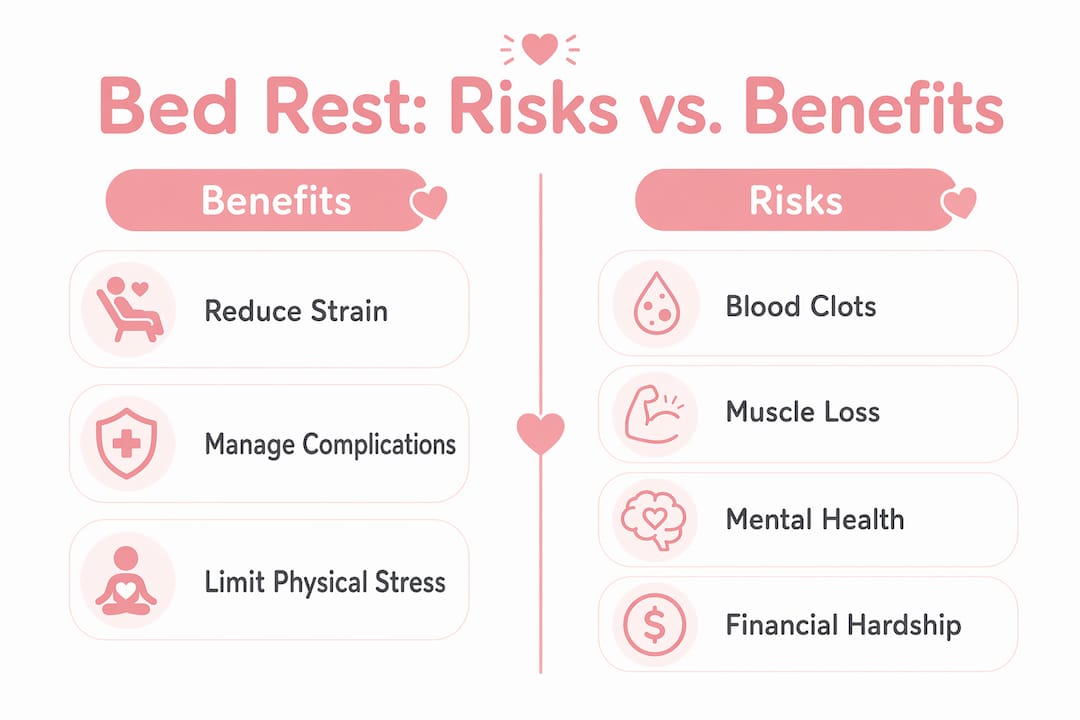
Just three days of bed rest can increase the risk of blood clots and trigger body-wide deconditioning, including reduced bone density and muscle atrophy. Restricted movement in pregnancy is directly linked to thromboembolic disease, a serious and potentially life-threatening complication.
| Factor | Bed rest | Active monitoring |
|---|---|---|
| Preterm birth prevention | No proven benefit | More effective with early detection |
| Blood clot risk | Increased | Lower with gentle movement |
| Muscle and bone health | Declines rapidly | Maintained with safe activity |
| Mental health | Worsens (depression, anxiety) | Better with social engagement |
| Cervical pressure | Unaffected by rest | Managed through monitoring |
Bed rest can worsen maternal outcomes including depression, anxiety, and financial hardship from job loss or insurance disruptions. The psychological toll is significant and often underestimated by providers. Despite all of this, 80% of maternal-fetal medicine specialists would still prescribe rest for at-risk patients, even though 70% of those same specialists acknowledge there is no supportive data. That gap between knowledge and practice is one of the most important things you can understand as an expectant parent.
When might bed rest still be prescribed during a twin pregnancy?
Routine bed rest and medically indicated activity restriction are two different things. Routine bed rest means prescribing rest as a general precaution for all twin pregnancies. Medically indicated restriction means limiting specific activities because of a confirmed, active complication.
Some specific complications like cervical insufficiency may warrant strict activity limits combined with other interventions, such as a cervical cerclage. This is highly individualized and not a blanket recommendation. Situations where your provider may still recommend some form of activity restriction include:
- Active preterm labor: Contractions before 37 weeks that are progressing.
- Cervical shortening: A cervix measuring less than 25mm on ultrasound in the second trimester.
- Placenta previa with active bleeding: Any bleeding from a low-lying placenta requires immediate rest and evaluation.
- Severe preeclampsia: Blood pressure that is not controlled with medication may require hospitalization and strict rest.
- Uncontrolled TTTS: Rapid fluid changes between twins may require reduced activity while awaiting intervention.
Doctors may recommend limited activity not as a cure but as a way to reduce exposure to stressors like heavy lifting or long commutes. This is a management strategy, not a treatment. Knowing the difference gives you the ability to have a more informed conversation with your care team.
Pro Tip: If your provider prescribes bed rest, ask whether it is full bed rest, modified bed rest, or pelvic rest. Each means something different, and knowing the specifics helps you follow the plan correctly.
How can you safely manage activity and support a healthy twin pregnancy?
Exercise is safe and beneficial in most twin pregnancies, contrary to older assumptions. Staying active improves cardiovascular stamina and reduces risks compared to full immobility. If your provider has not restricted your activity, gentle movement is your ally.
Here are practical steps to support your health during a twin pregnancy:
- Walk daily. Short, flat walks of 15–20 minutes support circulation and reduce blood clot risk without straining the uterus.
- Prioritize protein and iron. Twin pregnancies increase nutritional demands. Aim for adequate protein at every meal to support fetal growth and your own muscle maintenance.
- Stay hydrated. Dehydration can trigger uterine contractions. Drinking enough water daily is one of the simplest ways to reduce that risk.
- Practice pelvic floor exercises. Kegel exercises support the pelvic floor under the added weight of two babies and do not increase uterine pressure.
- Build a support network. Isolation during pregnancy, especially on bed rest, worsens anxiety and depression. Connect with other twin parents through communities like Twinsandcounting.
- Communicate openly with your provider. Report any new symptoms immediately, including pressure, spotting, or contractions. Early reporting leads to earlier intervention.
- Protect your mental health. If bed rest is prescribed, ask for a referral to a perinatal mental health counselor. The psychological impact of enforced rest is real and treatable.
If you are on modified bed rest, ask your provider which specific activities are off-limits. Many parents assume bed rest means complete immobility when their provider actually means avoiding heavy lifting and long periods of standing.
How does specialized monitoring replace routine bed rest for twin pregnancies?
Effective preventive care for twins focuses on frequent monitoring, nutrition, and selecting experienced providers rather than routine immobilization. More frequent ultrasounds and specialized care catch complications earlier, which improves outcomes far more reliably than rest alone.
Maternal-fetal medicine (MFM) specialists are trained specifically in high-risk pregnancies. Choosing a provider with MFM expertise is one of the most protective decisions you can make. The best precaution for expecting twin parents is selecting a healthcare provider skilled in multiples management who can deliver personalized monitoring and advice.
Modern precaution strategies that replace routine bed rest include:
- Cervical length screening: Ultrasound measurements of the cervix starting at 16 weeks detect early shortening before symptoms appear.
- Growth scans every 4 weeks: Regular ultrasounds track each baby’s growth and catch IUGR or TTTS early.
- Biophysical profiles: These detailed ultrasounds assess fetal movement, breathing, and fluid levels to confirm baby wellbeing.
- Non-stress tests (NSTs): Electronic fetal monitoring in the third trimester checks heart rate patterns and uterine activity.
- Nutritional counseling: A registered dietitian familiar with twin pregnancies can tailor caloric and protein intake to support two growing babies.
- Preterm birth prevention clinics: Some hospital systems offer dedicated programs for high-risk multiple pregnancies with weekly check-ins.
This monitoring-first approach means problems get caught and treated rather than simply waited out. That is a fundamentally more effective strategy than lying still and hoping for the best.
Key takeaways
Bed rest for twin pregnancies is not a proven treatment. Individualized monitoring, active wellness, and specialized care deliver better outcomes than routine immobilization.
| Point | Details |
|---|---|
| Bed rest lacks evidence | Cochrane reviews confirm no measurable benefit for preventing preterm labor or preeclampsia in twin pregnancies. |
| Immobility carries real risks | Just three days of bed rest increases blood clot risk and causes muscle and bone loss. |
| Some cases still warrant restriction | Cervical insufficiency, active preterm labor, and placenta previa with bleeding may require individualized activity limits. |
| Monitoring outperforms rest | Frequent ultrasounds, cervical screening, and MFM specialist care catch complications earlier and more reliably. |
| Mental health matters | Enforced bed rest worsens depression and anxiety, making psychological support a necessary part of any rest prescription. |
My honest take on bed rest and twin pregnancies
I have spent a lot of time reading the research on this topic, and one thing stands out clearly. Bed rest persisted for thirty years not because it worked, but because providers felt they had to do something. That impulse is deeply human. When a pregnancy is high-risk, inaction feels wrong. Prescribing rest feels like protection.
The problem is that protection without evidence is not protection. It is a false sense of security that can actually cause harm. The physical risks of immobility are real. The psychological toll of being confined to a bed for weeks or months is real. And the evidence that rest prevents preterm birth or preeclampsia in twin pregnancies is essentially nonexistent.
What I believe matters most is this: you deserve a provider who explains the specific reason for any restriction, not just a general instruction to rest. If your doctor recommends bed rest, ask what complication they are managing and what the alternative approaches are. A good MFM specialist will welcome that conversation. If they cannot give you a clear answer, that is important information too.
The twin pregnancy experience is already demanding enough. Spending it in bed without a clear medical reason adds stress without adding safety. Focus your energy on finding skilled, communicative care, staying as active as your provider allows, and building the support network you will need both before and after your babies arrive. You can read more about preparing for twins’ arrival to get a head start on that process.
— Jay
Twin pregnancy support from Twinsandcounting
Twinsandcounting is built for parents who are navigating exactly what you are facing right now. Whether you are managing a complicated twin pregnancy or preparing for what comes after delivery, the resources here are written specifically for the twin experience.

From practical tips for caring for twins to self-care strategies that actually hold up under the pressure of raising two babies at once, Twinsandcounting covers the full picture. You do not have to figure this out alone. The community, the guides, and the expert-backed advice are all here when you need them.
FAQ
Why is bedrest recommended for twins?
Bed rest has historically been recommended for twin pregnancies to reduce physical strain on the cervix and uterus, with the goal of lowering preterm birth risk. Current guidelines from SMFM and ACOG no longer support routine bed rest, as research shows it provides no measurable benefit for most twin pregnancies.
Can bedrest help twin pregnancies with specific complications?
Yes, in specific cases such as cervical insufficiency, active preterm labor, or placenta previa with bleeding, individualized activity restriction may still be part of a care plan. This is different from routine bed rest and is always tied to a confirmed complication.
What are the risks of bed rest during a twin pregnancy?
Just three days of bed rest can increase blood clot risk and cause muscle atrophy and bone density loss. Bed rest also worsens depression and anxiety, making psychological support a necessary part of any extended rest prescription.
Is exercise safe during a twin pregnancy?
Exercise is safe and beneficial in most twin pregnancies. Gentle activity like walking improves circulation and cardiovascular health, and experts at Cedars-Sinai confirm that staying active reduces risks compared to immobility.
What replaces bed rest as a preventive strategy for twins?
Frequent ultrasounds, cervical length screening, growth scans, and care from a maternal-fetal medicine specialist are the most effective tools for catching and managing twin pregnancy complications early, without the harms of routine immobilization.