
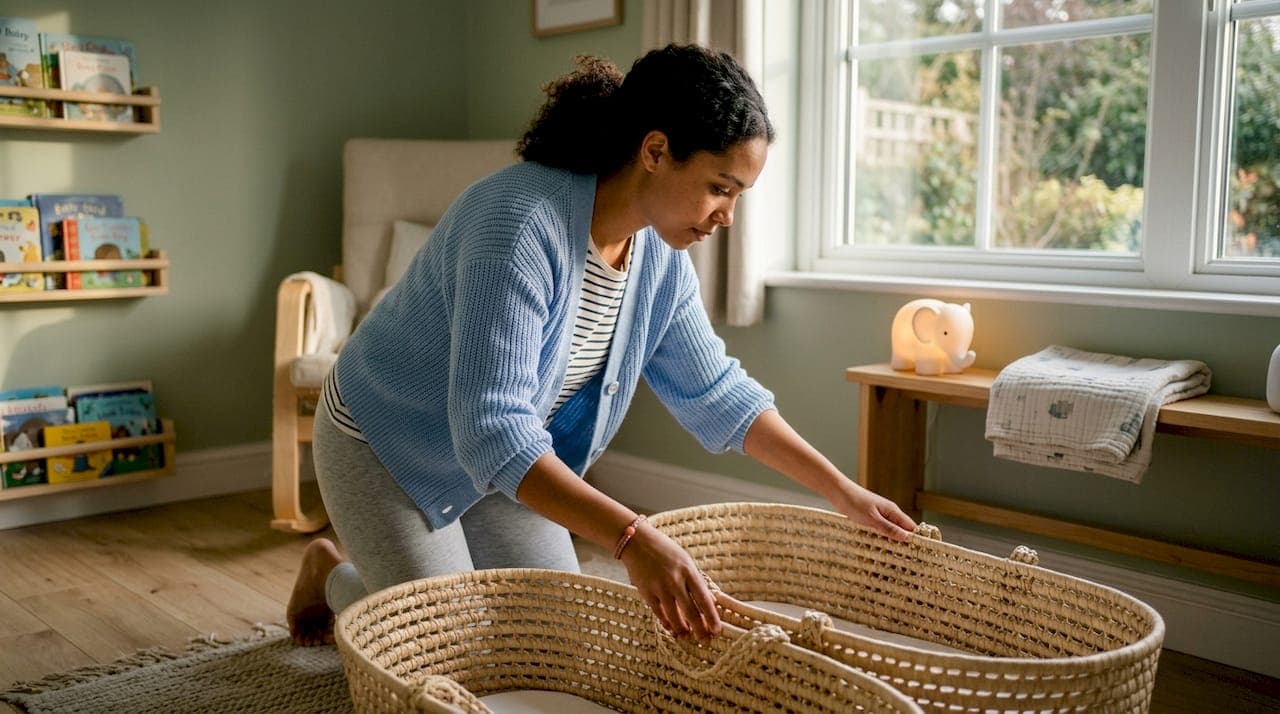
A safe co-sleeping twins setup means giving each baby their own firm, flat sleep surface inside the parents’ room, following the American Academy of Pediatrics (AAP) guidelines to reduce the risk of Sudden Infant Death Syndrome (SIDS). The term “co-sleeping” covers a range of arrangements, but for twins, the medically recognized standard is room-sharing without bed-sharing. Room-sharing for at least 6 months cuts SIDS risk by up to 50%. Twins face an even higher baseline risk than singletons, making strict adherence to these guidelines non-negotiable. Twinsandcounting has helped thousands of twin parents build setups that are both safe and sustainable from day one.
What does a safe co-sleeping twins setup actually require?
Every safe twin sleep environment starts with one rule: separate surfaces for each baby. The AAP prohibits bed-sharing and co-bedding for twins because placing two infants on the same surface creates suffocation risks, especially once rolling begins. Each twin needs a firm, flat mattress with no pillows, bumpers, or loose bedding. Both sleep spaces belong in the parents’ room for at least the first six months. Twins are roughly twice as likely to face SIDS risk compared to singletons, which is why the twin sleep environment basics go beyond general infant safe sleep advice.
Essential equipment for a twin sleep environment setup
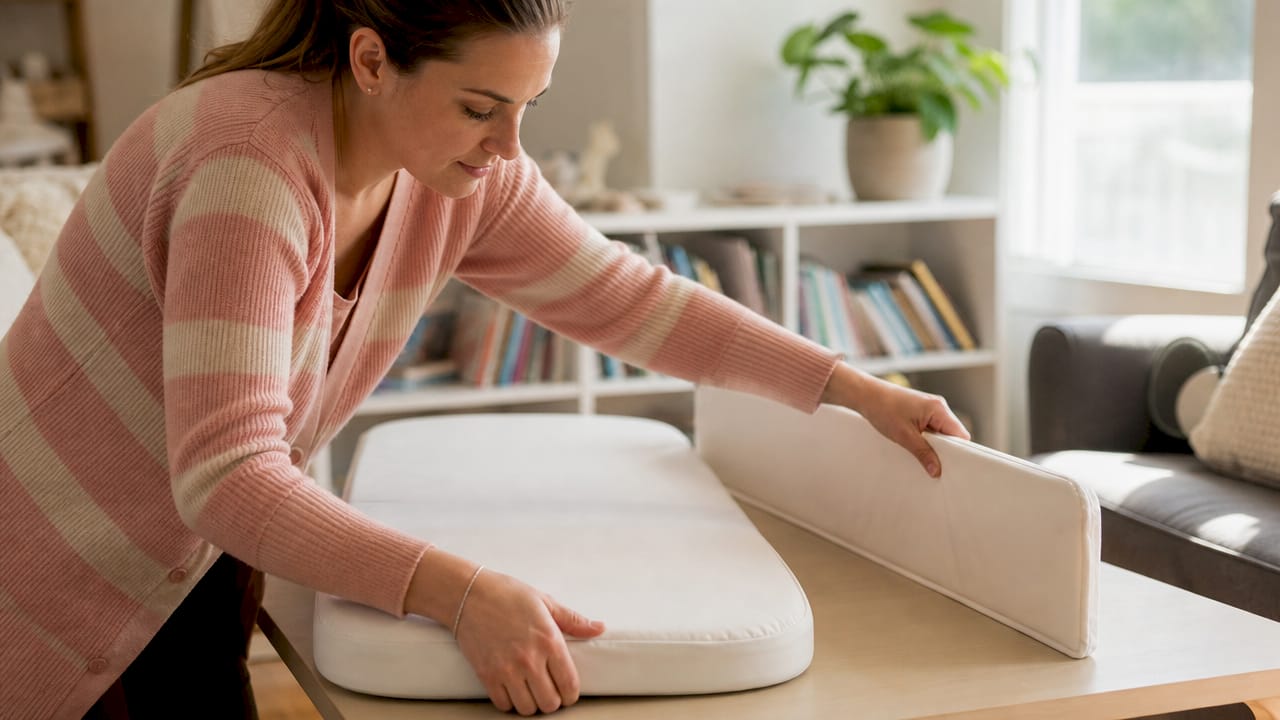
Choosing the right sleep surfaces is the foundation of co-sleeping safety for twins. You have three main options, each with real trade-offs.
| Sleep surface | Pros | Cons | Safety rating | Cost range |
|---|---|---|---|---|
| Individual bassinets (side by side) | Compact, keeps twins visible, easy access | Limited weight capacity, short use window | High | $80–$250 each |
| Full-size cribs (two separate) | Long-term use, firm mattress standard | Takes more floor space | High | $150–$600 each |
| Twin-specific bassinet with solid divider | Saves space, keeps twins close | Divider must be solid, not mesh | High (if certified) | $200–$400 |
| Bedside sleeper (one per twin) | Attaches to parent bed, easy night feeds | Requires two units for twins | High | $100–$300 each |
| Soft-sided play yards with bassinet insert | Portable, affordable | Inserts have weight limits | Moderate | $80–$200 |
Side-by-side individual bassinets or twin-specific bassinets with solid dividers are the most practical choices for small rooms. The divider must be rigid, not fabric, to prevent any contact between babies. Place both units within arm’s reach of your bed so you can respond to either twin without fully waking.
Temperature control matters more than most parents expect. Keep the room between 68°F and 72°F. Overheating is a known SIDS risk factor, so dress each baby in a single sleep layer and skip blankets entirely.
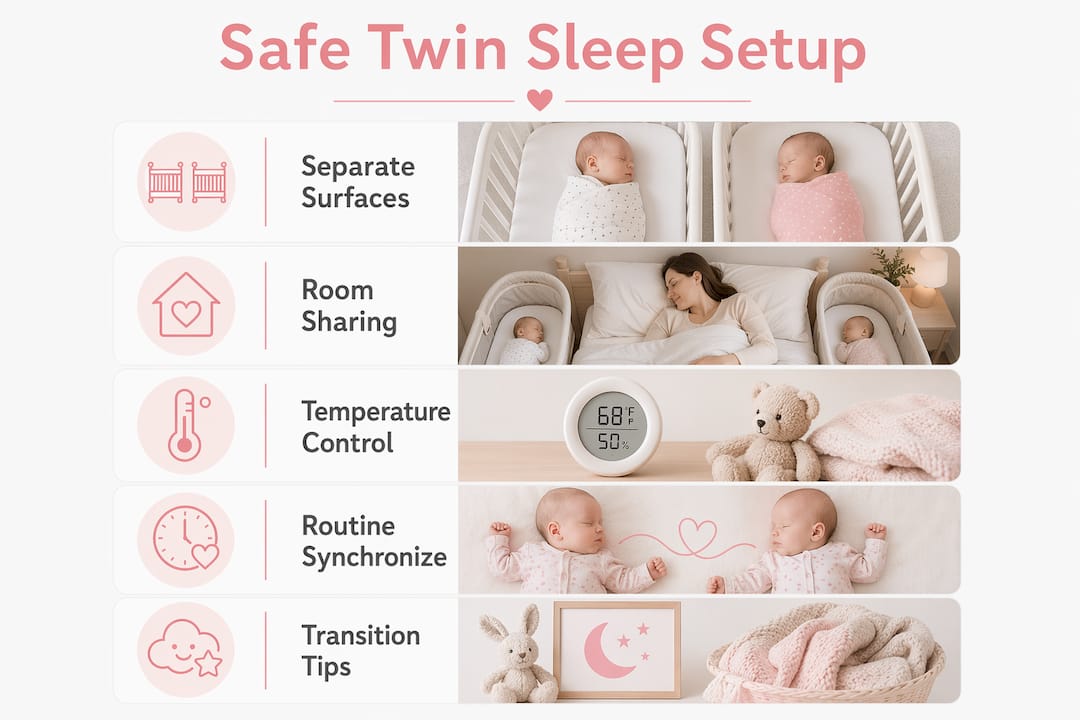
Pro Tip: If floor space is tight, stagger the bassinets at a slight angle rather than pushing them flush against each other. This keeps both babies visible from the bed and allows airflow between units.
How to transition twins to separate sleep areas
Transitioning twins to separate sleep spaces works best when you move one baby at a time. Trying to move both simultaneously doubles the disruption and makes it nearly impossible to troubleshoot which twin is struggling.
-
Identify the more independent twin. Start with the baby who self-soothes more easily. Moving the calmer sleeper first protects the household’s overall sleep quality during the adjustment.
-
Move the first twin to their new surface. Keep the new surface in the same room. Change only the sleep location, not the bedtime routine, the lighting, or the white noise. Consistency in everything else helps the baby adjust faster.
-
Hold the position for 5–7 days. Staggering the transition over 5–7 days prevents simultaneous sleep disruption across both babies. Use this window to observe the first twin’s adjustment before moving the second.
-
Move the second twin using the same method. Repeat the process with the same routine, same environment cues, and the same patience. The second twin often adjusts faster because the household rhythm is already established.
-
Reunite the routines. Once both twins are settled on their individual surfaces, sync their bedtime and wake windows again. Aligned schedules are what make the whole setup sustainable.
Pro Tip: During the transition window, place a worn but unwashed piece of your clothing near each bassinet. Your scent is a powerful calming cue for newborns and can reduce fussing during the first nights in a new spot.
The most common mistake parents make is rushing the second transition because the first went smoothly. Give each twin the full adjustment window regardless of how easy it looks.
How do synchronized routines improve twin co-sleeping safety?
Synchronized sleep routines are the single biggest factor in making a twin co-sleeping arrangement sustainable long-term. Aligned sleep and wake windows reinforce each baby’s biological clock and reduce the exhausting cycle of tag-team night feedings.
Here is what a mirrored sleep environment looks like in practice:
- White noise: Use one white noise machine per sleep surface, set to the same volume and sound type. Identical audio cues help each twin associate the sound with sleep independently.
- Lighting: Dim the room to the same level for every sleep period. Blackout curtains work well for naps and help signal nighttime to both babies simultaneously.
- Swaddling: Use the same swaddle technique and fabric weight for each twin. Consistent physical cues reinforce the sleep association across both babies.
- Feed timing: Wake both twins at the same time for night feeds, even if only one wakes naturally. Aligned feeding cycles are critical for parental rest past the three-month mark.
- Soothing sequence: Use the same order of steps (feed, burp, swaddle, white noise) for both babies every time. Predictability speeds up the settling process.
Synchronized twin sleep schedules improve parental rest and promote more consolidated infant sleep over time. The goal is not perfection on night one. The goal is consistency across enough nights that both babies begin to anticipate sleep.
Common challenges with twin co-sleeping and how to fix them
Even a well-planned twin baby sleep setup runs into real-world friction. Here are the most common problems and what actually works.
-
One twin wakes the other. This is the most frequent complaint. White noise at a consistent volume masks the sounds of one baby stirring. If one twin is a louder sleeper, position that bassinet slightly farther from the quieter twin without leaving the parents’ room.
-
Limited floor space. Two full-size cribs in a standard bedroom is often not realistic. Side-by-side bassinets or a twin-specific bassinet with a solid divider solves this for the first four to six months. Plan the crib transition before the bassinets hit their weight limit.
-
Temperature differences between babies. Twins can run at slightly different body temperatures. Dress each baby based on their own cues rather than dressing them identically. A room thermometer placed at crib level gives you an accurate read.
-
Parental fatigue from unsynchronized feeds. Tag-team night feedings become unsustainable quickly. Wake both twins together for feeds even when only one is crying. This feels counterintuitive at first, but it consolidates your wake windows and protects your sleep.
“Co-bedding may initially seem to ease infants’ sleep, but the suffocation risks greatly outweigh any perceived advantages.” This is the clearest summary of why separate surfaces are non-negotiable, no matter how much easier sharing one bassinet might look at 3 a.m.
- Night-time interventions that create new sleep associations. Picking up a twin every time they stir teaches them to expect it. Use a pause-and-observe approach: wait 60 seconds before intervening to see if the baby settles independently.
Key takeaways
A safe co-sleeping twins setup requires separate firm sleep surfaces for each baby, placed in the parents’ room for at least six months, with synchronized routines to protect both infant safety and parental rest.
| Point | Details |
|---|---|
| Separate surfaces are mandatory | AAP guidelines require each twin to have their own firm, flat sleep space at all times. |
| Room-sharing cuts SIDS risk | Keeping both babies in the parents’ room for at least 6 months reduces SIDS risk by up to 50%. |
| Stagger the transition | Move the more independent twin first, then wait 5–7 days before transitioning the second. |
| Mirror the sleep environment | Identical white noise, lighting, and swaddling cues help each twin sleep independently. |
| Synchronize feeds and wake windows | Aligned feeding cycles eliminate tag-team nights and protect long-term parental rest. |
What I’ve learned about safe twin sleep that most guides skip
I’ve seen a lot of twin sleep advice that focuses almost entirely on products. Buy this bassinet, use that white noise machine, get the right swaddle. The equipment matters, but it is not what makes or breaks the setup.
What actually determines success is the consistency of the environment, not the price tag of the gear. Two $90 bassinets with a firm mattress and a $20 white noise machine will outperform an expensive twin-specific unit if the routine around them is solid. Parents who struggle most are usually the ones who change too many variables at once when something goes wrong.
The other thing I want to be honest about: the first few weeks will be hard regardless of how well you set things up. Twins are two separate people with two separate nervous systems. They will not sync perfectly on day one. The goal of a mirrored environment is to give their biology the best possible conditions to align over time. Give it three to four weeks of consistent practice before you decide something is not working.
One more thing worth saying clearly. The AAP’s prohibition on bed-sharing is not a suggestion. It is based on real data about real infant deaths. The nights when you are most tempted to pull a baby into bed with you are exactly the nights when the risk is highest, because fatigue impairs your awareness. Keep the bassinets close enough that you can reach a baby without standing up. That is the compromise that keeps everyone safe.
Seek out community support, whether that is a twin parent group, a pediatric sleep consultant, or a resource like Twinsandcounting. You do not have to figure this out alone, and the parents who do best are the ones who ask for help early.
— Jay
Twin sleep resources from Twinsandcounting
Getting the sleep setup right is only part of the picture. Sustaining it through the first year takes real support, and that includes taking care of yourself, not just your babies.

Twinsandcounting has a full library of guides built specifically for twin parents. If you are running on empty, the twin parent self-care practices guide covers practical strategies that actually fit into a twin household’s reality. For the bigger picture on daily twin care, the ultimate twin baby care guide walks you through feeding, sleep, and development in one place. Both are worth bookmarking for the weeks ahead.
FAQ
Can twins share a bassinet safely?
No. The AAP requires each twin to have their own firm, flat sleep surface at all times. Sharing a bassinet creates suffocation risks, especially once infants begin rolling.
How long should twins room-share with parents?
The AAP recommends room-sharing for at least the first six months. This arrangement reduces SIDS risk by up to 50% and makes nighttime feeds easier to manage.
What is the safest way to transition twins to separate cribs?
Move the more independent twin first and hold that position for 5–7 days before transitioning the second twin. Staggering the move minimizes total household sleep disruption.
Does white noise help twins sleep in the same room?
Yes. Identical white noise machines placed at each sleep surface mask the sounds of one twin stirring and help each baby build an independent sleep association with the sound.
When should I synchronize twin feeding schedules?
Start synchronized feeding from birth and enforce aligned wake windows consistently past three months. Unsynchronized feeds create tag-team nights that become unsustainable over time.