

Sleepy feed twins is defined as feeding your babies in a drowsy or near-sleep state to help induce sleep, but pediatric experts recommend the opposite approach for twin families. Newborn twins need to eat every 2–3 hours around the clock and require 16–17 hours of sleep over 24 hours. That math alone tells you how critical a synchronized twins feeding schedule is. When you understand how feeding and sleep interact, you stop surviving the newborn phase and start managing it with confidence.
What is a sleepy feed for twins, and why does it matter?
A sleepy feed, in the clinical sense, refers to feeding a baby while drowsy or just before they fall asleep. The term “dream feed” is the more recognized industry standard, describing a feed given to a sleeping or barely awake baby, typically in the late evening, to extend overnight sleep. For twins, the concept gets complicated fast.
Experts caution against feeding to sleep because it creates a dependency. Babies learn to associate feeding with falling asleep, which means they cannot settle without it. This breaks your synchronization before it even starts.
The bigger problem is nutritional. When a baby feeds while drowsy, they take in less milk. Feeding during drowsy states leads to “snacking” rather than full meals. Snacking means shorter sleep stretches, which means you are up again in 45 minutes instead of 2–3 hours. With two babies, that cycle is exhausting.
The expert-recommended approach flips the script entirely:
- Feed when alert. Babies who are awake and engaged take fuller feeds.
- Allow wake time after feeding. This separates the feed-to-sleep association.
- Put babies down drowsy but awake. This builds self-soothing skills from the start.
- Avoid feeding as the last step before sleep. It creates a crutch that is hard to undo.
Pro Tip: If your twin keeps dozing mid-feed, try unswaddling them, tickling their feet, or switching sides. Keeping them alert during the feed is worth the extra effort.
How can you synchronize feeding and sleeping schedules for twins?
The Eat-Play-Sleep cycle is the most effective framework for twin synchronization. You feed both babies on waking, allow a short awake period, then put them down to sleep together. This cycle aligns their schedules and gives you predictable windows of rest.
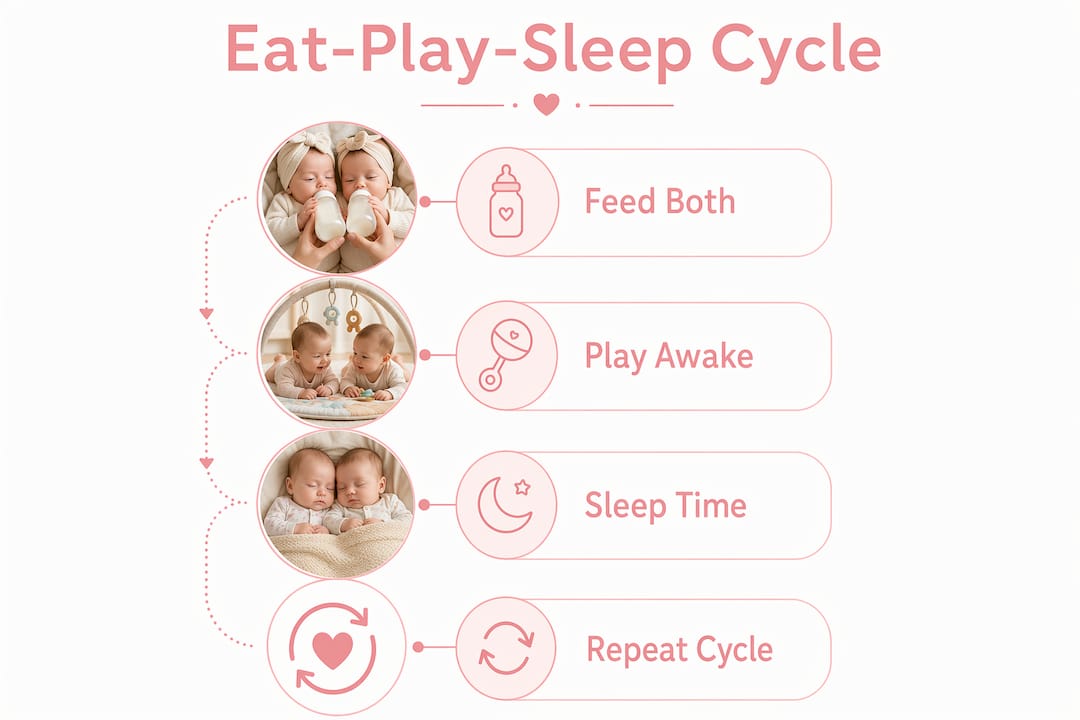
The rule that makes or breaks twin synchronization is simple: when one twin wakes, you wake the other. Waking a sleeping twin for synchronized feeding is not harmful. It is necessary. Parents who skip this step end up on two separate schedules, which means no rest at all.
Here is how to build the routine step by step:
- Wake both babies at the same time. If Twin A wakes naturally, rouse Twin B within 15–30 minutes.
- Feed both babies fully while alert. Use tandem feeding if breastfeeding, or have a partner handle the second bottle simultaneously.
- Allow 30–45 minutes of awake time. Gentle play, tummy time, or just holding them counts.
- Watch for sleepy cues. Yawning, eye rubbing, and fussiness signal the sleep window is opening.
- Put both babies down together. Aim for the same sleep space or side-by-side bassinets.
- Repeat every 2–3 hours in the early weeks. The cycle tightens as babies grow.
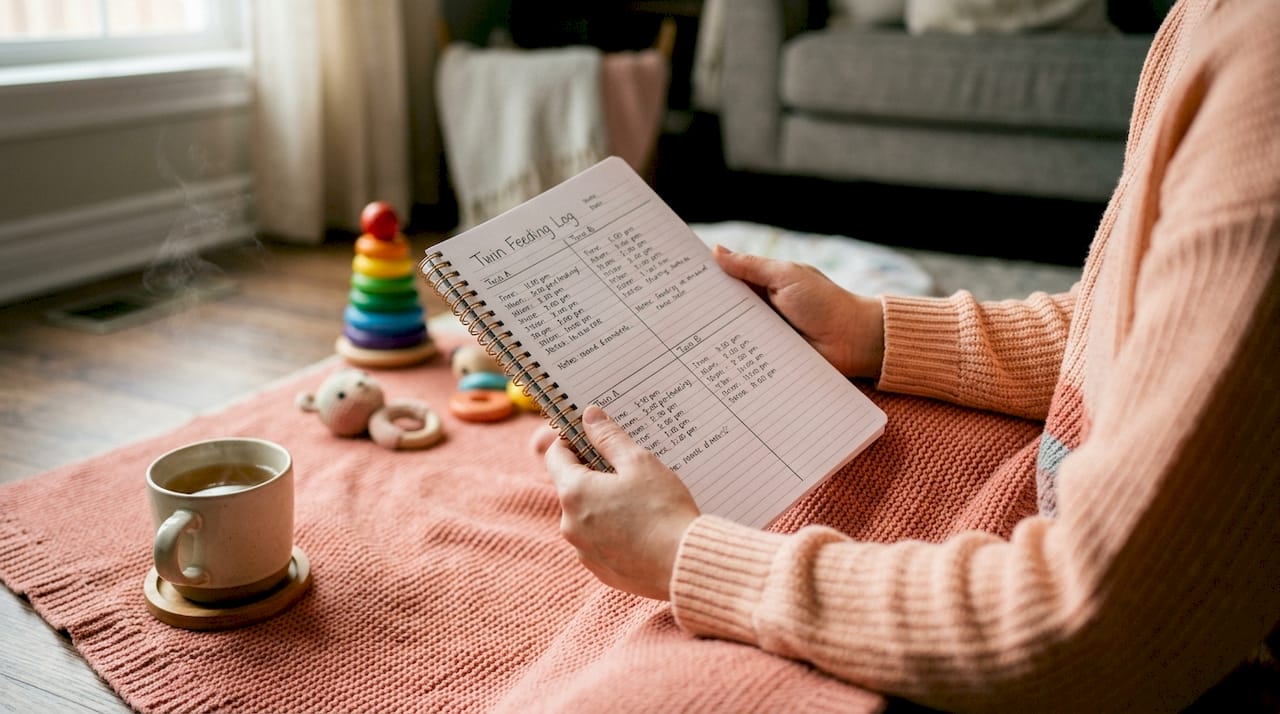
Pro Tip: Keep a simple log for the first 4–6 weeks. Tracking feed times and sleep windows helps you spot patterns and adjust before exhaustion clouds your judgment.
Here is a sample schedule for newborn twins in the first 8 weeks:
| Time | Activity | Notes |
|---|---|---|
| 7:00 AM | Wake and feed both | Full feed while alert |
| 7:45 AM | Awake play time | Tummy time, gentle interaction |
| 8:30 AM | Nap | Both babies down together |
| 10:30 AM | Wake and feed both | Rouse second twin if needed |
| 11:15 AM | Awake play time | Keep daytime bright and active |
| 12:00 PM | Nap | Repeat cycle through the day |
Twin routines take shape over 8–12 weeks, with some babies reaching 4–5 hour overnight stretches by week 10. That progress is real, and it comes from consistent repetition of the cycle above.
What are practical tips for managing sleepy breastfeeding or bottle feeding twins?
Feeding two babies at once is a physical and logistical challenge. The good news is that parents who figure out tandem feeding early gain back significant time. Here are the strategies that actually work:
- Tandem breastfeeding. Use a twin nursing pillow to position both babies simultaneously. It takes practice, but it cuts feeding time roughly in half. Check out twin feeding positions for detailed guidance on holds that work.
- Expressed milk for night feeds. A partner can handle one or both babies with a bottle of expressed milk while the breastfeeding parent sleeps. Partner shifts with expressed milk allow longer sleep stretches for mothers and keep milk supply stable.
- Cluster feeding awareness. Cluster feeding can mean feeding every 1–2 hours during growth spurts. Knowing this is normal prevents panic. It is temporary and supply-driven.
- Night feed differentiation. Keep nighttime feeds quiet, dark, and businesslike. No talking, no bright lights, no eye contact beyond what is needed. Keeping nights quiet and dark helps babies learn the difference between day and night faster.
- Positioning for sleepy twins. If a baby starts dozing mid-feed, a gentle chin stroke or ear rub often rouses them enough to continue. Do not let them drift off before they have taken a full feed.
- Self-care is not optional. Sleep deprivation impairs judgment and patience. Rotate night duties with a partner, accept help from family, and rest when both babies sleep. You cannot sustain the feeding schedule if you are running on empty.
For parents managing feeds alone, solo twin feeding strategies can make a real difference in how you structure the day.
How does avoiding sleepy feeding support long-term sleep independence?
Feeding twins while alert, then allowing wake time before sleep, builds something that sleepy feeding cannot: self-soothing. When babies learn to fall asleep without a feed as the trigger, they develop the ability to resettle themselves between sleep cycles. That skill pays dividends for months and years ahead.
Sleep associations formed in infancy are powerful. A baby who always falls asleep at the breast or bottle will signal for that same input every time they surface from a light sleep cycle. With twins, two babies waking and signaling simultaneously is a level of disruption that compounds quickly.
Feeding awake encourages full feeds and longer sleep intervals. Longer sleep intervals mean more consolidated rest for everyone. By the time twins reach 3–4 months, parents who followed the Eat-Play-Sleep model consistently report more predictable nights than those who fed to sleep throughout the newborn phase.
The developmental benefits extend beyond sleep. Babies who feed fully while alert tend to gain weight more steadily, because they are taking complete feeds rather than comfort sips. Consistent feeding also supports healthy newborn twin sleep cycles by reinforcing the body’s natural hunger and tiredness rhythms. The routine becomes self-reinforcing over time.
Key Takeaways
Feeding twins while fully alert, following the Eat-Play-Sleep cycle, and waking the second twin within 15–30 minutes of the first are the three practices that build a synchronized, manageable twin routine.
| Point | Details |
|---|---|
| Feed when alert, not drowsy | Drowsy feeding leads to snacking, shorter sleep, and broken synchronization. |
| Wake the second twin | Rousing the sleeping twin within 15–30 minutes keeps both babies on the same schedule. |
| Use the Eat-Play-Sleep cycle | Feed on waking, allow awake time, then sleep together to build aligned routines. |
| Expect 8–12 weeks for routine | Consistent repetition leads to longer overnight stretches by around week 10. |
| Night differentiation matters | Quiet, dark, low-stimulation nights help twins develop natural circadian rhythms faster. |
What I have learned about sleepy feeding after watching hundreds of twin families
The phrase “sleepy feed” trips up almost every new twin parent I have encountered, and I understand why. It sounds gentle and logical. Your babies are tired, you feed them, they sleep. What could go wrong?
What goes wrong is the dependency. Once two babies learn that feeding is the only path to sleep, you are locked into that pattern at every single wake-up. At 2:00 AM with two crying infants, that is not a routine. It is a trap.
The parents who made the fastest progress were the ones who committed to the Eat-Play-Sleep cycle even when it felt counterintuitive. Waking a sleeping baby feels wrong. Keeping a drowsy baby alert during a feed feels cruel. But the results after 10–12 weeks are undeniable. Those families had predictable nap windows, longer overnight stretches, and something priceless: time to breathe.
My honest advice is to treat the first 12 weeks as an investment. The short-term effort of keeping babies awake during feeds and syncing their schedules pays back in rest, confidence, and sanity. Patience is not passive here. It is the work.
— Jay
Twinsandcounting has the twin feeding resources you need
Feeding and sleeping with twins is genuinely hard, and no single article covers every situation you will face.

Twinsandcounting is built specifically for parents of twins, with guides that go deep on the real challenges: night feeding logistics, synchronized nap strategies, and the practical realities of keeping two babies on the same schedule. The site’s twin care tips pull together expert advice and real parent stories in one place. Whether you are in week one or week ten, you will find something that helps you move forward with more confidence and less guesswork.
FAQ
What does sleepy feed mean for twins?
Sleepy feed refers to feeding babies in a drowsy or near-sleep state. For twins, experts recommend feeding while alert instead, to promote full feeds and synchronized sleep schedules.
Should I wake my sleeping twin to feed?
Yes. Waking a sleeping twin within 15–30 minutes of the other waking is necessary for synchronization and does not harm the baby. Keeping both babies on the same schedule protects your rest.
How long does it take for twin feeding routines to stabilize?
Most twin feeding and sleep routines take shape over 8–12 weeks, with some babies reaching 4–5 hour overnight stretches by around week 10 with consistent Eat-Play-Sleep cycles.
What is the Eat-Play-Sleep cycle for twins?
The Eat-Play-Sleep cycle means feeding both twins on waking, allowing a short awake period, then putting them down to sleep together. This sequence builds sleep independence and keeps schedules aligned.
How do I handle cluster feeding with twins?
Cluster feeding, which can mean feeds every 1–2 hours during growth spurts, is normal and temporary. Synchronized feeding and partner support during these periods help manage the demand without derailing the overall routine.