
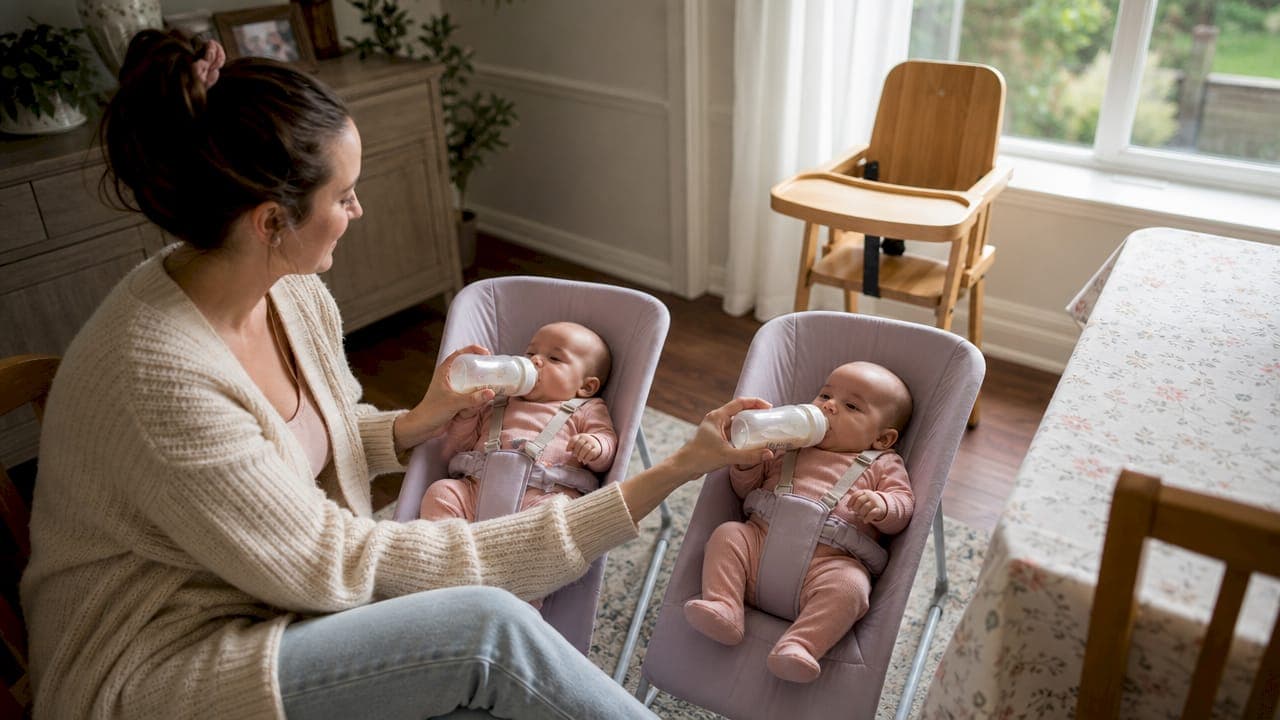
A babysitter’s role in twin routines is to implement and maintain synchronized feeding and sleep schedules that align with parental guidelines and each infant’s developmental needs. This is not simply doing everything twice. It requires specialized skills including tandem feeding, triage during simultaneous fussiness, and consistent sleep cue management. The role of babysitter twin routines directly affects infant security, parental recovery, and the overall stability of your household. When a babysitter understands twin care routines at this level, the whole family functions better.
How do babysitters establish synchronized feeding routines for twins?
Synchronized feeding is the foundation of every effective twin care routine. A babysitter who masters this skill saves you hours each day and protects your sleep. The core technique is tandem feeding, where both twins feed at the same time rather than one after the other. This single shift cuts feeding time nearly in half and keeps hunger cues aligned.
The “wake both” strategy is equally critical. When one twin wakes to feed, the babysitter wakes the second twin within a short window. The wake both approach helps synchronize hunger cues and sleep-wake cycles, with most twins stabilizing their rhythm by 8–12 weeks. That stabilization point is the goal every babysitter should work toward from day one.
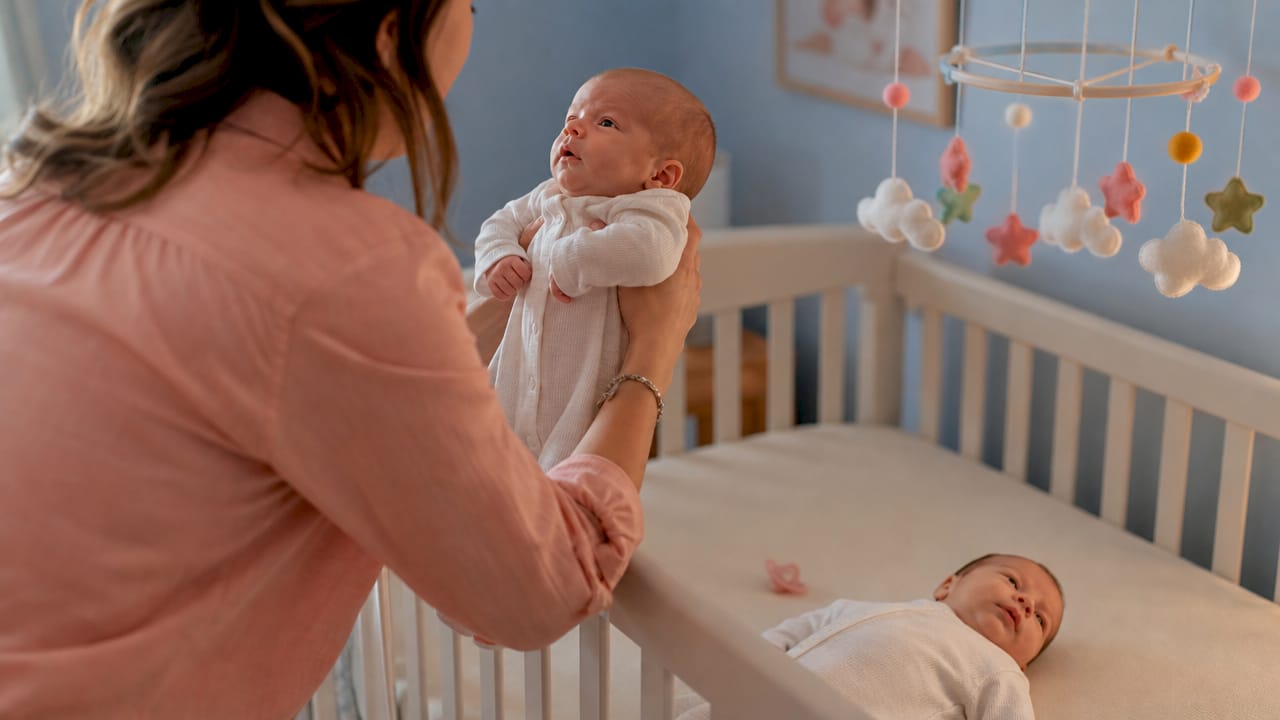
Feeding logs are non-negotiable for twin care. A babysitter tracks each twin’s intake separately, noting time, duration, and any signs of discomfort or reflux. This record protects against underfeeding one twin while the other feeds more aggressively. It also gives you a clear picture when you return home.
Safe positioning matters too. Upright or semi-reclined positions after feeding reduce reflux risk. A babysitter managing two infants alone needs a twin nursing pillow or two bouncer seats to keep both babies safely positioned during and after feeds.
- Track each twin individually. Use a simple log with columns for Twin A and Twin B, noting time, ounces or minutes, and any spit-up.
- Wake the second twin within 15–30 minutes of the first waking to protect schedule alignment.
- Use tandem feeding equipment. A twin nursing pillow or two propped bottles frees both hands for burping and repositioning.
- Watch for feeding cues, not just the clock. Rooting, hand-to-mouth movements, and fussiness signal hunger before crying escalates.
- Burp each twin before switching sides to reduce gas and discomfort during longer feeds.
Pro Tip: If one twin consistently feeds faster than the other, start with the slower feeder first. This gives that baby a head start and keeps both twins finishing around the same time.
What are effective twin sleep and nap routines babysitters should implement?
Sleep synchronization is the second pillar of twin care routines. A babysitter who keeps naps aligned protects your rest windows and prevents the exhausting cycle of one twin always waking the other. The target is to get both twins down within a 15–30 minute window of each other. Nap synchronization within this window is the standard that experienced twin caregivers work toward consistently.
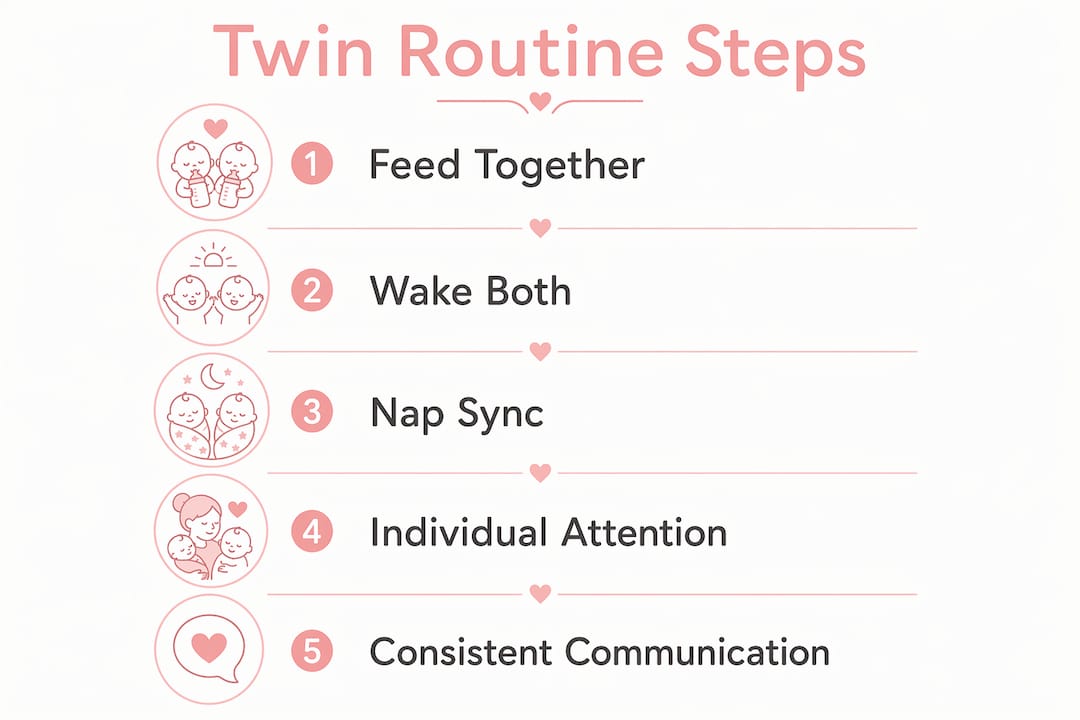
Bedtime rituals create the mental cue that sleep is coming. A consistent sequence of bath, gentle massage, feeding, and a lullaby tells both twins what to expect. Identical bedtime routines applied every night help align circadian rhythms and reduce resistance at sleep time. The babysitter applies this sequence the same way every time, regardless of how tired or fussy the twins are.
Self-settling is a skill twins can develop with the right support. Allowing a brief pause before responding to a crying twin, around 10–20 seconds, encourages self-soothing. This pause is not neglect. It gives each baby a chance to settle independently, which builds the foundation for longer sleep stretches.
- Start the wind-down 20 minutes before target nap time. Dim lights, reduce noise, and slow activity to signal the transition.
- Put both twins down drowsy but awake. This teaches self-settling rather than dependence on being held to sleep.
- Use white noise consistently. It masks household sounds and creates a sleep association that travels with the routine.
- Avoid rocking one twin to sleep while the other waits. This creates unequal sleep associations that are hard to undo.
- Log each nap start and end time. This data helps you and the babysitter spot patterns and adjust timing as the twins grow.
Pro Tip: If one twin wakes early from a nap, use gentle reassurance rather than immediate pickup. A soft voice or hand on the chest often extends the nap by 10–15 minutes, keeping both twins on the same schedule.
For a deeper look at coordinating rest times, Twinsandcounting has a detailed twin nap schedule guide built specifically for new parents.
How do babysitters handle behavioral management and individual attention?
Twin care requires more than duplicate tasks. It demands logistics and prioritization based on each infant’s cues and the specific moment. The most important skill a babysitter develops is knowing which twin to attend to first when both need care simultaneously.
The primary/secondary approach is the professional standard. When both twins fuss at the same time, the babysitter focuses on the twin escalating fastest first while offering minimal verbal reassurance to the other. This keeps both babies safe and avoids the overstimulation that comes from trying to fully attend to both at once.
Individual attention within a shared routine matters for development. Each twin needs dedicated tummy time, face-to-face interaction, and one-on-one bonding moments. A babysitter schedules these during natural gaps in the routine, such as when one twin naps slightly ahead of the other.
- Assess escalation level first. Before picking anyone up, scan both twins. The one showing stronger distress signals gets primary attention.
- Offer verbal reassurance to the waiting twin. A calm voice saying “I’m coming” reduces distress without requiring physical presence.
- Schedule individual tummy time separately. Place one twin on their tummy while the other is in a safe bouncer seat, then switch.
- Rotate who gets fed or changed first. Alternating prevents one twin from always waiting and supports equal bonding time.
- Note individual responses in the daily log. If Twin B consistently resists tummy time or Twin A settles faster with a pacifier, parents need that information.
Twins also need space to develop as individuals. The babysitter’s role includes individual attention for each twin to support separate developmental milestones, not just shared ones.
What communication practices best support twin routine success?
Clear communication between babysitters and parents is what keeps twin care routines consistent across caregivers. Consistency between home and babysitter routines is essential to infant security. When a babysitter uses different soothing methods or sleep cues than you do, twins experience confusion and increased resistance. That misalignment shows up as longer settling times and more night waking.
Night nannies and experienced twin caregivers maintain feeding and sleep logs for each twin, keeping the care area prepared and records current. This practice gives you a complete picture of overnight events without relying on memory. It also builds your confidence that care quality stays high when you are not present.
- Create a written handover document. Include each twin’s current sleep associations, preferred soothing methods, feeding schedule, and any known sensitivities.
- Walk the babysitter through your exact bedtime sequence. Do not assume they will infer it. Show them once, then observe them do it once before leaving.
- Set a clear escalation protocol. Define when the babysitter should call you, when to call your pediatrician, and what counts as an emergency.
- Schedule a weekly check-in. A 10-minute conversation about what is working and what is not keeps the routine current as the twins develop.
- Share feeding logs at every handover. Both directions. You share what happened before the babysitter arrived, and they share what happened during their shift.
Aligning sleep associations and soothing methods between you and your babysitter builds infant security and reduces disruptions during your absence. This alignment is not a one-time conversation. It is an ongoing practice that adjusts as your twins grow.
Tandem care vs. staggered care: which approach fits your twins?
The two main babysitting approaches for twins are tandem care and staggered care. Each has real advantages depending on your twins’ temperament and your family’s goals.
Tandem care means both twins receive the same care at the same time. Both feed together, both nap together, both have tummy time together. This approach maximizes your rest windows and keeps schedules tightly aligned. It works best when twins have similar temperaments and similar hunger and sleep cues.
Staggered care means attending to each twin in sequence, with a short offset between them. One twin feeds, then the other. One naps, then the other follows. This approach gives each baby more individual attention but shrinks your rest windows significantly.
| Factor | Tandem care | Staggered care |
|---|---|---|
| Parental rest | Longer uninterrupted windows | Shorter, fragmented windows |
| Individual attention | Less per session | More per session |
| Schedule complexity | Simpler to maintain | Harder to sustain long-term |
| Best for | Similar temperament twins | Twins with different needs |
| Babysitter skill level | Requires higher skill | More manageable for new sitters |
Most families benefit from a hybrid. A babysitter uses tandem care for feeding and sleep while building in staggered individual time during awake periods. There is no single right model. The best approach is the one your babysitter can execute consistently and that your twins respond to well.
Key Takeaways
Predictability in twin routines, not perfection, is the foundation of sustainable caregiving and parental mental health in the first months.
| Point | Details |
|---|---|
| Synchronize feeding first | Use the wake both strategy to align hunger cues, targeting rhythm stability by 8–12 weeks. |
| Apply consistent sleep rituals | Bath, massage, feed, and lullaby in the same order every night aligns circadian rhythms for both twins. |
| Use the primary/secondary system | Attend to the most distressed twin first while offering verbal reassurance to the other. |
| Align routines across caregivers | Share written handover notes and feeding logs at every shift change to prevent sleep and feeding confusion. |
| Choose the right care model | Tandem care protects parental rest; staggered care suits twins with different needs. Use a hybrid where possible. |
What I’ve learned watching babysitters manage twins in the first three months
The first 12 weeks are where the babysitter’s role either makes or breaks the routine. I have watched families with excellent babysitters sail through the newborn phase with far less exhaustion than families who hired caregivers without twin-specific experience. The difference is not effort. It is knowledge of the specific techniques that work for two infants at once.
The most common mistake I see is a babysitter who treats twin care as single infant care done twice. They feed one twin fully, settle them, then start on the second. By the time the second twin is settled, the first is awake again. The family ends up in a loop that never produces a real rest window. Tandem feeding and synchronized naps break that loop. They are not optional extras for experienced caregivers. They are the baseline.
The emotional demands on a babysitter managing twins are real. A specialized twin night nanny handles up to 24 separate care events in a single overnight shift. That number puts the physical reality of twin care in perspective. A babysitter who understands this going in will prepare differently than one who does not.
My strongest recommendation is to invest in a babysitter with documented multiple infant care experience, or to train your current babysitter using a structured handover process before you leave them alone with both babies. The goal of babysitter support in early twin care is to improve your mental health and recovery, not to achieve a perfect schedule. A good babysitter knows the difference.
— Jay
Twin routine resources worth bookmarking on Twinsandcounting
Twinsandcounting has built a library of practical guides specifically for parents managing two infants at once. Whether you are preparing a babysitter for their first overnight shift or refining a schedule that stopped working as your twins hit a new developmental stage, the resources there are written for your exact situation.

Start with the twin care tips guide for a full breakdown of babysitter coordination, feeding strategies, and schedule management. Parents navigating solo shifts will also find the solo parenting schedule tips directly applicable to babysitter handovers. Twinsandcounting also covers night feeding simplification for parents who want to prep their babysitter for overnight care with confidence.
FAQ
What is the babysitter’s main job in twin routines?
A babysitter’s primary job is to implement synchronized feeding and sleep schedules that match the parents’ established routine. Consistency across caregivers is what builds infant security and keeps the schedule stable.
How do babysitters synchronize twin nap times?
Babysitters use the wake both strategy, rousing the second twin within 15–30 minutes of the first waking. Most twins stabilize their shared rhythm by 8–12 weeks with this approach.
What should a babysitter do when both twins cry at once?
The babysitter uses a primary/secondary approach, attending to the twin showing the most distress first while offering calm verbal reassurance to the other. This prevents overstimulation and keeps both babies safe.
How do babysitters support twin sleep training?
Babysitters apply the same bedtime sequence the parents use, including bath, massage, feeding, and a lullaby, every night without variation. Allowing a brief 10–20 second pause before responding to crying also supports self-soothing development.
How often should parents and babysitters communicate about twin routines?
Parents and babysitters should exchange written feeding and sleep logs at every handover and hold a brief weekly check-in to adjust the routine as the twins develop. Written records reduce reliance on memory and catch problems early.