
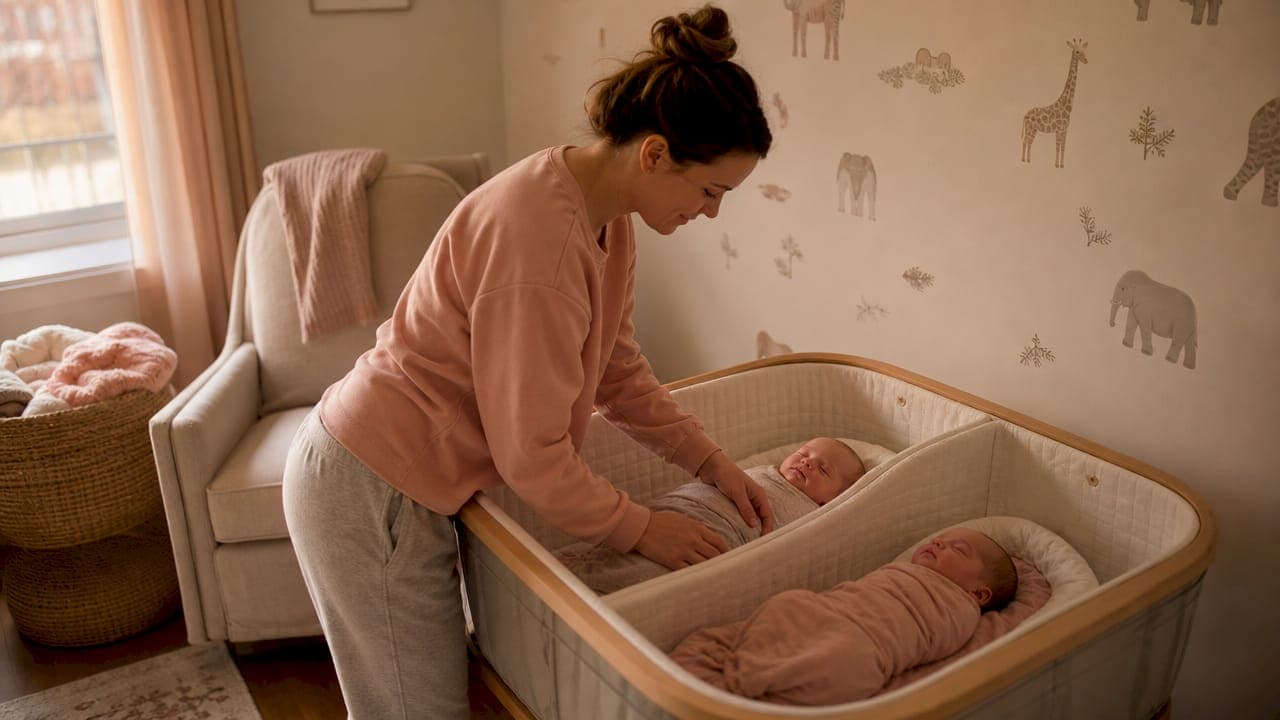
A twin bassinet is defined as a single sleep unit with two separate, side-by-side sleeping areas designed specifically for newborn twins. The twin bassinet benefits are real and immediate: you save nursery floor space, attend to both babies from one spot, and give each infant a safe, individual sleep zone. Products like the LiteDouble 2 and the Graco Pack ‘n Play with twin bassinet attachments represent two very different approaches to solving the same problem. This article covers space savings, safety standards, travel options, and the honest limits of twin bassinets so you can make a confident choice.
1. Twin bassinet benefits: How they save nursery space
A twin bassinet takes up significantly less floor space than two separate bassinets placed side by side. That difference matters a lot when your nursery doubles as your bedroom or sits in a smaller apartment.
A standard single bassinet footprint runs roughly 18 by 30 inches. Two separate units placed near each other can easily consume 36 by 30 inches or more, plus walking clearance around each one. A twin bassinet reduces that nursery footprint to a single compact unit, freeing up space for a feeding chair, a changing station, or simply room to move at 3 a.m.
The space savings also reduce decision fatigue. You position one unit, not two. You adjust one height, not two. For parents already managing double the gear, that simplicity adds up fast.
- Twin bassinets typically measure 24–30 inches wide total, versus 36+ inches for two singles
- One unit means one assembly, one set of instructions, and one piece to move when you rearrange
- Compact footprint works well in master bedrooms where the AAP recommends room-sharing for at least six months
- Fewer pieces of furniture reduce tripping hazards during nighttime wake-ups
Pro Tip: Measure your nursery or bedroom floor space before ordering. Mark the footprint with painter’s tape so you can visualize exactly where the bassinet will sit and whether you can still open dresser drawers and walk safely at night.
2. Parental convenience during nighttime care
Attending to two babies from one location is one of the most underrated advantages of a twin bassinet. When both infants are within arm’s reach, you spend less time walking back and forth and more time actually settling them.
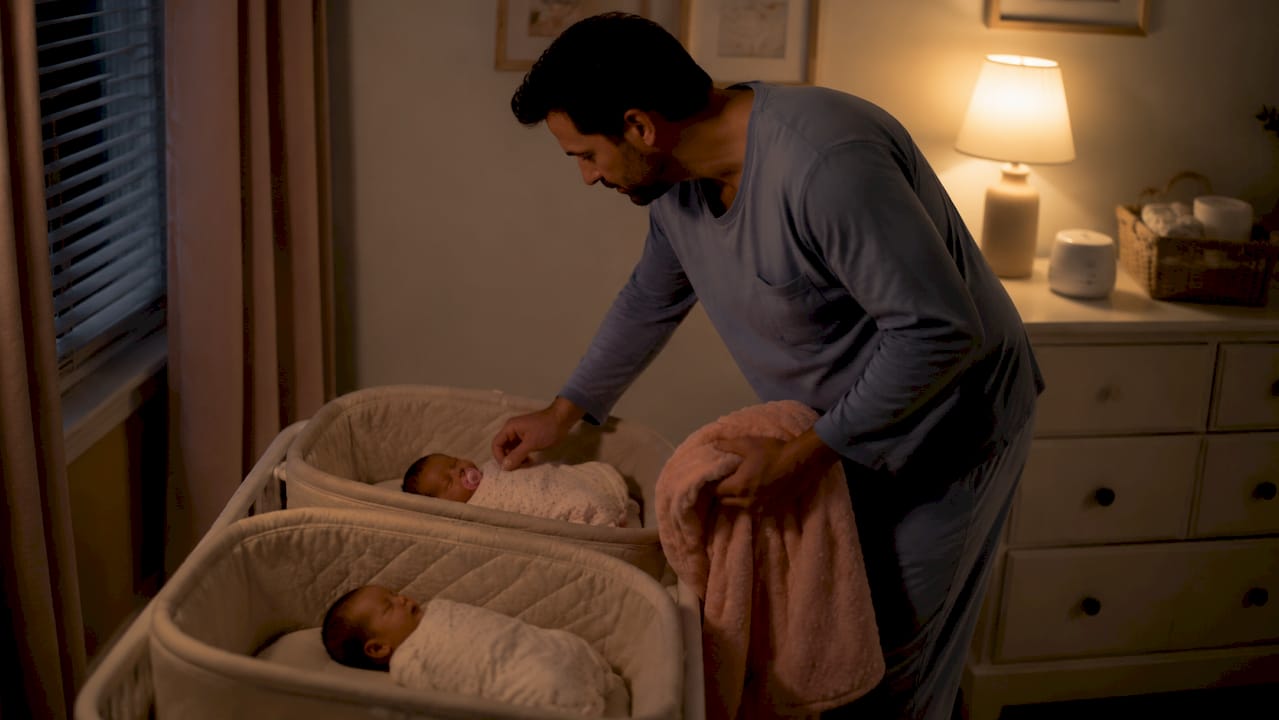
Nighttime care for twins is physically exhausting. Every extra step between two separate bassinets adds up across multiple wake-ups per night. With a twin bassinet, you can check, soothe, or pick up either baby without leaving your spot. That proximity also makes synchronizing twin sleep schedules easier because you can respond to both babies at the same pace and reinforce the same sleep cues simultaneously.
For parents flying solo on overnight shifts, the convenience is even more pronounced. You do not need to choose which baby to walk to first. Both are right there.
- Position the twin bassinet at bedside height so you can reach both babies without sitting up fully
- Keep feeding supplies on a single nightstand between you and the bassinet
- Respond to the first stirring twin quickly to prevent waking the second
- Use the same soothing motion for both babies to reinforce a shared rhythm
- Track wake times for each baby on a simple notepad or app to spot schedule patterns early
Bedside clip-on bassinets designed for single infants do not accommodate twins. A purpose-built twin bassinet or a Pack ‘n Play with a twin insert placed at bedside height solves this gap.
Pro Tip: When one twin wakes for a feeding, gently rouse the second twin at the same time. Keeping twins on the same schedule from the start is the single biggest time-saver in the first three months.
3. Safety: Separate sleep spaces within one unit
The American Academy of Pediatrics’ 2022 guidance strongly discourages co-bedding for twins. Each baby must have its own firm sleep surface, even when sharing a room. A well-designed twin bassinet meets this requirement by providing two distinct, divided sleep zones within one frame.
The key design feature is a firm, breathable mesh divider between the two sleeping areas. That divider prevents physical contact between the twins while still allowing airflow. It also means neither baby can roll into the other’s space, which removes one of the primary co-bedding risks.
Safe sleep for twins in a twin bassinet requires the same practices as any infant sleep setup:
- Place each baby on their back, every time, for every sleep
- Use no soft bedding, pillows, positioners, or bumpers in either sleep zone
- Confirm the mattress pad in each section is firm and fits without gaps
- Alternate which end of the bassinet each baby’s head rests at during different sleep sessions to reduce positional plagiocephaly risk, which affects about 19.7% of healthy infants
- Keep the bassinet in your room for at least the first six months per AAP guidance
For a deeper look at the full set of guidelines, Twinsandcounting covers safe sleep for twins in detail, including room-sharing specifics and what to do as your babies grow.
4. Travel-friendly twin bassinets vs. multi-function units
Not all twin bassinets serve the same purpose. Travel-specific models and multi-function units like the Pack ‘n Play solve different problems, and choosing the wrong one wastes money.
The LiteDouble 2 is built for portability. It weighs under 20 pounds combined and fits airline checked luggage requirements, making it the right choice for families who visit grandparents, travel for work, or split time between two homes. The tradeoff is a shorter usable lifespan. Travel twin bassinets typically last 3–5 months before twins outgrow the weight or developmental limits.
Pack ‘n Play systems with twin bassinet attachments weigh about 32 pounds and convert to a play yard after the bassinet phase ends. That extended use adds long-term value, but the heavier weight and larger footprint make them less practical for frequent travel.
| Feature | Travel Twin Bassinet (e.g., LiteDouble 2) | Pack ‘n Play with Twin Insert |
|---|---|---|
| Weight | Under 20 lbs | ~32 lbs |
| Airline compatible | Yes | No |
| Usable lifespan | 3–5 months | Longer (converts to play yard) |
| Footprint | Compact | Larger |
| Setup complexity | Simple | Moderate |
| Best for | Frequent travelers | Home use, longer-term value |
Pro Tip: If you travel more than twice a year, invest in a dedicated travel twin bassinet and a separate home unit. Trying to use one heavy Pack ‘n Play for both purposes leads to either skipped trips or a sore back.
5. When a twin bassinet is no longer the right fit
Twin bassinets have a short but valuable window of use. Parents report that most twins begin outgrowing the shared unit around 2.5 to 3 months as their movement increases. One active baby can disturb the other, breaking the synchronized sleep patterns you worked hard to build.
Recognizing when to transition matters as much as choosing the right bassinet in the first place. Waiting too long creates sleep disruptions that are harder to fix than the transition itself.
Watch for these signs that it is time to move to separate sleep solutions:
- One or both babies regularly wakes the other through movement or noise
- Either baby reaches the weight limit of 15–20 pounds per side or shows signs of rolling
- Sleep quality for both babies declines noticeably over several nights
- One twin has distinctly different soothing needs that require separate handling
- Either baby pushes against the divider or the bassinet walls consistently
Veteran twin parents note that twin bassinets are most valuable in the first 8–12 weeks and must be supplemented with independent sleep zones as babies grow. Transitioning to two single bassinets or a crib does not mean the twin bassinet failed. It means your babies are developing exactly as they should.
Key takeaways
A twin bassinet delivers its greatest value in the first three months by combining space efficiency, nighttime convenience, and safe separate sleep zones into one unit.
| Point | Details |
|---|---|
| Space efficiency | A twin bassinet uses less floor space than two separate units, freeing room for other nursery essentials. |
| Nighttime convenience | Both babies within arm’s reach reduces wake-up time and supports synchronized feeding schedules. |
| Safety compliance | Firm mesh dividers meet AAP guidelines by giving each twin a separate, firm sleep surface. |
| Travel vs. home use | Lightweight travel models like LiteDouble 2 suit frequent travelers; Pack ‘n Play suits home-based families. |
| Short usable window | Most twins outgrow a shared bassinet by 2.5–3 months, so plan your transition to separate sleep spaces early. |
What I’ve learned about twin bassinets after the first three months
The twin bassinet was the single best purchase we made before the babies arrived. Not because it lasted long, but because those first eight weeks would have been genuinely brutal without it. Having both babies within reach at 2 a.m., 4 a.m., and 6 a.m. meant I could function the next day. That is not a small thing.
What I did not expect was how quickly the window closes. By week ten, one of our twins was a restless sleeper and the other was a light one. The movement disruptions started small and then became nightly. We held on two weeks longer than we should have because we dreaded the transition. That was a mistake. The moment we moved them to separate bassinets, both babies slept better.
My honest advice: buy the twin bassinet, use it fully, and set a mental checkpoint at eight weeks to assess whether it is still working. Do not wait for a crisis to make the change. The bassinet is a tool for a specific phase, not a permanent solution. Treat it that way and it will serve you well.
Parental well-being during the newborn phase depends on sleep, and sleep depends on having the right setup at the right time. A twin bassinet gives you that setup for the most demanding weeks. Just be ready to adapt when your babies tell you they have outgrown it.
— Jay
More twin sleep and care resources from Twinsandcounting
Figuring out sleep for two newborns at once is genuinely hard. The twin bassinet gets you through the first weeks, but the months ahead bring new challenges: night feeding routines, schedule syncing, and eventually sleep training.

Twinsandcounting has built a library of guides written specifically for twin parents, not generic baby advice with “twins” added to the title. The twin infant care guide covers everything from bassinet setup through the first year. And if you are running on no sleep and need to take care of yourself too, the twin parent self-care guide offers practical strategies that actually fit into a twin parent’s day.
FAQ
What are the main twin bassinet benefits for newborns?
Twin bassinets save nursery space, keep both babies within arm’s reach for nighttime care, and provide each infant with a separate, safe sleep surface that meets AAP guidelines.
How long can twins use a shared bassinet?
Most twins use a twin bassinet for 2.5–3 months before increased movement causes sleep disruptions, though the weight limit of 15–20 pounds per side is the hard cutoff.
Are twin bassinets safe according to current guidelines?
Yes, provided each sleep zone has a firm mattress, no soft bedding, and a breathable divider between the two babies. The AAP’s 2022 guidance requires separate sleep surfaces for twins, which a properly designed twin bassinet provides.
What is the difference between a travel twin bassinet and a Pack ‘n Play?
A travel twin bassinet like the LiteDouble 2 weighs under 20 pounds and fits airline luggage requirements but lasts only 3–5 months. A Pack ‘n Play with a twin insert weighs about 32 pounds, is not airline-friendly, but converts to a play yard for longer use.
When should twins transition out of a shared bassinet?
Transition when one twin consistently wakes the other through movement, when either baby nears the weight limit, or when sleep quality declines over several consecutive nights.