

Twin parenting guilt is defined as the persistent feeling that you are failing one or both children by not giving each enough attention, love, or care. It is one of the most common emotional experiences among parents of multiples, and it is rooted in the impossible standard of perfect equality. Postpartum Support International recognizes elevated mental health risks for parents of multiples, and research published in Twin Research and Human Genetics confirms that twins develop as distinct individuals regardless of how equally they are treated. Understanding twin parenting guilt explained through this lens is the first step toward releasing it. You are not failing. You are parenting under conditions that demand far more than any one person was designed to manage alone.
What causes twin parenting guilt?
Twin parenting guilt grows from a specific set of pressures that parents of singletons rarely face. The most common trigger is what child development specialists call the “fairness trap.” This is the belief that both twins must receive identical amounts of time, attention, feeding, and soothing. When that standard inevitably breaks down, guilt fills the gap.
The fairness trap creates unrealistic expectations that lead to unnecessary guilt and stress. The problem is that equal treatment is not the same as fair treatment. Each twin is a separate person with separate needs, moods, and developmental rhythms.
Here are the most common causes of twin parenting guilt:
- The comparison trap. You compare your twins to each other and to other children their age. One twin walks first, one talks first, and you wonder what you did differently.
- Divided attention. When one baby cries while you feed the other, the guilt is immediate and physical. You feel it in your chest.
- Temperamental differences. One twin may be easier to soothe, more affectionate, or quicker to smile. You may find yourself spending more time with that child without realizing it.
- External pressure. Family members, friends, and even strangers comment on whether you are treating your twins “the same.” That pressure compounds your own internal standards.
- Identity strain. You may grieve the parent you imagined you would be, the one who reads every bedtime story and never rushes a feeding.
Research shows that 25–32% of behavioral differences between twins are explained by unique environmental experiences, not parenting failures. That means even identical twins diverge in development largely because of factors outside your control. Chasing perfect equality is not just exhausting. It is also scientifically unnecessary.
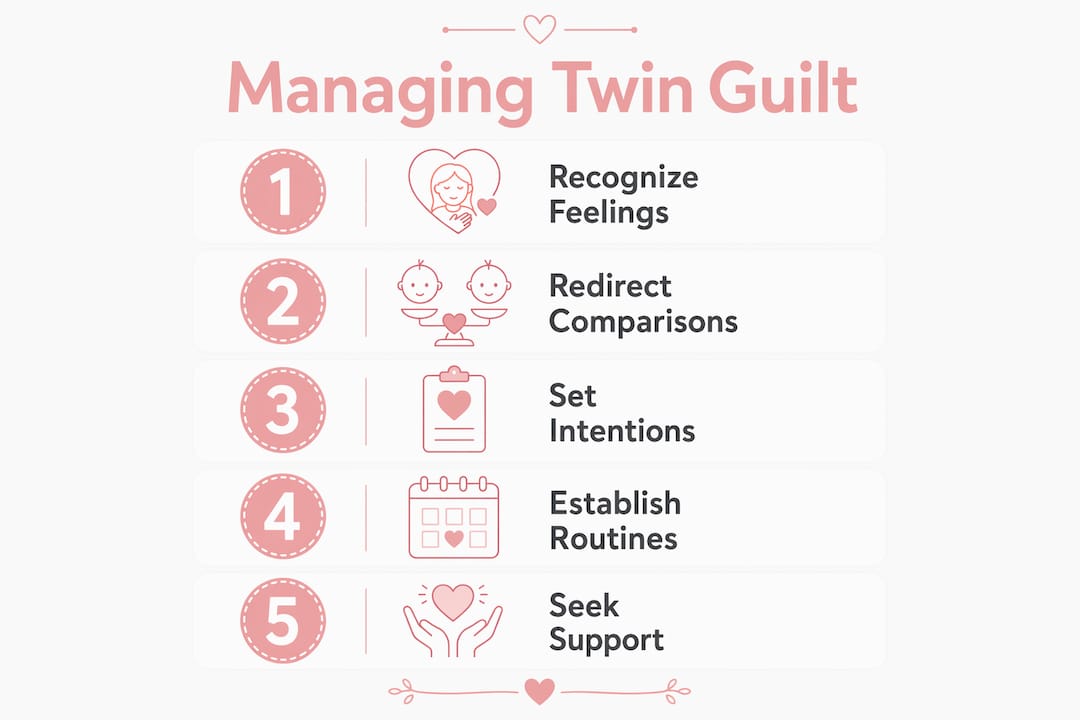
Pro Tip: When you notice yourself comparing your twins, redirect the thought. Ask instead: “Did I respond to what this child needed right now?” That question is answerable. “Was I perfectly equal?” never is.
The logistical intensity of twin parenting also plays a role. Managing two feeding schedules, two sleep windows, and two sets of developmental needs simultaneously is a form of cognitive and physical labor with no parallel in singleton parenting. That intensity creates conditions where guilt thrives, because there is always something you could not do at the exact moment it was needed.
How does twin parenting guilt affect mental health?
Twin parenting guilt does not stay contained to moments of stress. Left unaddressed, it compounds into chronic anxiety and depression. Mothers of multiples carry a meaningfully higher risk of postpartum depression, with a hazard ratio of 1.28 for depression and 43% greater odds of moderate to severe depressive symptoms compared to mothers of singletons. That gap is significant, and it reflects the real weight of what you are carrying.
“Feelings of isolation and longing for one’s old identity are common and normal among twin parents. They are distinct from a lack of love or gratitude, and recognizing them as separate emotions is the first step toward better mental health.”
Guilt often masks other emotions that deserve their own space. Isolation and identity loss are two of the most common. You may miss your old self, your old routines, and your old relationships. That grief is real. Naming it separately from guilt helps you process both more clearly.
The table below shows how unaddressed guilt can escalate across the postpartum period:
| Emotional stage | What it looks like |
|---|---|
| Early guilt | Feeling bad when one twin cries longer than the other |
| Chronic guilt | Constant self-criticism about attention, feeding, or bonding |
| Anxiety | Hypervigilance about every caregiving decision |
| Depression | Withdrawal, numbness, or loss of connection with both children |
| Identity loss | Feeling like you have disappeared as a person outside of parenting |
The good news is that proactive psychological support closes the mental health gap between twin and singleton parents almost entirely. A 2024 Italian cohort study found no significant distress differences between twin and singleton parents when proper psychological support was in place. That finding matters. It means the risk is real but not inevitable.
Postpartum Support International offers a helpline, provider directory, and online support groups specifically for parents of multiples. If guilt has shifted into persistent sadness, anxiety, or disconnection, reaching out to a professional is not a sign of weakness. It is the most effective thing you can do for both yourself and your children. You can also find postpartum support resources tailored to twin parents at Twinsandcounting.
Effective strategies for managing and overcoming twin parenting guilt
Managing twin guilt starts with a mindset shift. The goal is not to be a perfect parent to two children simultaneously. The goal is to be a good enough parent to each child across the full arc of their childhood. That reframe changes everything.
Accepting twin parenting as a system rather than a doubled version of singleton parenting is one of the most effective guilt-reduction strategies available. You are not parenting one child twice. You are managing a household with two infants who have overlapping but distinct needs. That shift in framing reduces the pressure to be emotionally present in two places at once.
Here are six strategies that work:
- Prioritize quality over quantity in one-on-one time. Research shows that 10 minutes of focused interaction with each twin builds meaningful emotional bonds. You do not need hours of exclusive attention. You need presence, eye contact, and responsiveness during the time you do have.
- Respond to individual needs, not identical schedules. If one twin is hungry and the other is content, feed the hungry one first. Responding to what each child actually needs is more effective than forcing parallel timelines.
- Build attachment through small moments. Feeding, soothing, holding, and eye contact all build secure attachment. These micro-interactions accumulate. You do not need to engineer special bonding sessions to create a strong relationship.
- Practice self-care without apology. Sleep deprivation and physical depletion amplify guilt. When you are rested, fed, and supported, you parent better. Self-care is not selfish. It is structural. Twinsandcounting has a dedicated guide to self-care practices that actually fit twin parenting demands.
- Use your support network actively. Grandparents, partners, and trusted friends can hold one twin while you focus on the other. Accepting help is not a failure of independence. It is how twin parenting is meant to work.
- Talk to a professional when guilt becomes constant. If you cannot get through a day without feeling like you have failed both children, that is a signal worth taking seriously. A therapist familiar with perinatal mental health can help you separate realistic concern from distorted thinking.
Pro Tip: Set a daily intention for each twin. It does not have to be elaborate. “Today I will make sure I look Maya in the eyes during her morning feed” is enough. Small, specific intentions are far more achievable than vague goals like “spend more time with each baby.”
How to balance attention between twins without guilt
Perfect equality between twins is both unrealistic and unnecessary. Attachment develops through repeated small caregiving interactions, not through mathematically equal time splits. That distinction frees you from one of the most exhausting forms of twin parenting guilt.
Emotional responsiveness is the standard that actually matters. When your child reaches for you, do you respond? When one twin is distressed, do you move toward them? Those moments of attunement are what build secure attachment, not a stopwatch.
Practical habits that support balanced attention without obsessive tracking:
- Alternate who you greet first each morning. This small ritual ensures both twins get a moment of undivided connection at the start of the day.
- Use solo outings strategically. Even a 20-minute errand with one twin while the other stays home with a partner or caregiver creates meaningful one-on-one time. Twinsandcounting covers individual attention strategies in depth for parents who want to build this into their routine.
- Narrate your actions to the waiting twin. When you must attend to one child first, talk to the other. “I hear you, I’m coming” is not just soothing. It teaches your child that their needs are recognized even when they cannot be met instantly.
- Communicate your approach to family. When relatives ask why you are not treating the twins identically, explain that you are responding to each child’s individual needs. That framing shifts the conversation from fairness to responsiveness.
Routines reduce the mental load that feeds guilt. When feeding, nap, and play schedules are predictable, you spend less energy making decisions in the moment. That cognitive relief leaves more room for genuine connection with each child.
Key Takeaways
Twin parenting guilt is a normal response to impossible standards, and it eases when you shift from chasing equality to practicing responsiveness.
| Point | Details |
|---|---|
| Guilt signals care, not failure | Feeling guilty means you care deeply; it is not evidence that you are doing something wrong. |
| The fairness trap drives most guilt | Trying to treat twins identically sets an unrealistic standard; responding to individual needs is more effective. |
| Mental health risks are real but manageable | Twin mothers face a 43% higher risk of depressive symptoms, but proactive support closes that gap significantly. |
| Small moments build strong bonds | Just 10 minutes of focused one-on-one interaction is enough to build meaningful attachment with each twin. |
| Mindset shift reduces guilt | Treating twin parenting as a system rather than doubled singleton parenting relieves pressure and improves outcomes. |
What I have learned about twin parenting guilt after years of watching families navigate it
The parents who struggle most with twin guilt are almost always the most devoted ones. That is not a paradox. It is the pattern. The guilt is loudest in the people who care the most, and it tends to quiet down not when parenting gets easier, but when expectations get more honest.
What I have seen work, again and again, is the moment a parent stops asking “Am I doing this equally?” and starts asking “Am I doing this well enough for each of them today?” That is a question you can actually answer. And most of the time, the answer is yes.
The hardest part of twin parenting guilt is that it can feel like a private shame. You love your children fiercely. You are also exhausted, stretched thin, and sometimes relieved when they fall asleep. Both of those things are true at the same time, and neither cancels the other out. Recognizing and naming feelings of isolation as separate from guilt about your children is one of the most clarifying things you can do for your mental health.
You do not have to be a perfect twin parent to be a great one. You just have to keep showing up, keep responding, and keep giving yourself the same grace you would offer any other parent doing this work.
— Jay
Support and practical guidance from Twinsandcounting
Twin parenting guilt is real, but you do not have to carry it alone. Twinsandcounting is built specifically for parents navigating the unique demands of raising multiples, with resources that go beyond generic parenting advice.

Start with the tips for taking care of twins guide, which covers practical strategies for managing two infants simultaneously without burning out. If you want connection alongside information, the real twin parenting stories section offers honest accounts from parents who have been exactly where you are. Twinsandcounting exists to make this experience feel less isolating and more manageable, one practical step at a time.
FAQ
What is twin parenting guilt?
Twin parenting guilt is the persistent feeling that you are not giving each twin enough individual attention, love, or care. It arises from the intense logistical demands of raising two children simultaneously and the impossible standard of perfect equality.
Is it normal to feel more connected to one twin?
Yes. Temperamental differences, feeding ease, and sleep patterns all influence early bonding. Feeling a stronger connection to one twin at a given moment does not mean you love the other less. Bonds deepen and shift over time with consistent caregiving.
How much one-on-one time do twins actually need?
Research shows that 10 minutes of focused interaction per twin is enough to build meaningful emotional bonds. Quality and presence matter more than total time.
Can twin parenting guilt lead to depression?
Yes. Mothers of multiples face a 43% higher risk of moderate to severe depressive symptoms compared to mothers of singletons. If guilt becomes constant or shifts into sadness and disconnection, professional support from a perinatal mental health specialist is the most effective response.
How do I stop comparing my twins to each other?
Focus on each child’s individual progress rather than relative milestones. Unique environmental factors explain 25–32% of developmental differences between twins, meaning divergence is normal and expected, not a result of unequal parenting.