
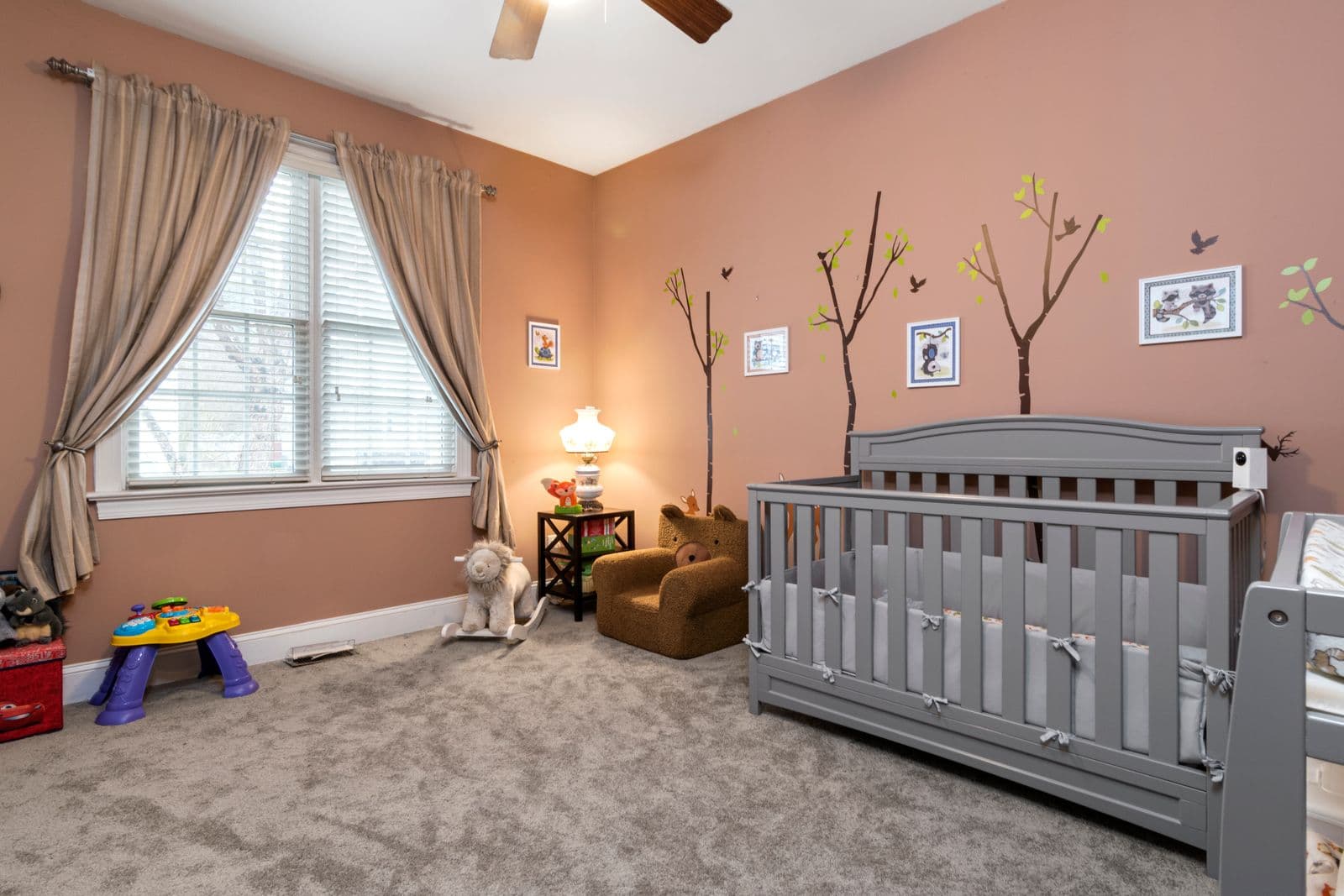
A twin nursery setup is the process of organizing and furnishing a shared room specifically designed for two infants, built around safety, efficient layout, and coordinated gear. Getting it right from the start matters more than most parents expect. The 2026 American Academy of Pediatrics safe sleep guidelines require separate sleep surfaces for each baby, so planning around two cribs is non-negotiable. The good news: twin gear costs roughly 1.6 times that of a singleton setup, not double, because many items are shared. This guide walks you through every stage of the twin nursery setup step by step, from measuring the room to the final feeding station.
How do you plan and measure a twin nursery space?
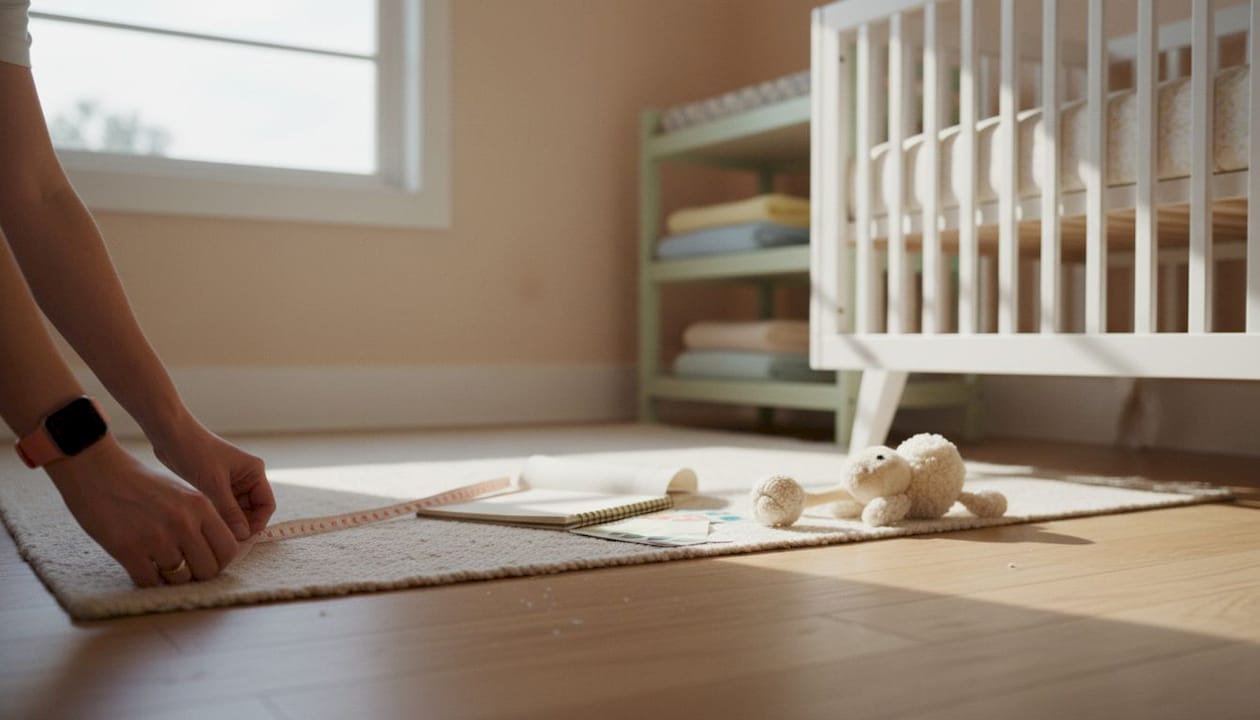
Start with the room’s dimensions before you buy a single piece of furniture. A minimum footprint of 10×10 feet gives you enough room for two cribs and essential furniture without feeling cramped. Anything smaller requires careful planning to avoid blocking pathways.
The three most practical twin crib arrangements are:
- Side by side: Both cribs run along the same wall. This works well in rectangular rooms and keeps both babies visible from the doorway.
- L-shaped: One crib on each adjacent wall. This layout frees up the center of the room and works well in square spaces.
- Head to head: Cribs face each other across the room. This is best when wall length is limited but the room is wide.
Whichever layout you choose, 24 inches of clearance between cribs and surrounding furniture is the standard recommendation. That space lets you reach in safely during nighttime care without bumping into anything. Before moving heavy furniture, sketch the room on paper or use paper cutouts scaled to your furniture dimensions. This takes 20 minutes and saves hours of rearranging.
Pro Tip: If your nursery is under 10×10 feet, mount shelves and organizers on the walls to reclaim floor space. Every square foot of floor matters when you have two cribs.
For small rooms, a dresser with a changing topper replaces a standalone changing table and a separate dresser, cutting the furniture count by one full piece.
What furniture and gear does a twin nursery actually need?
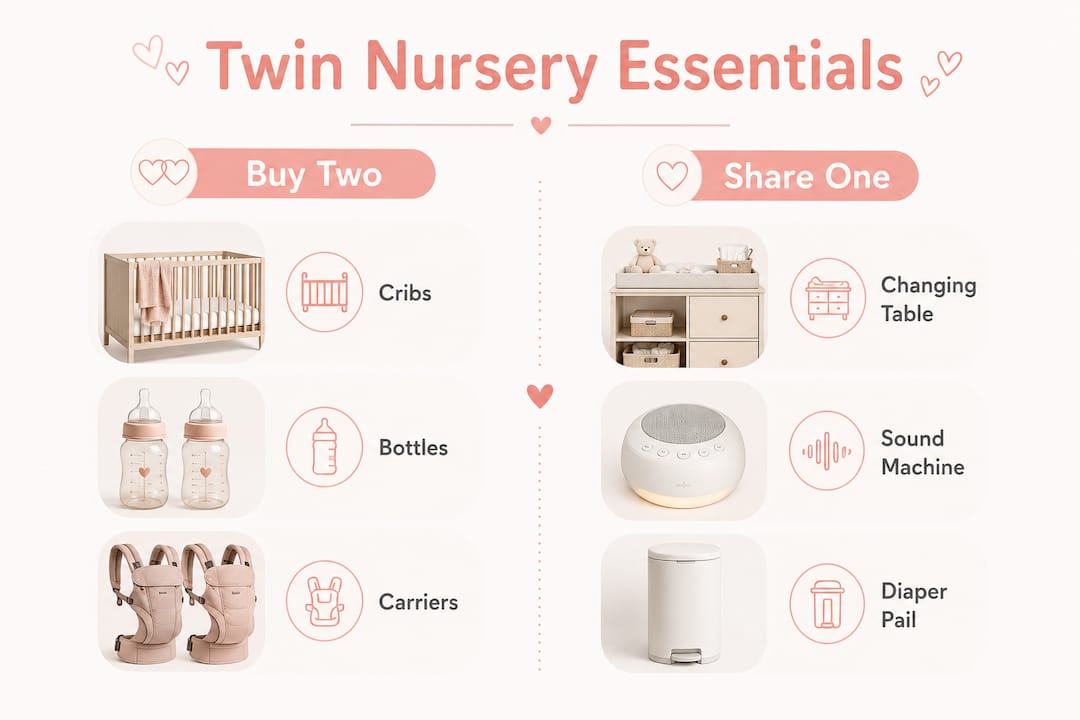
The twin nursery essentials explained simply: buy two of what touches each baby directly, and share everything else. The AAP 2026 guidelines are clear that each infant needs their own sleep surface from day one.
Items you need two of:
- Cribs or bassinets
- Car seats
- Bottles and nipples (matched sets per baby)
- Pacifiers
- Sleep sacks or swaddles
Items you can share:
- One changing table or dresser topper
- One sound machine
- One diaper pail
- One glider or nursing chair
- One baby monitor system with dual cameras
| Category | Buy Two | Share One |
|---|---|---|
| Sleep surfaces | Cribs or bassinets | N/A |
| Feeding | Bottles, pacifiers | Nursing pillow (twin style) |
| Diapering | N/A | Changing table, diaper pail |
| Monitoring | N/A | Dual-camera monitor |
| Soothing | N/A | Sound machine, glider |
Twin-specific gear fills a real gap here. The Twin Z Pillow, for example, supports tandem feeding and can cut feeding time significantly. Quality twin nursing pillows run $60–$120 and are widely considered the gold standard for twin feeding support. Convertible cribs that grow into toddler beds also pay off over time since you will use them for years, not months.
Pro Tip: Choose furniture from one brand line when possible. Matching finishes look intentional, and replacement parts are easier to source.
How do you organize storage and feeding stations for twins?
Organization is the difference between a nursery that works at 3:00 AM and one that defeats you. Set up your space in dedicated zones: one for diapering, one for feeding, and one for clothing and gear storage.
Setting up diapering zones
- Place the main changing station in the nursery with diapers, wipes, creams, and a diaper pail within arm’s reach.
- Stock a portable caddy for the living room with the same supplies. Satellite diaper stations throughout the home cut the time spent walking back to the nursery during round-the-clock care.
- Keep a third caddy in your bedroom for overnight changes.
- Restock all caddies every morning so you are never caught short at night.
Building your feeding nook
A dedicated feeding corner with your twin nursing pillow, a small side table, and a water bottle within reach makes tandem feeding sustainable. Batch-prepping bottles at the start of each day removes one decision from your night routine. Line up six to eight pre-measured bottles in the fridge so feeding is a grab-and-go task.
Using one bottle system for both babies matters more than most parents realize. Mixing brands means mismatched nipples, rings, and lids, which creates confusion and hygiene risks at 2:00 AM. Pick one brand and stick with it.
Maximizing storage space
- Use vertical wall shelves above the changing table for diapers and wipes.
- Install over-the-door organizers on the closet door for small items like socks, mittens, and hair accessories.
- Label every basket and bin clearly. Vertical storage and labeling keeps the room functional as the babies grow and gear changes.
- Store the next size up of clothing in labeled bins so you are never scrambling when a growth spurt hits.
How do you create a safe and cozy sleep environment for twins?
Safe sleep for twins is defined by the AAP as each baby on their own firm, flat surface, free of loose bedding, bumpers, and soft objects. Separate sleep surfaces are required from birth. Crib-sharing carries real risk once babies begin rolling, which typically starts around 4–6 months.
“Balanced symmetry in twin nursery design, using neutral palettes and coordinated bedding, creates a calm and organized room that benefits both babies and parents.” — Baby Steps Mama design approach
A few additions make a significant difference in sleep quality:
- Blackout curtains: These block morning light and extend nap windows. They are one of the highest-return purchases in any nursery.
- Sound machine: White noise masks household sounds and helps both babies stay asleep when one stirs. One unit placed centrally between the cribs covers both.
- Dual-camera baby monitor: Two Nanit Pro Smart Baby Monitors (one per crib) track each baby separately on a split screen and monitor breathing motion without wearables. That kind of visibility gives parents real peace of mind overnight.
For the first 3–6 months, a bassinet-first approach conserves space and keeps babies closer to your bed for night feeds. Transition both babies to cribs at the same time once mobility increases, rather than staggering the move. Staggering disrupts the routine you have worked hard to build. For more on getting both babies sleeping well, Twinsandcounting’s guide on synchronized nap strategies is worth reading before the babies arrive.
What mistakes do parents make when setting up a twin nursery?
Most twin nursery mistakes fall into two categories: buying too much and planning too little. Both cost you time and money.
- Buying duplicates you do not need. Two sound machines, two diaper pails, and two gliders waste money and floor space. Sharing one of each is the standard recommendation from twin parenting experts.
- Blocking pathways. A clear path from the door to each crib is non-negotiable at night. Furniture that forces you to sidestep in the dark is a safety hazard.
- Mixing gear brands. Mismatched bottles, nipples, and pump parts create logistical chaos. The one-brand rule applies to bottles, pacifiers, and breast pump accessories.
- Buying all expensive gear at once. High chairs, convertible strollers, and activity tables are not needed at birth. Staggering these purchases over the first year protects your budget and your storage space.
- Skipping satellite diaper stations. The nursery changing table is not always the closest option. Caddies in the living room and bedroom save real time across dozens of daily diaper changes.
Pro Tip: Walk through your home at night with the lights off before the babies arrive. Any obstacle you trip over needs to move before they come home.
Key Takeaways
A functional twin nursery requires two separate sleep surfaces, a minimum 10×10-foot layout with 24-inch clearance, shared gear where safe, and dedicated zones for feeding, diapering, and storage.
| Point | Details |
|---|---|
| Separate sleep surfaces | AAP 2026 guidelines require one crib or bassinet per baby from day one. |
| Room dimensions matter | A 10×10-foot minimum with 24-inch clearance between cribs keeps nighttime access safe. |
| Share strategically | Sound machines, diaper pails, and gliders can be shared; cribs and car seats cannot. |
| Zone your nursery | Dedicated diapering, feeding, and storage zones reduce chaos during round-the-clock care. |
| Stagger big purchases | Delay high chairs and strollers until needed to protect budget and floor space. |
Why the nursery you build now shapes the first year
Setting up a twin nursery is not just a design project. It is a logistics problem you solve before exhaustion sets in. I have seen parents spend weeks on color palettes and days on crib choices, then arrive home with two babies and realize they have no clear path to the changing table at midnight.
The rooms that actually work are not the prettiest ones. They are the ones where every item has a place, every station is stocked, and the parent can move through the space half-asleep without thinking. Aesthetics matter for your sanity, and a calm, symmetrical room genuinely does reduce visual stress. But function has to come first.
The one thing I would tell every expecting twin parent: set up the feeding nook before anything else. That is where you will spend the most time in the first three months. Get the chair right, get the pillow right, and pre-stock the side table. Everything else can be adjusted after the babies arrive. The feeding station cannot wait.
— Jay
Twinsandcounting has the twin parenting resources you need
Setting up the nursery is just the beginning. Once your twins are home, the real work of managing two babies on the same schedule starts.

Twinsandcounting is built specifically for parents of twins, with practical guides covering sleep, feeding, schedules, and self-care. Whether you are figuring out night feeds or trying to keep two babies on the same nap schedule, the site has step-by-step guidance written for the twin experience. Start with the 9 essential tips for twin care to build your foundation, and explore the full library of twin-specific resources at Twinsandcounting.
FAQ
What is the minimum room size for a twin nursery?
Nursery layout experts recommend a minimum of 10×10 feet for a twin setup, with 24 inches of clearance between cribs and surrounding furniture for safe nighttime access.
Do twins need separate cribs from birth?
Yes. The 2026 American Academy of Pediatrics guidelines require separate sleep surfaces for each infant from day one. Crib-sharing becomes a safety risk once babies begin rolling, typically around 4–6 months.
What twin nursery gear can parents share?
Parents can share one changing table, one sound machine, one diaper pail, one glider, and one dual-camera baby monitor. Items that touch each baby directly, like cribs, car seats, and bottles, require one per baby.
How do you organize a twin nursery for nighttime efficiency?
Set up dedicated zones for diapering, feeding, and storage, and stock satellite diaper caddies in the living room and bedroom. Batch-prepping bottles at the start of each day removes decisions from your overnight routine.
When should twins transition from bassinets to cribs?
Most twin parents transition both babies to cribs at the same time around 3–6 months, when mobility increases. Moving both simultaneously preserves the shared routine rather than disrupting it with a staggered switch.