

A predictable twin routine is a consistent, sequence-based pattern of feeding, play, and sleep that aligns both babies’ physiological rhythms to make daily caregiving manageable. Unlike a rigid clock schedule, a routine follows a logical cause-and-effect order: eat, then brief awake time, then sleep. Experts recommend this sequence-based approach because newborn nervous systems are too immature to understand clock time but can learn repeated sequences. The American Academy of Pediatrics and resources like Twinsandcounting both recognize that predictability, not perfection, is what helps twins thrive and parents stay sane.
What is a predictable twin routine and how does it work?
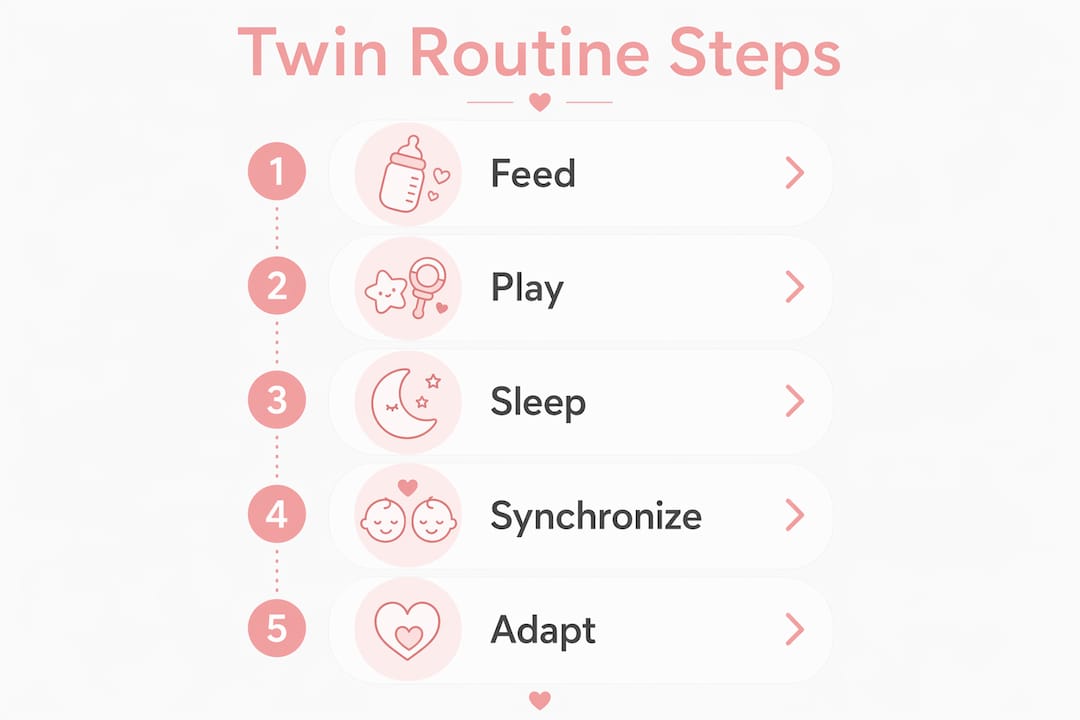
A predictable twin routine is defined by its sequence, not its timing. The core pattern is eat, play briefly, then sleep. Repeat. That cycle is the backbone of every successful twin daily routine, and it works because babies’ brains respond to cause-and-effect patterns long before they can read a clock.
The hypothalamus matures around 3–4 months, which is the brain region that regulates circadian rhythms. Before that point, a sequence routine supports developing brains far better than a fixed schedule does. This is the critical distinction between a routine and a schedule. A schedule says “feed at 7:00 AM.” A routine says “feed when the baby wakes, then play, then sleep.” One is clock-dependent. The other is baby-dependent.
Newborns typically feed every 2–3 hours, and that frequency naturally creates the rhythm of the routine. Each feeding anchors the next cycle. Over the first 8–12 weeks, those cycles gradually lengthen as babies’ stomachs grow and sleep consolidates. The routine does not change. The intervals between repetitions simply get longer.

The second critical piece is synchronization. With twins, you are not just managing one cycle. You are managing two. The goal is to align both babies into the same sequence so you are not feeding one while the other sleeps, then immediately starting again. That overlap is what causes parental burnout. A synchronized twin routine prevents those overlapping care cycles and creates real windows of rest for you.
What does a predictable daily routine for twins look like in practice?
The daily structure follows the eat-play-sleep sequence repeated across the day, with each cycle lasting roughly 2–3 hours in the newborn stage.
Here is a representative daily pattern for newborn twins:
- Morning anchor feed (6:00–7:00 AM): Feed both babies simultaneously or back-to-back. This is your anchor point for the day.
- Brief awake time (20–40 minutes): Gentle stimulation, diaper changes, tummy time. Keep it short for newborns.
- Nap 1: Both babies sleep. You rest or handle household tasks.
- Feed 2 (approximately 9:00–10:00 AM): Repeat the sequence.
- Awake time and nap 2: Continue the pattern through midday.
- Feed 3, awake time, nap 3: Afternoon cycle.
- Bedtime routine (bath, dim lights, final feed): Signal that the day is ending.
- Overnight feeds: Every 2–3 hours initially, gradually stretching as weeks pass.
The gradual consolidation of naps and longer overnight sleep stretches typically begins between 8 and 12 weeks. That is when the routine starts to feel less like survival and more like a system.
One factor parents often overlook is feed quality. Drowsy feeding leads to shorter sleep and fragmented cycles. A baby who snacks while half-asleep takes in less milk, wakes sooner, and breaks the sequence. Keeping babies alert during feeds produces fuller feeds, which extend sleep intervals and stabilize the routine.
Pro Tip: Anchor your morning feed to the same approximate time every day. This single anchor point organizes the rest of the day’s cycles without requiring you to watch the clock obsessively.
How does synchronization of twins’ routines improve family life?
Synchronization is the difference between managing twins and surviving them. Aligned routines prevent overlapping crying and feeding cycles, which reduces parental burnout and creates predictable care windows. When both babies eat together and sleep together, you get actual breaks. Without synchronization, you are always caring for one baby while the other is about to need you.
The practical tool for achieving synchronization is the “wake the other” rule. When one twin wakes to feed, you wake the second twin within 30 minutes. Applied consistently from week 2, this 30-minute rule accelerates alignment during the critical 8–12 week developmental window. Most parents see meaningful synchronization by week 8 when they apply it consistently.
“Perfect timing is less important than consistency and predictability in routines to help parents function and babies thrive.”
— Well Supported Family
Key benefits of a synchronized twin routine include:
- Reduced caregiver overlap: Both babies need care at the same time, not in a staggered, never-ending loop.
- More parental rest: Aligned sleep windows mean you sleep when both babies sleep.
- Stronger feeding patterns: Simultaneous or back-to-back feeds align hunger cues and extend overnight sleep stretches over weeks.
- Developmental support: Predictable sequences help babies’ developing brains build expectations and calm.
One important nuance: identical twins still have distinct temperament differences and individual sleep needs. Synchronization is a goal, not a guarantee. Some days one twin will be hungrier or fussier. The routine provides the structure. Flexibility keeps it workable.
What are common challenges when adjusting a predictable routine for twins?
Every twin routine hits disruptions. Growth spurts, illness, and variable hunger are the most common culprits. The key is knowing how to adapt without abandoning the structure entirely.
Common challenges parents face include:
- Growth spurts: Babies suddenly feed more frequently, breaking the established cycle. Feed on demand during these periods and gently return to the sequence within a few days.
- Illness: A sick twin may need more frequent comfort and feeding. Prioritize the sick baby’s needs and accept temporary desynchronization.
- Variable hunger: One twin may consistently eat more or wake earlier. Adjust the “wake the other” timing to the hungrier twin’s natural rhythm.
- Nap skipping: Overtired babies fight sleep harder, which fragments the entire sequence. Watch for early tired cues and put babies down before they become overtired.
- Temperament differences: One twin may settle quickly while the other needs more soothing. Build a few extra minutes of settling time into the sequence.
Pediatricians caution that the “wake the other” rule has a clear medical exception. In cases of prematurity or low birth weight, feeding on demand takes priority over synchronization. Always follow your pediatrician’s guidance when medical needs are involved.
Restoring sync after a disruption is simpler than starting from scratch. Return to the morning anchor feed at the usual time, apply the 30-minute wake rule again, and give it 3–5 days. The routine will re-establish itself because the sequence is already familiar to both babies.
Pro Tip: Use a feeding log for twins to track each baby’s wake times, feed durations, and sleep lengths. Patterns become visible within a week, and adjustments become much easier when you have data instead of guesswork.
What practical twin routine tips help parents manage daily care?
Building a routine that holds up in real life requires more than a good plan. It requires the right habits and environment to support it.
Feeding strategies:
- Feed both babies simultaneously when possible. Tandem breastfeeding or propping bottles side by side saves significant time and keeps hunger cues aligned.
- If back-to-back feeding is necessary, start with the hungrier or more wakeful twin first.
- Keep babies alert during feeds. Tickle feet, change positions, or remove a layer of clothing to prevent drowsy snacking.
Sleep environment:
- Dim lights and reduce stimulation in the 30 minutes before naps and bedtime. Babies’ brains respond to environmental cues.
- A consistent bedtime routine of bath, feeding, and dimmed lights signals both babies that sleep is coming. This cue-based approach works because it pairs a sequence with a physiological response.
Nighttime management:
- Keep nighttime feeds quiet and low-stimulation. No bright lights, no play, minimal talking.
- Consider a dream feed for twins at 10:00–11:00 PM to extend the first overnight stretch.
- For solo parents, managing night feeds alone is one of the hardest parts of twin parenting. Prepare everything in advance: bottles, diapers, and a safe feeding station.
Here is a quick reference for how the routine evolves across the first months:
| Age | Feed frequency | Wake windows | Naps per day |
|---|---|---|---|
| 0–4 weeks | Every 2–3 hours | 45–60 minutes | 4–5 |
| 4–8 weeks | Every 2.5–3 hours | 60–75 minutes | 4–5 |
| 8–12 weeks | Every 3 hours | 75–90 minutes | 3–4 |
| 3–4 months | Every 3–4 hours | 90–120 minutes | 3 |
The routine does not stay the same. It grows with your babies. Recognizing when to extend wake windows or drop a nap is part of keeping twins on the same schedule as they develop.
Key Takeaways
A predictable twin routine is a sequence-based pattern of eat, play, and sleep that synchronizes both babies’ rhythms, reduces parental burnout, and supports healthy infant development.
| Point | Details |
|---|---|
| Routine vs. schedule | A routine follows a sequence; a schedule follows the clock. Sequences work better for newborns. |
| The “wake the other” rule | Wake the second twin within 30 minutes of the first to build synchronization by weeks 8–12. |
| Full, alert feeds matter | Drowsy feeding shortens sleep cycles. Keep babies awake during feeds to extend sleep stretches. |
| Anchor the morning feed | A consistent morning start time organizes the rest of the day without rigid clock-watching. |
| Flexibility is part of the plan | Growth spurts and illness will disrupt sync. Return to the sequence within a few days to restore it. |
Why I think most twin parents overcomplicate this in the first weeks
Here is what I have seen repeatedly: parents come into the first weeks with a detailed spreadsheet, color-coded by baby and hour. By day five, they have abandoned it entirely because real babies do not follow spreadsheets. The routine falls apart, and they conclude that routines do not work for twins.
The mistake is treating the routine as a rigid script instead of a repeating sequence. The eat-play-sleep pattern is not a schedule. It is a rhythm. Rhythms flex. They bend around a fussy afternoon or a growth spurt and then return to their natural shape. That is what makes them sustainable.
What actually works is simpler than most parents expect. Pick one morning anchor time. Apply the 30-minute wake rule consistently. Keep feeds alert and full. Dim the lights before sleep. That is the whole system. Everything else is refinement.
The parents who succeed with twin routines are not the ones with the most detailed plan. They are the ones who stay consistent with a simple sequence and give it enough time to take hold. Eight to twelve weeks is the realistic window. The first four weeks are often chaotic regardless of what you do. That is normal. Trust the sequence, not the clock.
— Jay
Twinsandcounting has resources to help you build your routine
Managing two babies at once is genuinely hard, and no article replaces the support of a community that has been through it.

Twinsandcounting offers practical, twin-specific guidance across every stage of the routine-building process. From sleep training both babies at the same time to understanding overnight patterns, the resources are built for the real twin experience, not a generic parenting template. If you are running on little sleep and need a clear next step, the twin parent self-care guide is a good place to start. You cannot pour from an empty cup, and your wellbeing is part of the routine too.
FAQ
What is a predictable twin routine?
A predictable twin routine is a consistent sequence of feeding, brief awake time, and sleep repeated throughout the day to align both babies’ rhythms. It is sequence-based, not clock-based, making it more realistic for newborns whose brains cannot yet process fixed schedules.
When should I start a twin routine?
Most experts recommend introducing a sequence-based routine from week 1 or 2, with the “wake the other” rule applied consistently to build synchronization by weeks 8–12.
Should I wake a sleeping twin to feed?
Yes, in most cases. Waking the second twin within 30 minutes of the first prevents overlapping care cycles and builds synchronization. The exception is prematurity or low birth weight, where your pediatrician may advise feeding on demand instead.
How do I handle a twin routine during a growth spurt?
Feed on demand during the growth spurt without abandoning the sequence entirely. Return to the morning anchor feed and the 30-minute wake rule once the spurt passes, and sync typically restores within a few days.
How does a twin routine differ from a twin schedule?
A routine follows a repeating sequence triggered by the baby’s cues. A schedule follows fixed clock times. Routines are more effective for newborns because their nervous systems respond to sequences, not time, until around 3–4 months of age.